 How we use AI in our process


ERP Development for Businesses
That Need More Control, Visibility, and Scale
Disconnected processes make operations harder to manage
When departments rely on isolated software tools, data gets duplicated across systems, approvals pile up as manual tasks, and leadership loses access to a reliable, unified view of operations. Every decision becomes slower, and every process gap compounds into a larger structural problem over time.

Generic ERP tools stop fitting as the business grows
Out-of-the-box software was built for average use cases. Once your business introduces complex user permissions, non-standard approval chains, unique internal protocols, and edge-case workflows, standard software starts creating more friction than support.
A custom ERP creates a clearer system for scaling work and decisions
Custom architecture does more than automate tasks. It builds a cohesive management structure that aligns internal roles, live databases, compliance requirements, and automated reporting into a single backbone.
Selected Metrics that
Reflect Our Experience with Complex Digital Products
What Clients Say About
UITOP’s ERP Development


Cole Weiler
CEO, BoltWise“They took way more responsibility than we asked and we were so happy with the results of all their work. UITOP was easy to work with, flexible, and valuable to our company.”


Neil Hosey
ResHub, CTO


Dylan Gambardella
Founder, Different Health“They took extra time to ensure that our frontend developer could easily implement the wireframes.”

Sam Jordan
TrovBase, CEO

Dirk Pauw
CEO, Tavas“We’re most impressed with UITOP’s ability to come up with a system to be able to bring design solutions.”

Jordan Girard
Whiterock, Founder

Jake Heimark
Costa Security, CEO"We are happy with the improved UI/UX, which has made product navigation cleaner, simpler, and more intuitive. The team is great and always there to help."

Michael Mosseri
Total Brokerage, CEO

Nicolas Endress
ClimEase, CEOERP and Business System Development Cases

Building an ERP system around real business workflows
Valocore needed to simplify government contracting by moving complex paper-based tasks into one easy digital system. UITOP designed a clear SaaS platform: organized the core product structure, made financial workflows easier to follow, created transparent reporting tools, and developed a scalable design system that supports future changes in contracting processes.

Connecting fragmented tools and workflows in one scalable platform
Initially, Slabstack, an ERP for construction teams, was challenging to navigate. It was difficult for producers to manage daily operations, projects, reports, client communication, and performance data. Our UITOP team redesigned the product: shaped the core structure, created clear dashboards and reporting flows, and built a flexible component system to support future growth.

Improving operational visibility with ERP automation and clearer data flows
LogiCore was built for a logistics company that had warehouses, inventory, and shipments spread across different tools. UITOP created a custom platform that brought shipment tracking, warehouse maps, SKU management, live inventory updates, and operational dashboards into one place. The client now works from a single system, where office and warehouse teams can see the same information, spot stock issues sooner, and make shipping decisions twice as fast.

Why Companies Choose UITOP for
Custom ERP Solutions


What Our Custom ERP Development Services Include
ERP Discovery, Process Mapping, and System Scope
Business workflows, roles, and operational bottlenecks
We conduct a thorough audit of your current operational model, tracing data paths, identifying processing delays, exposing manual double-entry points, and locating the exact system disconnects creating friction between departments. This analysis establishes the factual foundation for every subsequent architectural decision.
ERP scope based on business priorities, not generic modules
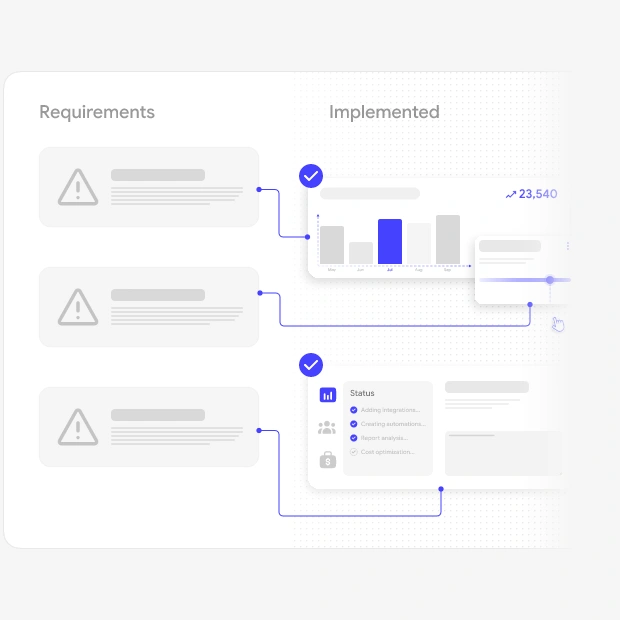
Rather than mapping your workflows into pre-built module templates, we define a system layout built around your highest-priority operational needs and near-term growth objectives. Every included feature earns its place based on direct business relevance.
Requirements, system logic, and implementation roadmap
Our team produces technical documentation covering structural entity relationships, security role definitions, data validation rules, and a sequenced engineering rollout plan, giving your team and ours a clear, agreed-upon reference for every phase of development.

Custom ERP Modules and User Experience Design
Modules built around finance, operations, reporting, and internal workflows
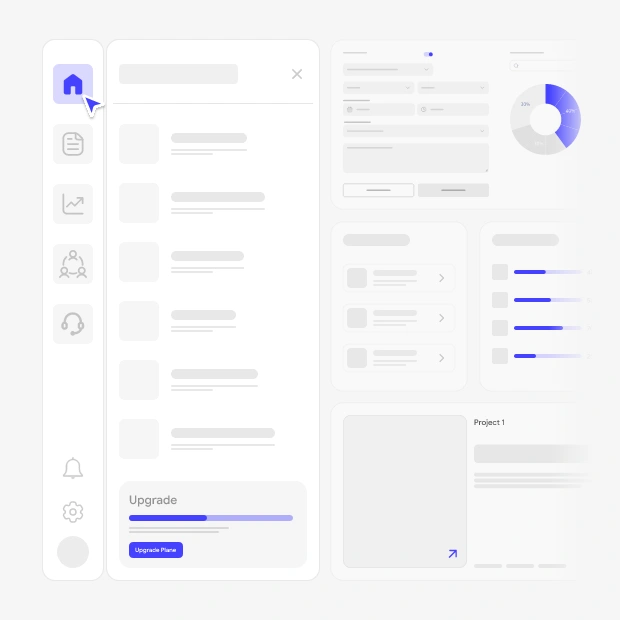
We structure tailored dashboard environments that consolidate financial health indicators, live inventory records, and procurement activity into a single unified interface, eliminating the need to cross-reference separate tools or run manual reconciliation between disconnected data sources.
Role-based user flows and interfaces for daily work
Every system user operates differently. UITOP builds distinct, access-controlled interface views for field technicians, department managers, and executive leadership, ensuring each role sees exactly the data and actions relevant to their responsibilities, without unnecessary exposure to unrelated system areas.
Clear dashboards, actions, and decision-making paths
We optimize information-dense screens to surface clear process states, detect anomalies that require attention, and place action controls where decisions actually happen, reducing the time users spend interpreting data and increasing the time spent acting on it.

ERP Software Development, Integrations, and Data Architecture
Custom ERP development with scalable front-end and back-end architecture
We engineer reliable backend database structures and performant frontend portals capable of handling high concurrent session loads, enforcing core business rules without processing lag, and maintaining response consistency as operational data volumes grow.
Third-party integrations, APIs, and data migration
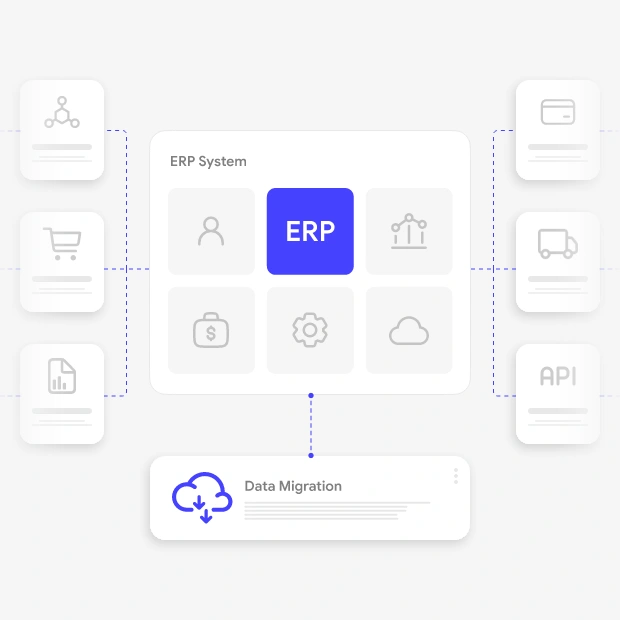
UITOP connects your new platform with external CRMs, logistics applications, accounting software, and banking gateways through custom API integrations. We also manage the secure, validated migration of your existing operational data from legacy environments into the new system architecture.
Cloud, on-premise, or hybrid ERP delivery based on business needs
Our team deploys your custom software environment to cloud infrastructure, on-site servers, or a hybrid configuration based strictly on your enterprise compliance requirements, data residency standards, and information security policies.

ERP Rollout, Optimization, and Long-Term Product Evolution
Testing, rollout, and adoption support
We run comprehensive end-to-end workflow testing across all user roles, validate security boundaries, and manage the operational rollout in structured phases, reducing the risk of process disruption and ensuring your teams can transition to the new system without downtime.
ERP modernization and expansion as business processes change
When existing platforms accumulate technical debt or stop reflecting current workflows, our UITOP team steps in to refactor legacy code, introduce updated feature sets, adjust system parameters to match new operational realities, and remove structural inefficiencies built up over time.
Support for mobile access, new modules, and future integrations
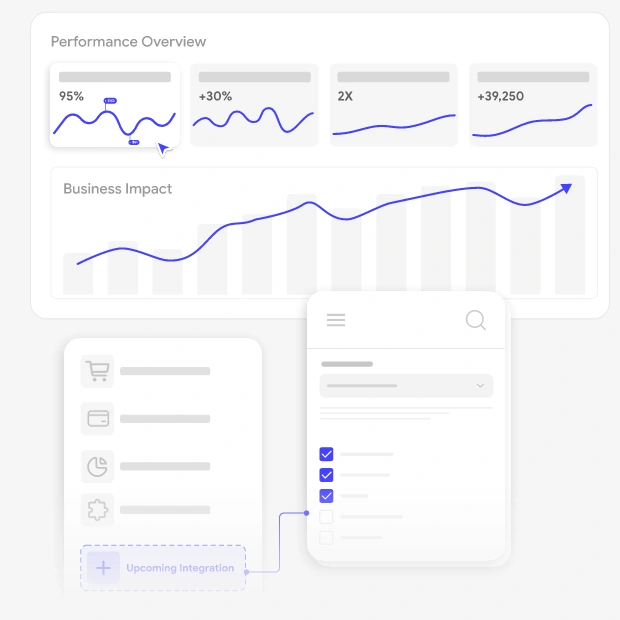
We build responsive mobile access layers and add new functional modules as your operational footprint expands, ensuring the platform continues to serve evolving requirements without requiring a full architectural rebuild each time your business model shifts.


Our ERP Development Process
1. Understand business processes and system goals
2. Define ERP scope, workflows, and implementation priorities
3. Design the ERP structure and user experience
4. Build the ERP system, integrations, and data logic
5. Test, launch, and support adoption
6. Optimize and scale the ERP as the business evolves

Technologies, Tools, and Practices
We Use for ERP Development
We use technologies like Java, Python, SQL Server, MongoDB, AWS, and Azure to build robust ERP solutions. Our engineers integrate with other systems using APIs.


Related Enterprise and Product Development Services


Frequently Asked Questions
What are ERP development services?
Custom ERP development services produce centralized enterprise software that automates internal workflows, connects department-level databases, and manages corporate resources within a single operational platform. The resulting system typically covers core business functions including operations management, financial tracking, human resource administration, and real-time analytics reporting.
When does a business need a custom ERP solution?
The inflection point typically arrives when spreadsheets and off-the-shelf tools can no longer keep pace with operational complexity. Reliable triggers include persistent data silos between departments, recurring manual re-entry errors, an absence of real-time reporting, and internal workflows that generic packaged software structurally cannot support without heavy workarounds.
Can UITOP build an ERP system from scratch or improve an existing one?
Both. We design and engineer scalable ERP platforms from the ground up when no suitable foundation exists. We also perform thorough audits of legacy enterprise instances, refactoring accumulated technical debt, optimizing underlying database structures, and extending platforms with new custom feature modules without disrupting active operational use.
What business processes can be covered in a custom ERP system?
Our UITOP team architects systems covering the full operational range: multi-currency financial management, live inventory and warehouse tracking, automated procurement workflows, supply chain logistics monitoring, employee and HR record management, and real-time executive dashboards that consolidate performance metrics across every connected department and data source.
Can a custom ERP integrate with our current tools and databases?
Yes. Integration architecture is a standard component of our development process. We build custom API connectors to link your new platform with external CRMs, regional banking gateways, corporate logistics applications, and active legacy SQL databases, maintaining data consistency and security across every connection point.
How long does custom ERP software development usually take?
The timeline depends directly on operational scope. A focused MVP module covering core workflows typically requires 8 to 12 weeks from finalized requirements to launch. A comprehensive multi-module platform involving deep third-party integrations and structured data migration from a legacy environment spans approximately 4 to 6 months.
How do you approach data security and access control in ERP systems?
Security is treated as an architectural requirement, not a post-deployment layer. UITOP implements data encryption at rest and in transit, enforces granular role-based access control (RBAC) so employees access only authorized records, maintains detailed audit logs of all system interactions, and configures server environments to enterprise compliance standards from day one.
Can UITOP support ERP optimization and further system growth after launch?
Yes. Our engagement model is structured for long-term product evolution, not single-delivery contracts. Our UITOP team provides post-launch maintenance, supervises user adoption rollouts, monitors database performance under growing load, optimizes server configurations, and develops new feature modules as your operational requirements and organizational footprint continue to expand.