How we use AI in our process

Product
/
Dec 08, 2022
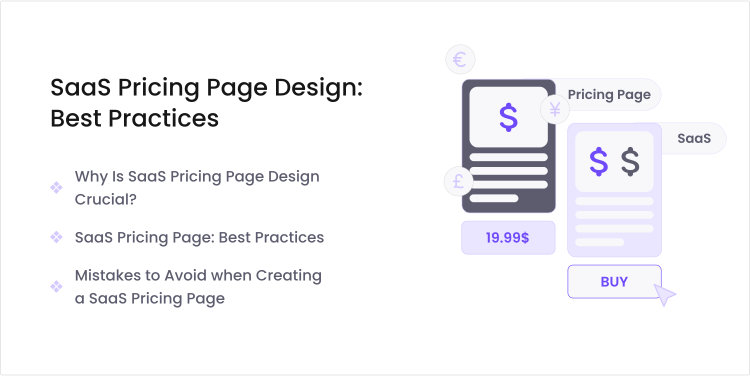
A successful user journey is one that ends with a purchase. That is why marketers dedicate a lot of resources to getting them through all the steps. However, the whole effort can be in vain if the software-as-a-service (SaaS) pricing page design is built incorrectly. And some of the companies, namely 60% of the research participants, don't even have such a page. Then there is no need to be surprised if the sales rate is not what you would like.
The way businesses form pricing has a psychological effect on customers. It depends on whether they will be determined to make a purchase or postpone it for later. That is why thorough page design preparation is important. So, let's dive deeper into the SaaS pricing page formation and discover the best practices.
A SaaS pricing page is a page on the website where customers arrive at the end of the funnel. It is a place where fate is decided: whether the client will be engaged enough to buy from you or will go to the competitors. The pricing page is as important as the home page since it serves as a logical ending to the whole user journey.
A page with prices and offers is also a possibility to build trust and show the value of your product. If you hide additional fees and don't tell about them clearly, imagine the level of loyalty you will receive from your clients. On the contrary, if your message is described comprehensibly, it won't make the customer doubt the purchase.
No matter what size your company is. From startups to big corporations, the pricing page is key to building the proper ending to the sales funnel. The same goes for the audience: if you intend to sell subscription plans for professionals in the field or for amateurs, you have to keep the pricing page clean and understandable.
There are multiple benefits to creating a well-planned SaaS pricing page. The following are some of them:

Before you start forming SaaS pricing pages, you should conduct user research. By identifying user personas and gathering their feedback, it will be easier to build a pricing policy. Once you have done that, follow the pricing page practices below.

There will be different people reaching your site. Some seek professional help from your service, and some are just starting their way and want to try it. You have to develop plans that will suit every type of buyer. For example, you can add a small description of the plan and for whom it will be the best match. It is also recommended not to present more than three plans, as more options confuse buyers.
Understanding your target audience will not cover all the types of customers that come to you. Along with offering different options in terms of time, especially for SaaS businesses, providing weekly, monthly, and annual subscriptions is beneficial. There can be a feature to connect with a sales team. Users' requests vary, and thus, the purchasing plan can cater to their needs with the help of the sales representatives.
Even though your buyers are highly trained in their field, that doesn't make a pricing page an encyclopedia. Everything that relates to charges should be simple. If you are offering a plan with a free intro, make sure users understand that it will automatically renew at the start of a new billing period. Also, provide users with information on how to handle subscriptions and find more details about the plans.
The desire to offer a product on the international market should be supported by the ability to see the price in the national currency. Since there might be conversion fees added to the final price, customers have to be informed about that and be able to make a deliberate decision.
Psychology says people perceive information from left to right and from top to bottom. Also, what they first offer will be an offer to which they will compare all others. So, if you want to get more annual subscriptions sold, put them first in the line. You can also highlight the most popular plans, which signals that since many people chose them, they are satisfied.
The problem many businesses need help with is card abandonment. Therefore, when a person decides to leave your site at the final stage, offer a reduced price or additional services for free. Such small awards positively influence decision-making and convert more leads into sales.
Not all questions and doubts can be covered in the FAQ section. Thus, while people decide on the purchase, they have to be able to reach out to your representatives and get help. Not only is it essential for those who haven't bought anything, but it is also essential for those who have already made a purchase. There might be technical issues like double-purchasing that should be troubleshooted quickly.
Usually, designers make the following mistakes in the SaaS pricing page design:

Let's learn from the best SaaS pricing pages. Here are some perfect examples of how the page with the prices should be formed to convert leads into sales.
Slack's pricing page contains all the essential information users need before purchasing a subscription. At the top of it, different plan options are described. Every plan is advertised according to the team size, so by knowing just your company size, you can already make the decision. Another great feature of the page is the offer of a customizable plan, an "Enterprise Grid." For those who want a special plan, Slack provides a contact for their sales team to advise on the best option.
As you scroll down, you can see what features are included in each plan. And on top of that, there is the FAQ section with a link to information about billing at Slack.

Jasper's AI writing tool doesn't lag behind either. They attract customers' attention with their interactive way of presenting subscription plans. Jasper expects to get more people to talk to sales, so they put this option first in the row. Also, they identify the most popular plan and encourage clients to buy an annual subscription with 20% off. In every plan description, there are defined features. But when you mouse over every phrase, you can see a more detailed description. Even the call to action (CTA) button is alive on Jasper: as you mouse over it, the arrow goes from left to right. Surely, their feature list located under the plans is also impressive and comprehensive.

Switching to a more simply-built SaaS design, Retool offers its users a clear and concise pricing page. They don't overload readers with information and make it easier to perceive the content with the help of properly chosen colors.
Retools' pricing page peculiarity is that they explain how to deal with the plans. At the bottom of the page, different options describe how customers can change their plans if they plan to scale, pay less for end users, etc.

SaaS pricing page design is a fundamental decision on which your revenue will depend. It can attract users and speed up decision-making or add more abandoned cards to your statistics. To create a successful pricing page, you should keep it clear, describe the plans according to buyer personas, engage in buying with special offers, and offer support in any questions.
It is a page that shows the prices of the services. It is the final destination of customers who go through different stages on your platform. The main purpose of a SaaS pricing page is to properly inform customers about the prices. However, it also builds trust and long-term relationships with clients.
The benefits of dedicating resources to this page creation are countless. Firstly, it keeps users’ uncertainties and doubts away. As it often happens, we postpone deciding if we don’t have a proper understanding of the product. Also, a successful pricing page makes customers stay loyal and recommend your service.
The main concept of a pricing page lies in clarity and honesty. But to be clear, you first have to investigate who your users are. And also the situation on the market. As you find out the users’ personas, you can adjust different types of plans according to that differentiation. Don’t forget to add more information on what the plans cover and answer popular questions in the FAQ section.
Proper user research is the key to success. When you discover important users’ metrics, you can build pricing on that data. Also, businesses tend to over-promise, which is not a good tactic. Surely, every decision should be tested. And with the pricing policy, it is the same.