Design, Startup • May 02, 2023
 How we use AI in our process Learn more

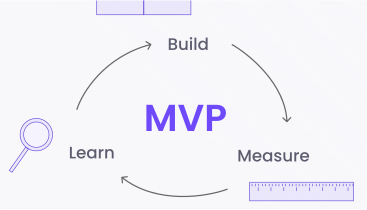
Almost every startup company falls into the same costly trap - the desire to build a perfect product from scratch. However, such a goal frequently leads to delays in production, wasted resources, and burning deadlines. A much smarter approach is to create a minimum viable product (MVP) version of your app and polish it to perfection only after you receive feedback from your real customers.
The undeniable advantage of minimum viable product design is that it isn't just a "bare-bones" version, but a working product that can bring real insights, allowing you to learn fast and make great business decisions. It's also necessary to distinguish an MVP design from prototyping and proof of concept (PoC). Precisely, a prototype of your product stands for idea visualization, PoC validates the technical feasibility, and MVP design provides the app's version to maintain further development strategy.

Designing an MVP is not only about saving the budget or rolling out the app as quickly as possible. The fundamental role of any minimum viable product design is to allow you to learn from real-world data and provide exceptional value to your users. The goal is to create a solution that will help to solve customers' problems, while receiving insights to inform future decisions. To do so, your prioritization should lie in the area where your MVP app:
Even with the best intentions, the MVP UX strategy can be frequently undermined by common mistakes. Avoiding the pitfalls listed below will help your team to stay focused and deliver the exceptional application that resonates with the target audience:
Creating a successful MVP is about proper strategy, attention, and a fast learning pace. Here's a complete step-by-step guide on how to turn a simple idea into a working, user-friendly product with room for growth based on real-world insights.

The first thing that needs to be actively brainstormed with your team is the actual need or problem your product will solve. Clarify and explain your vision regarding the pain points or unmet needs that your app addresses. Support your understanding with a thorough research of existing competitors and existing marketing trends.
Understanding your unique value proposition (UVP) is a significant component of your future success. Businesses have to clearly understand their weak and strong points to stand out among the diverse competitors.
During the UI/UX process creation, focus on the main features that can deliver the established value and throw your forces to make them agile and user-friendly.

Once the core value is identified and fixed, it's time to decide what features and functionality have to be included in the MVP UI design. For that matter, techniques like MoSCoW (Must Have, Should Have, Could Have, Won't Have) or Value/Effort matrix will be perfect for ranking features by feasibility and impact. After you define all the necessary features, map out the whole user's journey to ensure the final experience will align with your vision.
Design is not only about the visuals, but also about the usability and convenience. That's why you have to start with low-fidelity wireframing to plan the whole structure and appearance of the interface.
Once done and polished, you can move into the high-fidelity prototypes to visualize interactions. Focus on clarity and convenience, instead of overcrowding your interface with features that confuse users.
Building an app in testable and precise increments is the best way to track progress and move forward in the development process. Besides that, the business can't and shouldn't wait for the launch to start the testing process.
Involve real users as soon as possible, especially during the beta testing, interviews, and A/B tests. Ask for feedback for everything, from bugs to the level of usefulness and satisfaction.
Do not be afraid to initiate the launch, and do not expect satisfactory results from the beginning. It's a perfect phase to gather users' feedback, evaluate the data, and gain early insights to create the following product's evolution cycle. If you use this phase solely for learning and improvement, it will greatly prepare your business for further scale and growth.
The MVP is only the beginning of the long journey ahead of you. During that continuous period, you and your team have to use every bit of data, every user's comment, and every identified bug to refine the product and make it better. Keep a clear vision of the initial goal, and stay committed to the journey for continuous improvement.
Collaboration with a seasoned and experienced UI/UX team can transform the landscape of your product's future. Here are some main reasons why you should consider seeking professional advice from the top UI/UX agency:
At the time Uitop joined the project, Bookteligence already had a SaaS platform designed to help publishers track and optimize book performance. But it was outdated. Our client decided to create a new MVP and add more features to get feedback from users (book publishers) and verify their idea's relevance.

Our journey began with a thorough UX/UI research. We designed the dashboard via wireframing and focused on surfacing main metrics like reviews, sales trends, and competitive analysis.
With this consistent and eligible approach, the platform has become a user-friendly tool while maintaining its core functionality. The final impact was clear as well: a 93% usability score, 94% in responsiveness, and over 150% in user acquisition. That's how the final results of a partnership with a solid company like Uitop look.
Building a solid MVP version is about focusing on solving real user pains, delivering the core value, and making a positive first impression for your target audience. A lean, user-centered approach combined with the ability to learn quickly is the best way to win the hearts of your customers and accelerate your way to the top of the market.
However, it's necessary to remember that MVP is only the beginning that has to be accompanied by a desire to improve throughout the journey. We at Uitop specialize in creating data-driven MVPs that will conquer the hearts of your clients. From the research to launch, we will help you make a product that is doomed to be successful.