

Design, Product • Jan 29, 2026
 How we use AI in our process Learn more
Gorgeous displays can engage the audience and leave a lasting impression on the users. However, it is rarely the case that mere looks would lead to the business’s long-term success. Customers want more than just a pretty interface — they demand accessibility, simplicity, and real value. Even an attractive interface can disguise confusing navigation, poorly defined flows, or lacking features. A product built on shaky ground won’t ever be successful, no matter how inviting it looks.
Impact on business necessitates more than just visual improvement. The teams must work on actual problem-solving, carry out user research, and perform business and design goal alignment. The product's success is the result of strategic thinking. The design needs to realize measurable impacts, facilitate growth, and minimize risks.
Excellent UI remains a significant factor. However, it delivers the best results when included in a broader scheme. A product that synchronizes the design choices with the objectives, user preferences, and metrics will be successful. Putting resources into a product design strategy guarantees that design is a source of value.
Some teams may think that if a product has a nice interface, it will be successful. This idea sounds safe and rational. Nevertheless, it frequently results in an expensive and ineffective process. The attractiveness of the visuals draws the customer’s attention, but it seldom leads them to the brand. Genuine success will be based on the adoption of value, clarity, and mission.

Among the popular misconceptions are:
These wrong ideas come about because the user interface is the most visible and quickest to judge. The strategy seems abstract and is more difficult to assess. However, relying solely on the quality of visuals, instead of integrating design and business strategy, leads to the creation of weak products.

Good products have both aspects, i.e., they are beautiful and hence meaningful. The high quality of the visuals should help the function, not take over it.
Product design goes beyond screens and buttons. It bridges business goals with user needs.

Strategic product design is grounded in research. The teams study the users thoroughly by looking at their behavior, the problems they face, and the reasons behind their actions. The findings from the research become a major factor in deciding the features, interactions, and flows. The design is no longer a surface-level trait but a channel for providing real value.
Every design decision taken must be in line with the business goals. For instance:
Through linking the users’ value with quantifiable business results, the teams apply a powerful product design strategy.
Prototyping, testing, and acquiring feedback are the very basics of the process. Iteration minimizes risk and guarantees the products’ compatibility with the real-world requirements. Through continuous improvement, the teams become data-driven.
A growth-driven design process guarantees that design is a contributor to business success. The focus is on learning cycles, metrics, and strategic objectives, not on the isolated visual enhancements. The products get better based on the insights and the assessed outcomes.
Strategic product design demands collaboration. The designers, the product managers, and the engineers cooperate to make sure that each decision generates value. This leads to the blurring of the lines between design as an art and design as a business discipline.
The design decisions are made with the consideration of factors such as scalability, maintainability, and adaptability. The products that are made in this way are robust and in tune with the changing user needs and corporate priorities.
The adoption of a strategic approach to design by companies leads to the creation of products that not only have an impact but also bring in measurable ROI and sustainable growth.
Creating a product with great design that meets both business and user needs is very effective. Products give value to users and the company when the design is such that the decisions made are deliberate, quantifiable, and based on research. This cohesion guarantees that each feature, flow, and interaction will not just contribute to polishing the surface but rather will lead to meaningful outcomes.
Achieving this level of alignment requires deep insights into both user behavior and strategic priorities. Alongside, they also depend on extensive studies, trial and error, and teamwork across different functions to make sure that the outcomes of the decisions made are of significant impact and can be measured.
A well-organized discovery period assists in recognizing the most vital issues that need to be resolved and in figuring out the best ways to create value. Organizations often use product discovery services to gather actionable insights and prioritize initiatives effectively.
| Business goal | Design decision | Outcome |
|---|---|---|
| Increase retention | Simplified onboarding | Higher user engagement and lower churn |
| Drive revenue | Clear value propositions | Better conversions and revenue growth |
| Reduce support costs | Self-service patterns and clear feedback | Fewer support tickets and higher user satisfaction |
The way product design is chosen strategically leads to business outcomes that can be measured. It affects the growth positively, and the risk is not only minimized but also the ROI is maximized.
If the companies apply the design thinking for business strategy during the decision-making process, they will surely reap the benefits of superior user satisfaction, quicker adoption, and higher market performance. The main impact is:
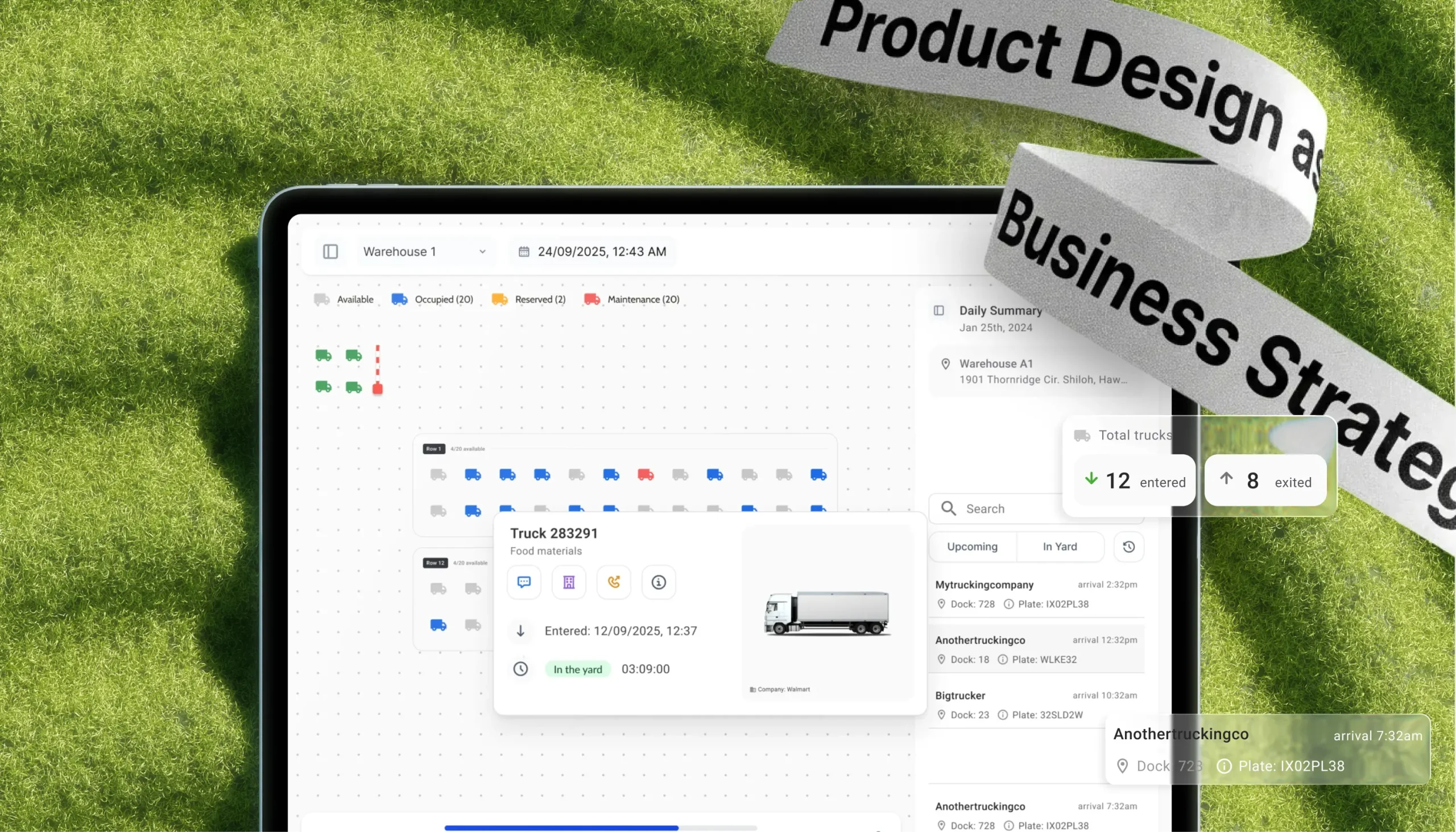
Activate OS. By giving users more control through design, platform quality and satisfaction increased. Users made fewer mistakes, improving operational efficiency.

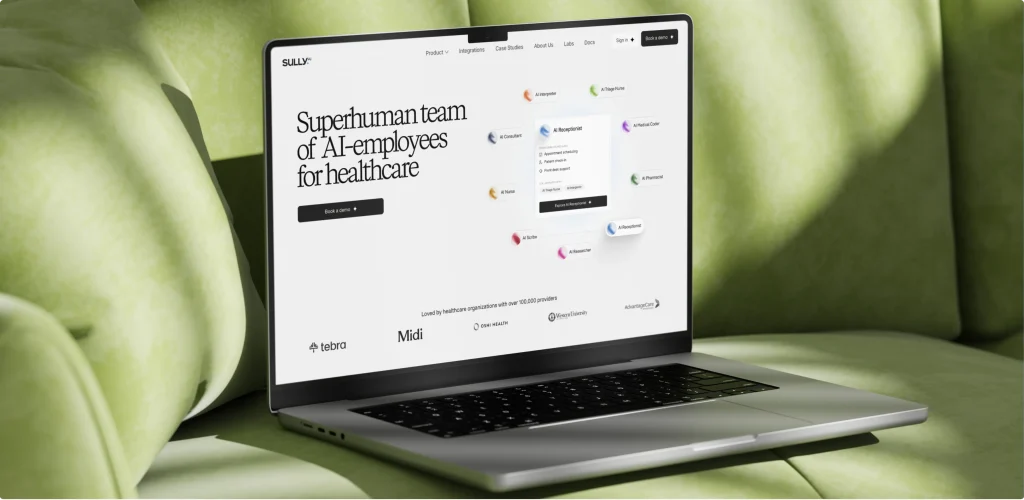
Sully AI. A revolutionary product for the American hospital sector. Minimal cognitive load, ease of use, and compliance-focused design led to $20M in investment and strong sales performance.
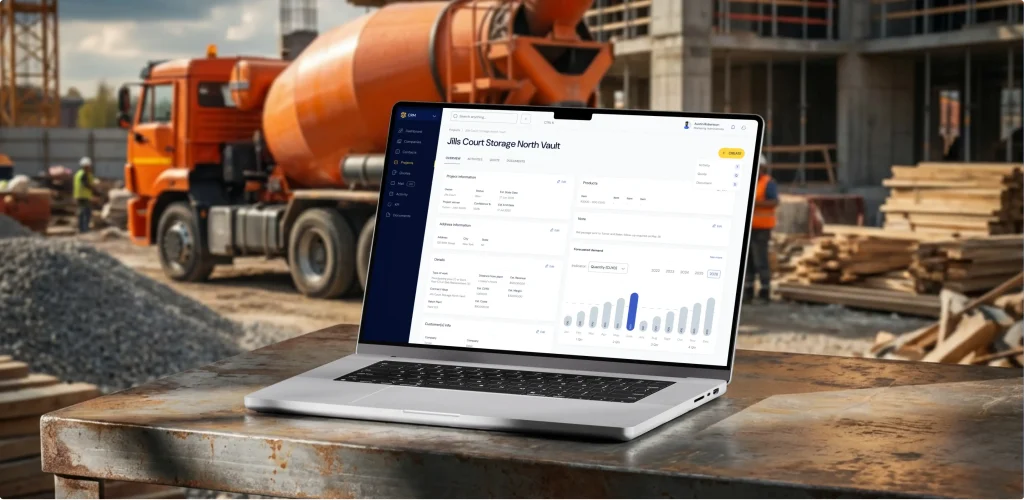
Slabstack. Initial design improvements accelerated adoption and recognition. Over three years, continued strategic design refined the system, integrating it into America’s largest construction ecosystem.
Design that is strategic makes the company’s business results and properly reflects design efforts. The teams exceed just beautiful things and focus on the impact that can be measured, taking into account both the needs of the users and the priorities of the business.
The above-mentioned cases illustrate the way in which purposeful design choices affect marketing, risk lowering, and maximization of ROI.
Solely concentrating on the UI may lead to a dead end for the teams. The graphical and layout refinements can eventually result in the development of visually attractive products. However, if there is no plan, the implications of such developments on the business will be very little. The teams need to make a leap from the execution phase to the strategy and design in order to make a significant impact.
Step-by-step evolution
Designers and product managers learn to collaborate. This is when you decide to hire UI/UX designers who understand business context. Teams shift from surface changes to deep problem-solving. The shift improves quality and reduces wasted work.
A lovely interface can captivate users from the very start. But if a business design strategy is not strong enough, even the most beautiful UI cannot cover it up. In fact, there are a lot of products whose great visuals still do not meet the requirements of the business or the satisfaction of the customers.
Product success depends on more than UI. Teams must design for impact, value, and measurable results. Strategic design connects business goals with user needs. It shapes products that grow, retain, and deliver ROI.
Companies that treat design as a business discipline gain a competitive edge. They build products users love, and businesses thrive on. Great UI is necessary. But strategy makes it powerful.
Design value is derived from the resolution of authentic user issues and the achievement of business objectives. While looks are essential, utility is the most significant factor.
The strategic thinking process helps make the success criteria clear, to get different departments on board, and to lessen the uncertainty. It results in making better choices and having more transparent routes to the goals.
Absolutely. Frameworks such as outcome‑driven design guide the teams toward the focus on the results that can be measured, the product vision, and not only the details of the interface.
Research helps make the design decisions based on the actual needs of the users. It lowers the risk and raises the possibility of getting the product “in market” successfully.
Design teams should switch the focus as soon as the fundamental user-friendliness is achieved. This allows the design to impact the product roadmap and business impacts early.

