
Design, Product • Feb 09, 2026
 How we use AI in our process Learn more
There is a common belief that code, a chosen framework, or a tech stack is a decisive factor that influences every web app's on-time, within-budget launch. But what if we debunk that myth and tell you that design decisions in web development actually determine how long the process will take and how much it will cost?
Product interface and functionality shape what is built, how it is built, and how much it takes to build it. UI/UX complexity, information architecture, interaction patterns, and other choices directly set the development effort before a line of code is written. If you make a small change, such as adding a custom dashboard, you could add a month to your timeline.
The impact of product design is often treated as purely creative and UX-focused. However, this gap is the most common reason why web projects run over budget and miss deadlines. In this article, we will explore how product design decisions directly impact project development costs, timeline, and technical complexity.
Designing a product is not a cosmetic or abstract process. It is that factor that defines the real cost of building a web application. Even before the development begins, design outlines system complexity, architectural flexibility, and the predictability of the expenses. Every decision that is reflected on the screen or user flow can either simplify the engineering work or set a high level of difficulty.
Product design development can increase costs in several ways:

Every digital product design and development decision leads to different outcomes. Some might simplify the process, while others might increase complexity, dependencies, and expenses. The most resource-draining issues don’t always come from advanced features but from how they are designed, connected, and standardized across the product.
Overloaded feature sets are always “the best friends” of missed deadlines. Every additional change in functionality comes with new states, edge cases, and dependencies that should be monitored from backend and frontend logic.
When interfaces become multi-functional, with dense dashboards, deeply nested settings, or highly customized user flows, development effort escalates far beyond the scope. For instance, small “additions” might lead to more QA scenarios, regression risks, and more complex structures.
A lack of disciplined scope control at the design stage results in constant revisions, long development cycles, and unpredictable estimates.
When design lives among separate screens and workflows without a shared logic and component system, developers have no other choice but to duplicate components, add exceptions, or build one-off solutions.
Having an inconsistent design system leads to building custom UI solutions for every new feature and handling a growing number of technical adjustments. That is why systematic design approaches, such as structured product redesign services, are necessary for complex and scalable web applications.
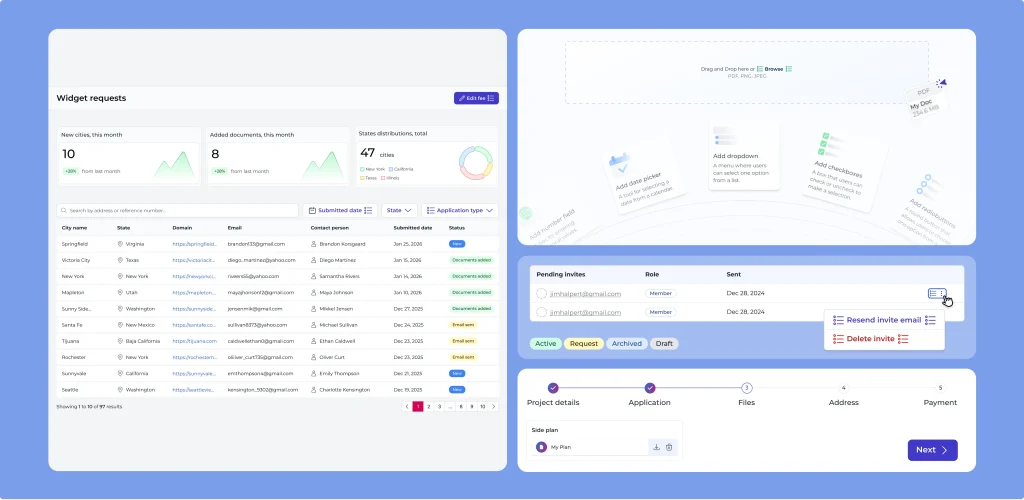
The rule we adopted at our agency is to build a design system for every new project; otherwise, complex applications can’t scale. The illustrative case is the client AirClub. This CRM platform included multiple user roles, scenarios, and states. Thus, maintaining design logic was essential. The system helped us to unify components, eliminate duplication, and reduce cognitive load for developers.
As a result, we saw a faster and more predictable development. The speed was increased by 33%, and the number of UI-related revisions dropped by nearly 50%.
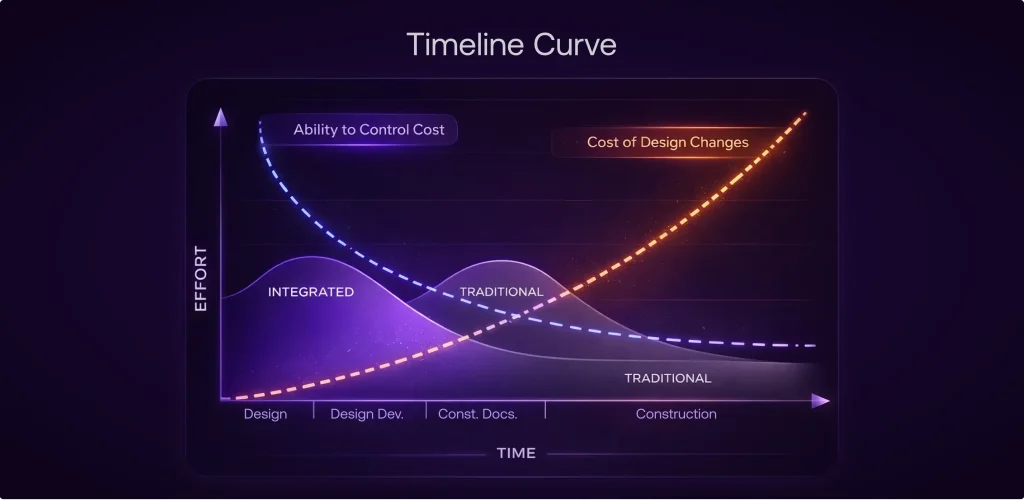
If you are building a poor design, you won’t notice that right from the beginning. But as the process continues, you will see hidden friction through rework, missed deadlines, and growing technical debt. When decisions are incomplete and rushed, they lead to unstable architecture and expensive changes.
When developers hit the ground running, it is already too late to introduce design modifications. At this stage, it is no longer abstract but translated into database structures, UI logic, and APIs. Even a minor aesthetic improvement can trigger a cascade of revisions and reworks.
Late designs require:
Therefore, it becomes quite visible when even the smallest tweak is introduced. You get timelines stretched, budgets grow, and delivery becomes unpredictable.
Rework happens very often when design and engineering teams are not aligned. When designers work in isolation, solutions might seem intuitive from a UX perspective. However, they can be unnecessarily complex or insufficient to implement.
This misalignment comes in various forms, such as designs that ignore technical constraints, interactions that require excessive conditional logic, or states that don’t connect to backend models.
In such cases, developers usually introduce workarounds, temporary fixes, or “just in case” remedies. Those solutions meet short-term goals, but they increase technical debt when the code becomes harder to maintain over time.
The cost of technical debt is cumulative. With every new “rushed fix”, you get a platform where every new feature takes longer to implement, and system stability gradually erodes.
Early product design is the best approach to follow if you want to stay on schedule and within budget. When interface and functionality ideas are discussed and set before development, there is less uncertainty, risks are exposed early, and rough sketches turn into clear systems. And designers and developers no longer walk in the dark.
During early design planning, teams align not only on what will be built but also on how complex it is going to be to implement. When user journeys are defined, edge cases are outlined, and system states are set, engineers choose appropriate architecture, tech stack, and instruments. That is why structured early-phase work, such as product discovery phase services, plays a crucial role in making timelines and budgets predictable.
When the discovery stage is being neglected, the whole design process is built on assumptions only. But later in development, they turn into dilemmas in the form of unexpected dependencies, missing scenarios, and limitations.
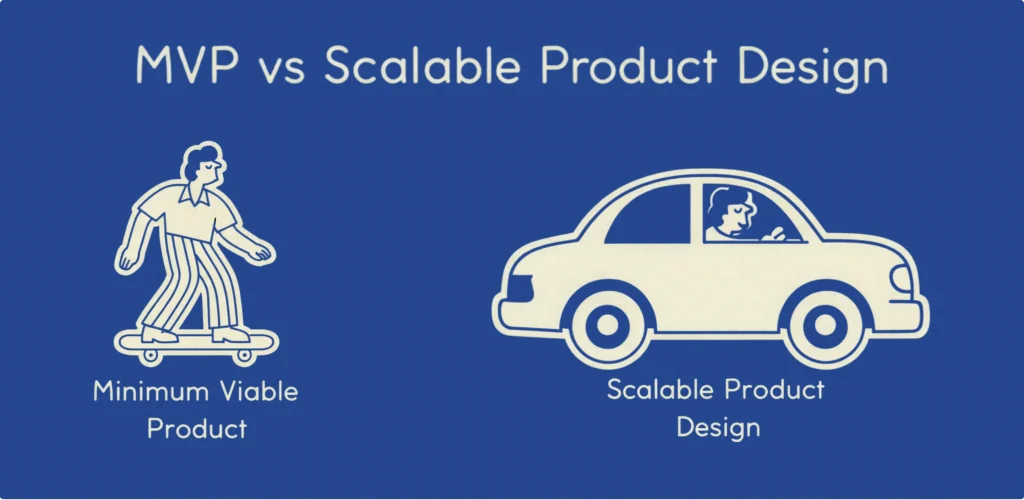
A common confusion revolves around designing a minimum viable product (MVP) and designing for scalability. In the case of MVP, the UI/UX part focuses on validating the hypothesis quickly, with speed as a priority. This approach is effective only when the design determines what is foundational and what is temporary.
If you treat MVP versions as final ones, you put yourself at risk. Your goal was to test fast and move on; thus, the platform wouldn’t stand serving many users. At some point, you would need to rebuild the core functions, and early savings would turn to costly remakes.
Scalable product design differs from MVP design with intentionality. Even if the product set is minimal, the whole structure is crafted with future growth in mind.
Product design and product development solutions define not only how a web app looks but also how it feels. User roles, scenarios, journeys, and scalability assumptions are directly linked with architectural requirements. When you make those decisions well-thought-out, the result is a clean and extensible architecture.
With every new user scenario, you get more architectural implications: linear flows allow for straightforward state management and predictable API connections, while branching scenarios require an additional logic layer and conditional rendering. That is why user scenario mapping at the beginning allows engineers to build a clear structure and product core.
For user roles, design decisions directly shape authorization and access logic. Web applications with single-role models have centralized permission handling, and multiple-role products require granular access control. When the number of roles is defined at the early stage, they are built at the architectural level, not scattered throughout the codebase.
Scalability characteristics are usually treated as something that is already built in. However, when you grow and plan to have dynamic dashboards, real-time updates, personalization, and multi-tenant scenarios, you need to have performance-focused architecture, isolation strategies, and many more. And if those scalability issues were not discussed upfront, you could end up with partial system rewrites.
That is why professional web application design services like ours treat design as a part of building the product architecture. UI/UX strategy is a blueprint that defines system boundaries, dependencies, and scalability paths.
Investing in design at the start of the project is the best practice to save product design and development costs. For many businesses, it might sound like an upfront expense. However, it serves as a cost-control layer that validates expensive decisions before they reach the development phase. This is why structured product design services are often viewed not as a cost, but as a safeguard for long-term development efficiency.
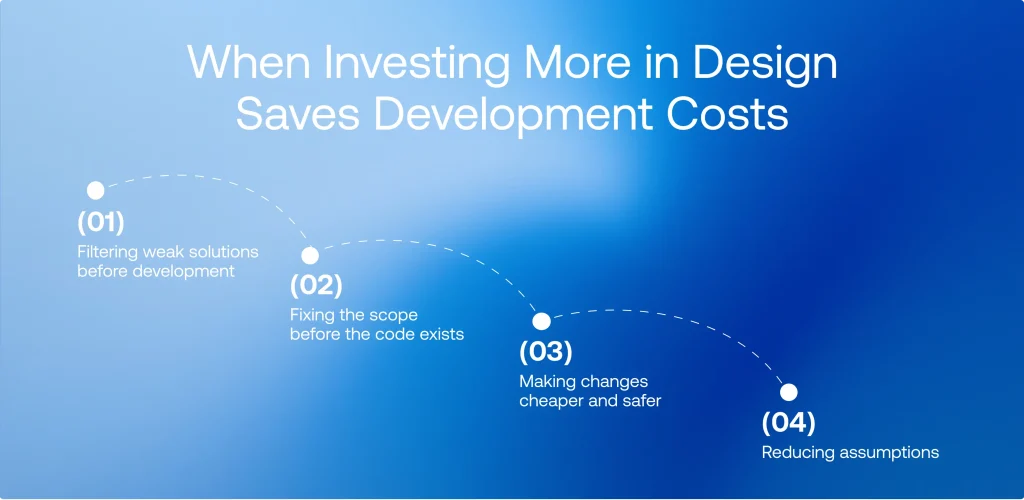
Here are the ways through which early design work reduces product creation expenses:
At UITOP, we have experienced that design iterations for complex B2B products can reduce R&D budgets by 25–35%. And there is a simple explanation for this: engineers receive already tested solutions against scenarios, logic, and user perception. This minimizes future rework and makes teams confident in moving fast.
It is common for teams to treat product design as an afterthought; however, it is one of the most effective tools for controlling budget and delivery timelines. UI/UX decisions determine scope clarity, system complexity, and the level of technical risk. When these factors are discussed and aligned in the beginning, there is no uncertainty going forward.
Strong product design strategy addresses business goals, user needs, and engineering constraints. This saves many teams from rework, big technical debt, and makes the whole process more predictable.
In this context, product design and development are procedures that complement each other. Design sets the boundaries within which development operates, and development in its turn validates UI/UX solutions. If you make them sync, projects will stay closer to deadlines and initial estimates.
Once you define business goals and target users, you can build your first sketches. Thus, you can uncover hidden requirements, technical constraints, and dependencies before they have an impact on the development.
Even simple web applications benefit from structured design. If you miss that step, your product won’t be able to grow, and even adding new features will cause many risks.
Clear design documentation sets a favorable atmosphere for collaboration between developers, designers, and stakeholders. It speeds up decision-making and minimizes subjective misinterpretations.
Based on design structure and architecture, you decide whether the product is easy to maintain, extend, and hand over to other team members.
Redesigns don’t relate only to the visual side. However, they often require changes to user flows, data structures, permissions, and system logic that are already written in the codebase.