
Development, Product, Startup • Jan 11, 2025
 How we use AI in our process Learn more
The digital product market is flourishing with new startup companies that promise to revolutionize the world and solve individual user needs. Offering a unique solution that has never existed or wasn't properly delivered is half of success. Another half goes to properly presenting it with the help of digital product design.
Effective and well-thought software design is not only about aesthetics. It is about creating an easy-to-navigate user interface (UI) and seamless user experience (UX). Thoroughly crafted design influences user retention, customer satisfaction, and product usability metrics.
However, early-stage development companies usually face many challenges, such as limited financing, tight deadlines, and rapid iteration cycles. Research shows that increasing the budget by 10% for UX improvement can lead to an 83% increase in conversion. Thus, when startups deprioritize UI/UX design creation, they risk failing to meet user needs.
So, how should startup product design be created? Let's discover the main principles and practices.
Digital product design creates functional, user-friendly, and aesthetically attractive experiences that satisfy user needs and meet business requirements. The design umbrella covers multiple categories: UI/UX design, user research, wireframing and prototyping, branding, testing, and refining.
Digital product design plays a decisive role in the startup ecosystem. By leveraging its methods and technologies, new businesses can test and validate ideas, reduce risks before the launch, and deliver the best user experience.
Focusing on the following design principles can create experiences that attract users and make them enjoy the product.

As you develop a product for users, it is crucial to learn about their needs deeply. That includes conducting user research, identifying user personas, and building journey maps. Although this costly procedure doesn't always fit startups' budgets, you can rely on lean research methods. Surveys and interviews can bring the same value for minimal investment.
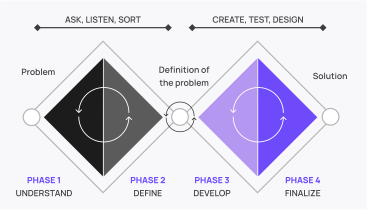
For developing businesses, their idea must pay off. But what sounds brilliant to you might not suit end-user needs, leading to resource waste. And this is where design sprints and raping prototyping chip in. Following this methodology, creating a minimum viable product (MVP), and validating the ideas before they reach realization help companies refine the results based on honest user feedback.
Even if you offer solutions to advanced issues, delivering them to users should be simple and easy to comprehend. Complex interfaces with a lot of data overwhelm viewers, while clean and structured screens encourage easy interaction. This is what Airbnb has done. They focused on a simple design with frictionless user experiences, allowing users to navigate the product effortlessly.
The best digital product design is the one that seamlessly fits into the overall business model, messaging, and branding. Thus, it is essential for startups to ensure consistency across all UI elements, typography, and color schemes. Cohesive design helps to create a strong brand identity, making your company recognizable in the market.
Product design for startups should be adaptive and flexible as company size and needs grow. Designers should create reusable UI elements and scalable design systems for businesses to expand without redesigning everything from scratch.
The digital product design process is built on these main pillars that guarantee to craft a design that is functional, attractive, and easy to navigate.
To make your product accessible to people with disabilities and stay compliant with Web Content Accessibility Guidelines (WCAG), you have to incorporate special technologies such as high color contrast, readable font sizes, and adaptability with assisting devices. This will improve your software reach and brand reputation.
Don't put testing at the final development stage. By implementing usability testing from the early stages, you can locate the issues before they become major bugs. Startups can benefit from inexpensive testing methods such as A/B testing, quick feedback loops, and guerilla testing.
Digital product design is powered by UI/UX tools that streamline the design process, transforming it into an easy space to create and collaborate. Here are some of the popular instruments and wireframes startup companies can benefit from:
To foster a seamless design creation process, all teams should collaborate and keep everyone in the loop. Developers, designers, and product managers should strive for open communication and shared workflows, ensuring that design solutions serve user and business needs.
In many cases, startup owners may rush the design process senselessly, negatively influencing the user's experience and overall product perception. In the section below, we gathered some main pitfalls that can cause significant difficulties in your product development and further release.

The following real-life examples prove that improving digital product design can solve low user retention and user satisfaction.
Travelers didn't always like the renowned worldwide homestay marketplace Airbnb. In the early development stage, company owners struggled with low user engagement, the route cause for which was poor image quality and some absence of images at all. But they redesigned the interface and invested in professional photography, so you won't even recognize whether you are on the vacation rental platform or Pinterest.

Juicero, a high-tech juice press, could have been destined for success if its developers tested the idea first. The brand has faced a wave of negative reviews stating that the device is useless and is not worth paying so much for. This can happen to a company when you don't conduct user testing and analyze product adoption.

https://platform.theverge.com/
Contributing to digital product UI/UX design from early development stages is essential if your goal is to build a functional and user-friendly platform. To do that, you need to put the customer at the center of every decision, be agile and flexible, build with consistency in mind, stay minimalistic, and deliver scalable design ideas.
If you are ready to put your product on another level, contact our agency, and we will work on solutions tailored to your needs!