Design, Product, Startup • Apr 07, 2025
 How we use AI in our process Learn more
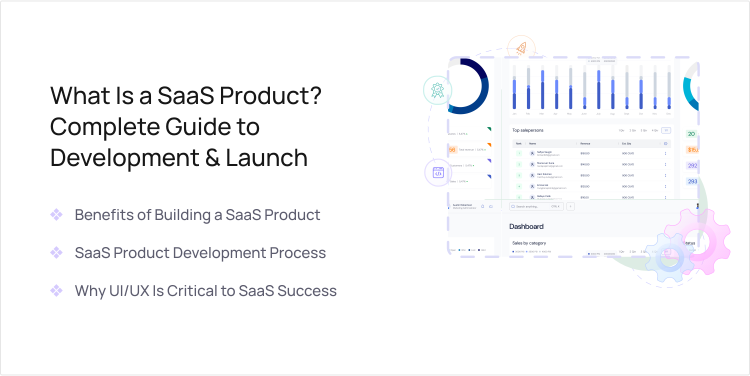
SaaS, or software as a service, is a cloud-delivered software model that users subscribe to and access online. End customers don't need to install any applications but just use the product through a web browser, while vendors have to manage the infrastructure, maintenance, security, and updates.
SaaS computing services are at the peak of their popularity, and you might already be using them every day, for instance, Notion, Slack, or Salesforce. The auto-renewal business model, ability to quickly iterate the product, and easy scalability make this product type a favorite among founders, investors, and clients.
In this guide, we will closely explore everything you need to know about SaaS: its benefits, full development cycle, and stages that are involved in creating a successful product that users trust and love.
Delivered by a provider through the cloud, a SaaS product allows users to access the software via the Internet. The customer creates an account, pays the subscription fee, and starts using the platform. The developer handles the operation, management, and maintenance of the system and infrastructure on which it exists.
Several SaaS product features differentiate it from other computing services. A cloud-based app is hosted on a remote server and managed by the creator. It is available for a recurring payment rather than a one-time license. The system allows clients to grow and scale easily based on their needs. It can also be accessed on various devices, from different locations, and simultaneously.
Well-known examples of SaaS products are Slack, used for collaboration and communication, Notion, suitable for project management and taking notes, and Figma, serving as a prototyping tool.
To better understand the difference between SaaS and on-premise software, let's look at this comparative table:
| Functionality | SaaS | On-Premise Software |
| Deployment | Hosted on the cloud by the creator | Installed by users on company servers |
| Responsibility for maintenance | Handled by the vendor | Handled by in-house IT specialists |
| Accessibility | From any device and location via the Internet | From the internal network |
| Cost model | Subscription-based | One-time license purchase and maintenance costs |
| Updates and security | Managed by the vendor | Managed by the internal IT team |
| Scalability level | Easily scalable | Requires updating infrastructure |

When you decide to build a SaaS product, you will see that this process is challenging yet rewarding, with multiple benefits. Here is why cloud-based systems are highly attractive models in today's digital economy:
The SaaS product lifecycle involves various stages and processes. However, with the right strategy, it is possible to go from an idea to a successful product launch. So, let's look at the two most critical phases in the cloud-based system development lifecycle.

Every project starts with brainstorming ideas. The teams decide on the niche, specific user problem, and general functionality. You might choose to go in a general direction and develop a SaaS product that will always be in demand, like a customer relationship management system or file management tool. Or, you could focus on developing a niche solution, such as software for legal practices or pet clinics.
Next comes competitor analysis. To enter the market, you need to build a top-notch product so that people choose you instead of other SaaS products. Analyze other platforms' functionality, their weaknesses, and what sets them apart.
To be sure the idea is in demand, many developers adopt the Minimum Viable Product (MVP) approach. This relates to creating a basic application with core functions and testing its adoption and performance level.
Once you confirm that your idea solves real users' pains, you can proceed to build a product roadmap. It includes the identification of the core features and nice-to-have extras for advanced user experience and engagement.
Deciding on the business model is also essential. Even though SaaS products are offered on a subscription basis, you can still select different models: freemium, with enterprise deals, or tiered subscription pricing.
At the end of this phase comes technical planning. It sets the foundation for the whole product and its future scalability. Thus, it is essential to choose the right stack — databases, front-end and back-end frameworks, and hosting technologies — that align with your goals, user traffic, and future growth.
SaaS product design is crucial to the platform's overall success. Providing advanced functionality is not enough to impress modern users. It is personalization and easy navigation that make people stay with your company. If you take these design aspects into account, you are destined for success:

Creating a SaaS product requires far more than just writing code. It is a multi-stage journey of building a scalable, top-performing, and secure platform. These SaaS product development phases highlight the critical processes involved in creating a SaaS product.
The goal of the MVP is to focus on core functionality that addresses the main user challenge. You have to build a lean platform with enough features to test their effectiveness and learn what people think about the idea.
An Agile framework will be the most suitable here. It instructs teams to work in short sprints, deliver features incrementally, and apply changes based on gathered feedback and real data. It reduces the risk of overbuilding and validates every step with actual user pain.
Modern SaaS solutions never work on their own but require integration with third parties like these:
Target to enable a robust API architecture to be able to connect with more services as the demand grows.
Infrastructure is a key for SaaS applications. Consider covering these aspects and incorporating these solutions when building the product:
When testing SaaS products, providers must strike a balance between manual and automated testing methods. Apply automation for repetitive tasks like unit and regression testing, and use manual resources for usability checks and exploratory testing.
As cloud-based computing services are expected to scale and withstand large amounts of operations and active users, it is critical to check their performance. Conduct stress testing, load testing, and scalability checks to see if downtime or latency takes place.
Security is equally important. Apply penetration testing and vulnerability scans to detect gaps where easy access to data or other weaknesses are hiding.
SaaS product launch is not the finish. It is a critical stage where a strategic view and a go-to-market approach are needed. The process starts with a beta launch, the purpose of which is to test the product with early users in a controlled environment. This is when you can gather end customer feedback and validate its value.
Insights gathered during the beta launch guide refinements and final enhancements to the product. Once applied, you can be sure the platform delivers the expected results from the first day.
Product adoption also depends on the marketing efforts. This is why it is so important to optimize software for search engines, launch PPC campaigns, advertise yourself on other platforms, and engage in public relations.
Following the market launch, the main objective becomes shifting from development to scaling. And again, continuous user feedback will serve you as a roadmap on what to change. Allow people to share their opinions through surveys, in-app feedback, and support tickets.
Another way to learn about software performance is from analytics. See what functionality is used the most and what is left behind to improve, expand, or retire.
To achieve long-term success, strong customer support and retention are vital. Guide your customers at every stage through helpful documentation, a responsive support team, and proactive communication.
And don't forget about your team, as once you grow in infrastructure, you also need more human talent.
UI/UX design decides product success in many aspects. From the first seconds of interacting with the platform, users already determine if they like it or not.
Secondly, well-organized user flows help customers perform their tasks efficiently and quickly, reducing churn rates and supporting long-term engagement. Additionally, the clearer your design is, the fewer support tickets you receive, which is a win-win situation.
If you deliver a polished product interface, you already stand out on the market. And finally, if you create a design with scalability in mind, you can grow together with your clients' demands.
To illustrate the importance of UI/UX design, here are examples of how our clients turned to us to enhance their user experience — and how it transformed their products.


SaaS product creation is a long journey that goes through several steps: ideation, MVP creation and testing, secure DevOps, iterative design, and data-supported launch. A successful platform release depends on a clear roadmap, a user-centered mindset, UI/UX design prioritization, and continuous improvement.
If you need expert guidance for turning your SaaS product design idea into reality, don't hesitate to shoot us a message!