How we use AI in our process

Startup, Development
/
Jul 10, 2026

Some startup founders and product teams treat the initial launch like a high-pressure launch process. Driven by the pressure to capture early market signals and secure venture funding, they often push code to production using shortcuts. This usually leaves them with a fragile system dependent on temporary scripts, unindexed database tables, and hardcoded logic. Sure, that setup might survive a dozen friendly beta testers, but it encounters limitations the second you try to onboard your first enterprise accounts.
Building a software asset that lasts often requires a different approach to early product delivery. Launching a minimal version doesn't mean you have to write short-term code that needs a total rewrite every six months. Smart engineering teams know how to balance quick feature validation with clean, structured code. When you are figuring out how to build a SaaS MVP, you should make sure your early design choices and system boundaries are set up from day one to let the product evolve.
In cloud product design, a minimum viable product (MVP) is often misunderstood as simply the cheapest, most stripped-down version of an idea. This mindset leads to incomplete, confusing interfaces that frustrate customers and hand you unreliable usage data. A real, high-value launch version is a deliberately planned tool built to test specific user habits and market opportunities with minimal engineering waste.

A key goal of your initial release is to test whether your application solves a painful, high-priority operational challenge for your target audience. Rather than trying to ship a massive, multi-featured platform all at once, focus primarily on the most critical user journey.
Validating this primary workflow tells you if your product addresses a real market need. By keeping the initial scope tightly focused on this core workflow, you gather accurate usage metrics while keeping your system lean and highly adaptable.
Some early-stage cloud applications fail during initial scaling not only because of market demand issues, but because the underlying system struggles under real-world traffic. Rushing an MVP out the door with messy shortcuts builds up a significant hidden code debt that eventually slows development speed.

Within a year of launch, these shortcuts turn into a massive system blockage. Minor feature additions start taking weeks of messy refactoring, and bugs can accumulate faster than the team can resolve them. Your team gets trapped in a reactive loop of constant reactive fixes, destroying your deployment speed and giving more stable competitors an easy win.
Succeeding in competitive cloud markets requires a disciplined approach to project management that balances deployment speed with long-term software agility. Product managers must separate secondary, low-impact visual elements from core technical systems that are expensive to refactor later. Such a separation ensures your team can ship features quickly without locking itself into technical constraints that block future business growth.

Staying agile requires following a clear product roadmap that aligns your immediate features with future expansion goals. Developers should use modular, well-documented frameworks that let independent services grow on their own. This keeps your early versions flexible, ensuring you can scale your infrastructure smoothly as your active user base grows.
Isolating the exact boundaries of an early-stage app requires a strict focus on user efficiency. Product leads often make the mistake of overloading their launch roadmap with secondary features, hoping to please every potential customer segment at once. This scope creep inflates your development bills, delays your launch timeline, and confuses early users with an over-complicated layout.
To establish a clear, realistic development scope, teams should identify the single user journey that delivers the highest immediate business value. Features outside this primary path should usually be simplified or moved to a future update.
Keeping your initial product footprint lean ensures your developers spend their valuable hours perfecting core application systems. This disciplined focus produces a fast, reliable application that early customers can easily adopt and understand.


Explore our MVP development services
See what we offer and how our MVP development services can help bring your SaaS product to life.
Learn moreRunning a disciplined product discovery process is a vital requirement for protecting the engineering budget. This phase helps your team pressure-test behavioral assumptions through competitive research, user interviews, and data mapping before writing production code. Gathering real market insights beforehand protects your organization from wasting valuable resources on features that customers do not actually care about.
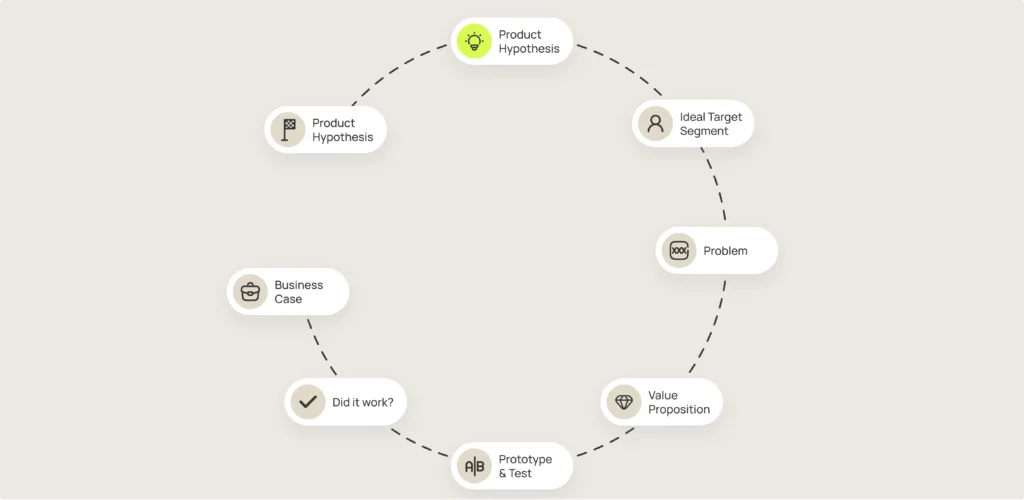
Discovery ensures that your product roadmap is shaped by verified customer metrics rather than unverified internal opinions. It provides your engineering leads with clear user journey mappings, structured data models, and explicit system requirements before development begins. This preparation minimizes launch risk, prevents late design changes, and ensures every early sprint moves you closer to genuine product-market fit.
A common mistake among startup teams is assuming that early launch versions can afford to have an unclear or poorly structured user interface. They believe early adopters will happily tolerate broken navigation patterns and messy layouts as long as the underlying technology functions. This logic overlooks a critical fact: if a customer cannot figure out how to use a feature, the feature is effectively broken for them.
A frustrating, unoptimized user interface directly skews your product testing metrics. When customers drop out of an onboarding sequence, it is often due to ineffective layout design and visual clutter rather than a lack of interest in the feature itself.
An MVP demands a clean, highly intuitive design that removes friction from your primary workflow. Prioritizing layout clarity ensures that your usage metrics reflect genuine market interest, giving you a clean dataset to guide your next moves.
Building an agile, highly dependable cloud platform requires making smart architectural choices from the very first development sprint. Achieving a truly scalable MVP development process depends on how cleanly your engineering team separates frontend interface presentation layers from backend calculation engines and data tables.
Enforcing this modular codebase structure prevents unexpected performance bugs as you scale up your operations. Using clear service boundaries ensures that developers can easily upgrade independent functional modules without risking platform-wide downtime or breaking adjacent features. This engineering flexibility keeps your application fast, adaptable, and better prepared for rapid enterprise scaling.
Every early-stage software platform accumulates some technical debt during its race to market, but managing this debt requires clear boundary rules. Accepting temporary solutions in non-critical areas, such as basic manual account onboarding tools or simple static data charts, is fine for accelerating a launch.
However, allowing debt to compromise core technical foundations like database tables, user security setups, or multi-role permission paths creates major security and stability risks.
High-risk shortcuts can easily freeze your engineering velocity, turning future platform updates into slow, expensive coding tasks. To protect your development momentum, your software architects must continuously balance short-term feature goals with long-term code health. Confining code debt to non-essential modules allows you to preserve fast iteration speeds while keeping future development costs low and predictable.
The real difference between a successful software startup and a failed project comes down to how leadership views the launch day. Struggling teams treat the initial release like the finish line, tossing code together blindly just to hit a random calendar date.

Growth-focused companies, on the other hand, see the first launch as just the opening step in a long-term plan, built to evolve into an enterprise-grade platform.
Planning for long-term scalability from day one ensures that every early data choice, interface component, and endpoint structure supports future business expansion. This approach protects your development roadmap from messy refactoring cycles when your active user base begins to scale.
Building your software as an evolving system is one of the most reliable ways to transform early customer interest into sustained market growth.
As your product achieves early market success, your software infrastructure faces a series of complex operational changes. Onboarding enterprise clients introduces new user privileges, automated workflow needs, large data storage challenges, and real-time data sync dependencies. These evolving needs require making ongoing SaaS architecture decisions to keep platform performance fast and dependable under heavy loads.
To prevent database slowdowns during peak hours, your engineering teams must transition toward distributed multi-tenant storage models, automated server resource scaling, and asynchronous processing queues. This technical evolution ensures that large report calculations or complex third-party data syncs never slow down frontend performance. Upgrading your application framework systematically preserves rapid feature delivery while keeping your infrastructure resilient as you scale up.
Sorting out your data and building modular frontend pieces early means your tech team can scale the platform without running into constant system blockages. Laying a solid foundation ensures your app easily handles sudden business growth and heavy data streams with minimal interface lag.
A clear example of this is seen in our work with LambentLogic, where we applied these exact principles to build a scalable healthcare distribution platform.
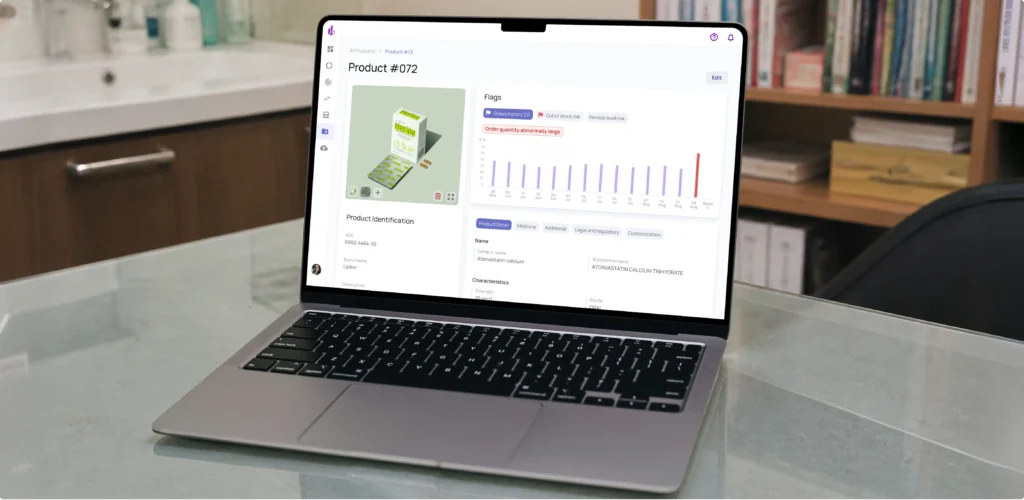
During the early discovery phase, UITOP defined a scalable React architecture and an optimized database setup for LambentLogic. The goal was simple: make sure the code wouldn't become difficult to maintain later. We built a lightweight component UI kit in Figma using precise auto-layouts, then handed it to our developers to create a standardized frontend. This kept the code clean and prevented layout glitches down the line.
We also built fast, lightweight API connections to link warehouse inventory logs directly to the main distributor dashboard without any lag. On the frontend, our team used simple state management to ensure pages refresh instantly, even when a user is building a large order with dozens of different items.
To protect sensitive healthcare client profiles and shipment history, we implemented a reliable role-based access control system across different user permission levels. Finally, we set up automated deployment tracks so the distribution facilities receive stable software updates quietly in the background as their stock volume grows.
After implementation, the client reported the following improvements:
Succeeding in fast-moving software markets means moving away from traditional, assembly-line project handoffs. When designers build visual concepts in isolation, they often produce complex visual ideas that are incredibly slow or expensive to code under tight deadlines. This disconnect can lead to revision loops, missed launch dates, and budget waste.
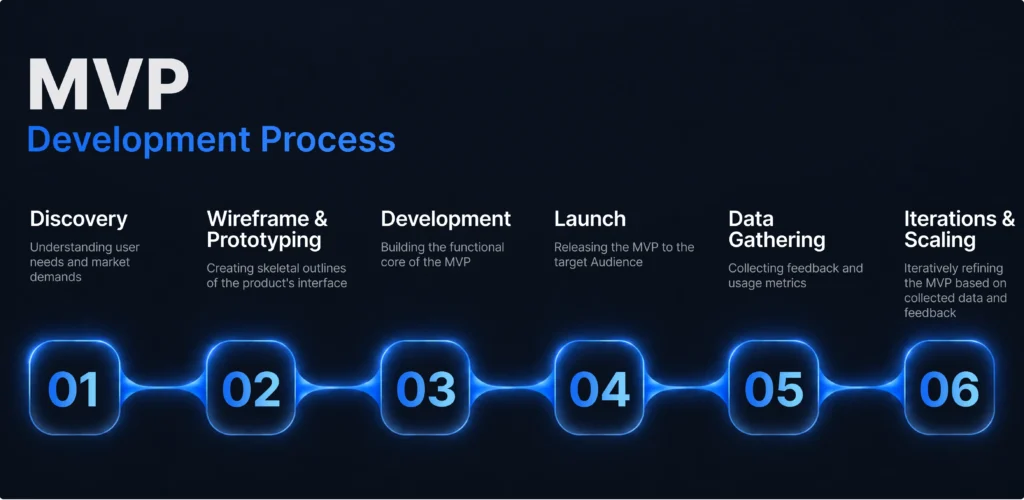
To fix this, modern startups choose a unified, UX-first product development approach. Having your visual designers, system architects, and software engineers collaborate from day one ensures that every interface concept is validated for technical feasibility early on.
Our teams use shared component libraries, run regular design-dev code reviews, and sync daily to ensure frontend layouts match your actual database constraints. This side-by-side teamwork reduces unexpected rework and protects your project budget.
Let’s build your SaaS product
Need a design partner who understands startup challenges and helps turn ideas into scalable solutions?
Book a callPreparing a new platform for future enterprise growth does not require building massive, overly engineered cloud networks before you even sign your first customer. It just demands a disciplined focus on modular code, clear documentation, and smart feature priorities.
A successful cloud platform requires a smart balance between launch speed, backend stability, and clean usability. Your MVP should work as an agile tool built to gather clean market feedback while laying a solid foundation for future business growth. Prioritizing modular code patterns and responsive screen speeds from day one protects your application from getting stuck in technical debt later.
If your startup organization is currently struggling with slow feature updates, rising software debt, or communication gaps between design and development teams, modernizing your process framework may be the right next step.
It’s the initial launch version of a cloud application built with a focused set of core features. It is designed to validate your main business assumptions and user workflows with minimal resource waste.
A launch version should focus on the primary user journey needed to solve your customer’s most important problem. Secondary tools should be simplified or postponed to save your development runway.
Yes. Building a scalable system does not require expensive infrastructure early on. It means setting up clean database models, decoupled service boundaries, and modular component structures that can expand smoothly later.
Keep your core architectural structures, such as database schemas, user privileges, and API endpoints, clean and modular. Limit temporary shortcuts exclusively to minor, non-critical front-end features.
Once early customers confirm your product’s core value, your engineering team can safely scale up the infrastructure, expand automation features, connect advanced integrations, and optimize performance for larger market distribution.