How we use AI in our process
 All-in-one Logistics & Warehouse Software LogiCore

LogiCore is an advanced logistics and warehouse SaaS built to manage inventory, shipments, and warehouse operations within a single system.

The client wanted one powerful system to connect their entire warehouse, inventory, and shipping workflow. They searched the market for a ready-made tool, but existing options were either too weak, too complicated, or didn't fit their real-world processes. Running a multi-million dollar logistics business across 3 or 4 different programs created massive data gaps, delayed updates, and forced managers to make major decisions blindly.
The client decided to build their own custom platform from scratch with us. They needed to stop the constant manual typing mistakes, fix sudden stock shortages, and connect the warehouse floor with the office. They wanted a clean, flexible system that could grow with the business without forcing them to pay for expensive software workarounds.
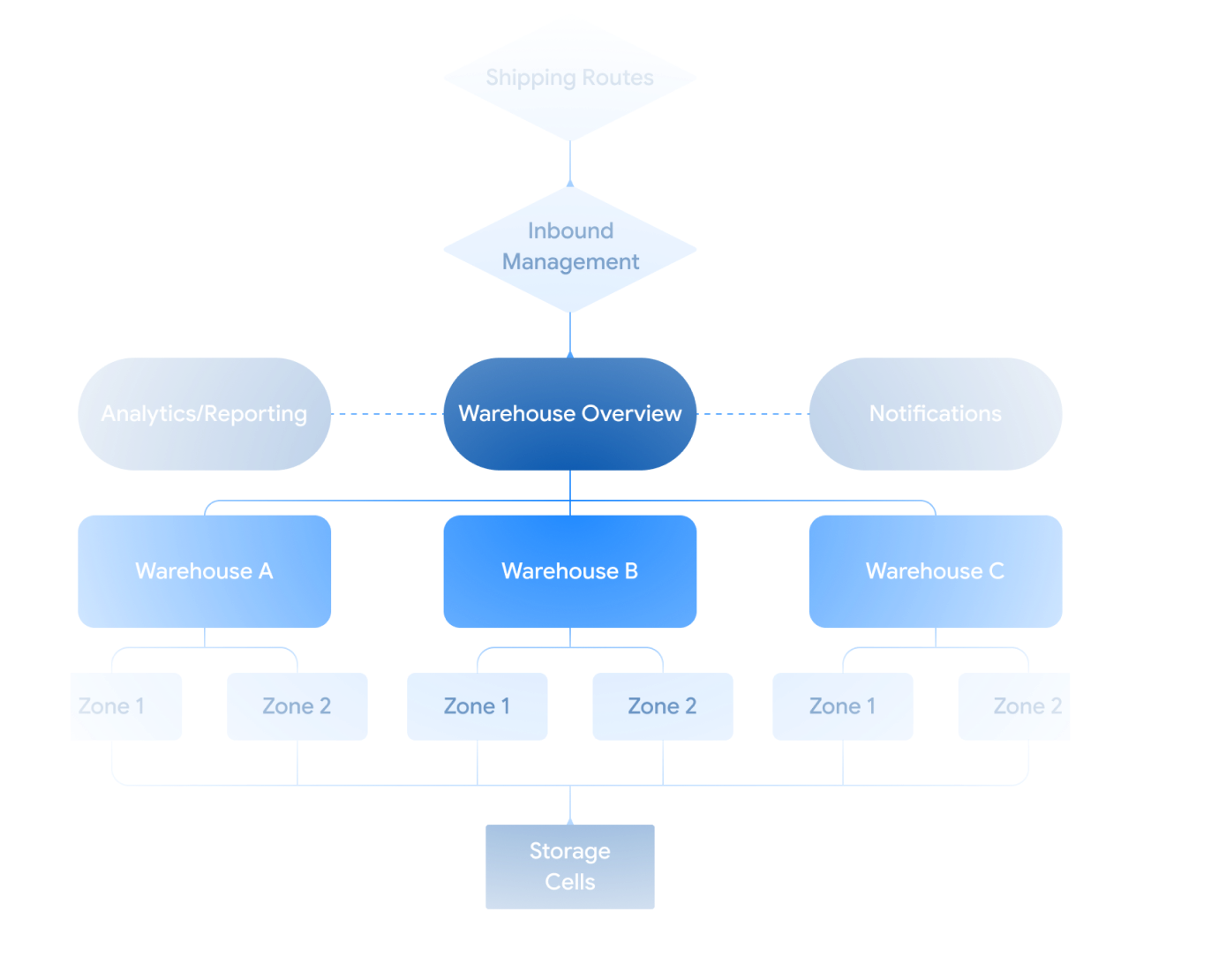
We built an enterprise-grade software system that connects all shipment tracking and warehouse operations in one place. By engineering the entire platform and its backend architecture from scratch, we gave LogiCore users a unified ecosystem. Now, every regional warehouse, specific storage shelf, active transit truck, and business metric work together seamlessly in real time.
The main office and the warehouse floor now operate using the exact same live data, rather than separate, disconnected tools. Managers can see transit delays and stock shortages instantly, allowing them to fix problems before they cost money. This deep system integration cut out manual typing errors, organized inventory allocation, and doubled the speed of daily shipping decisions.

Our Team
We started with product design, where we mapped out UX flows and interfaces in detail, transforming chaotic data about shelves, products, and deliveries into simple and intuitive screens. At the same time, project management stepped in to structure all stages of the work, establish rapid development cycles, and ensure that new system modules were launched on time without disrupting the warehouse’s daily operations.
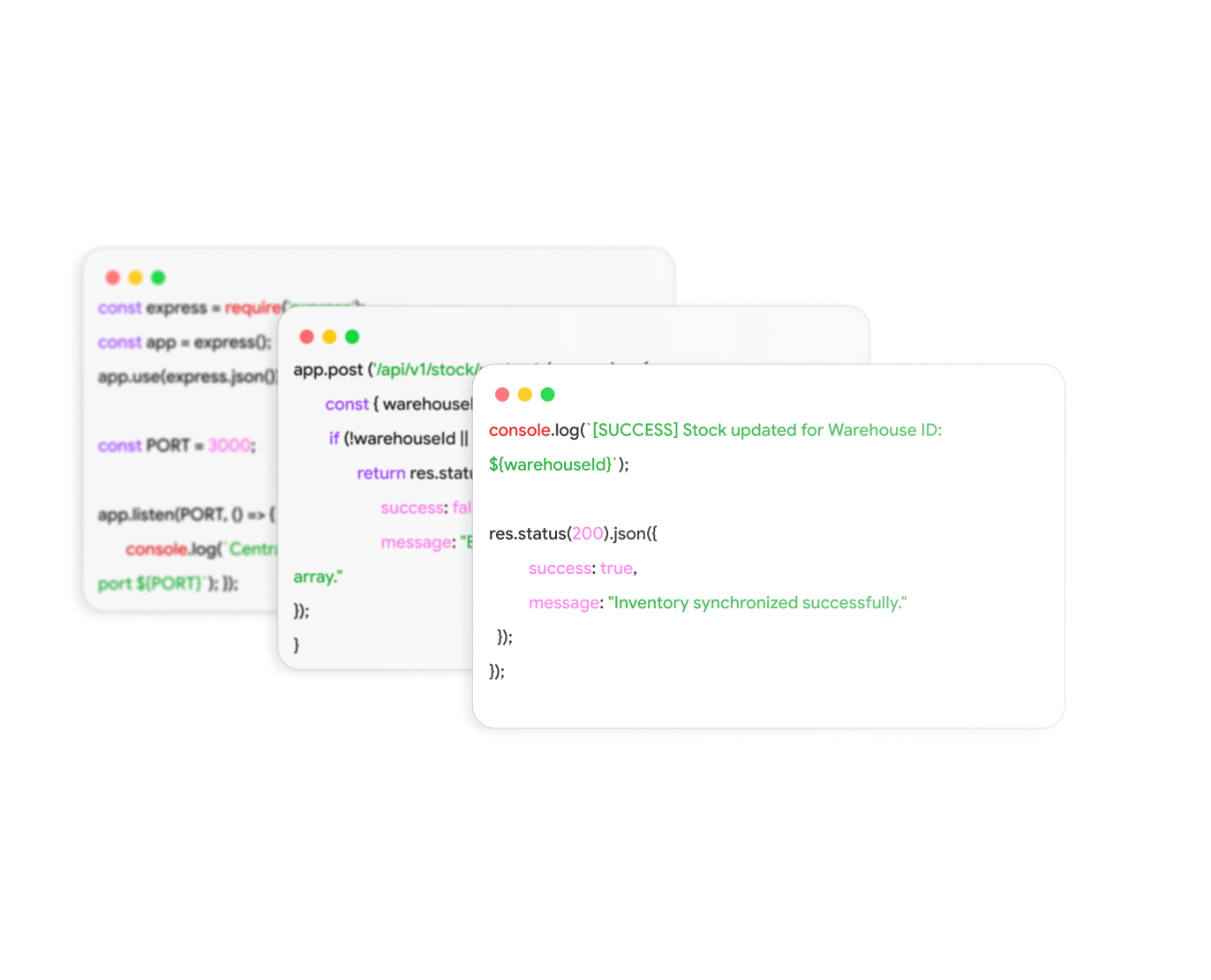
Then, the development team built a solid technical foundation (backend) from scratch, integrating package tracking, the warehouse map, and inventory synchronization into a single cohesive system. In the final stage, the testing team conducted a series of stress tests under heavy loads, checking every detail for speed and accuracy to ensure the platform’s absolute stability during real-world peak logistics workloads.
Project Brief
This was the full-cycle development of a complex enterprise software system built completely from scratch. We designed and engineered the entire system logic and user interface from the ground up to fix a major industry issue: warehouse staff and managers usually get lost in confusing, messy platforms, losing track of stock and making mistakes during high-stress shifts. Our goal was to build a highly efficient system that reduced costly human errors, speeds up daily operations, and gives the business full control over its entire supply chain.

Shipment Monitoring Dashboard
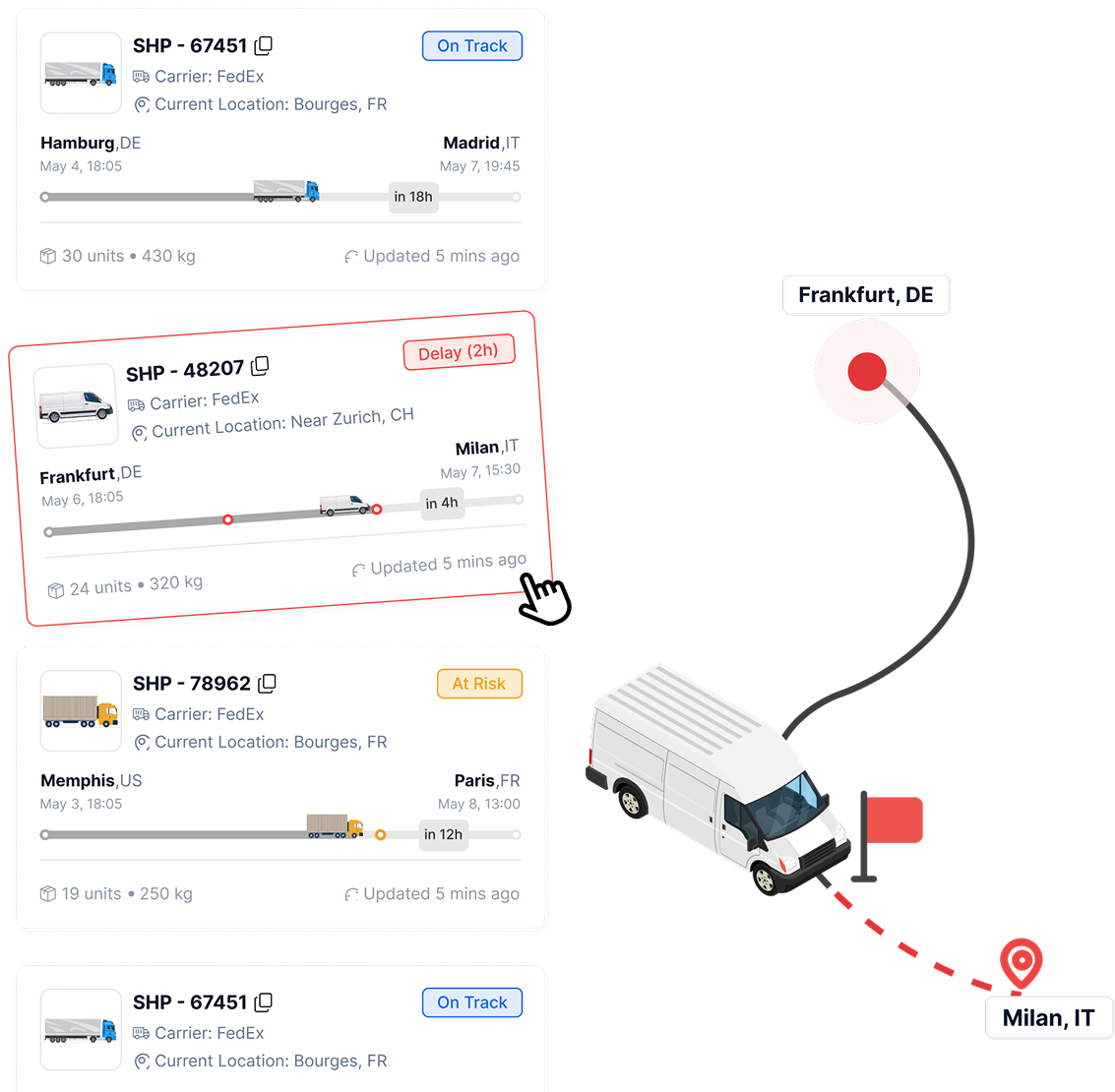
To ensure high performance, the UITOP team built the shipment table using TanStack Table (React Table v8) with server-side pagination and row virtualization. This architecture keeps the DOM lightweight and ensures the UI remains fast and responsive, even when rendering thousands of live shipment records.
For real-time data accuracy, status badges and ETA drift indicators are managed via Zustand store polling. The system periodically fetches fresh data from the REST API in the background. This ensures that timestamps like “Last Updated” always reflect the latest carrier updates instead of cached values.

Live Freight Tracker
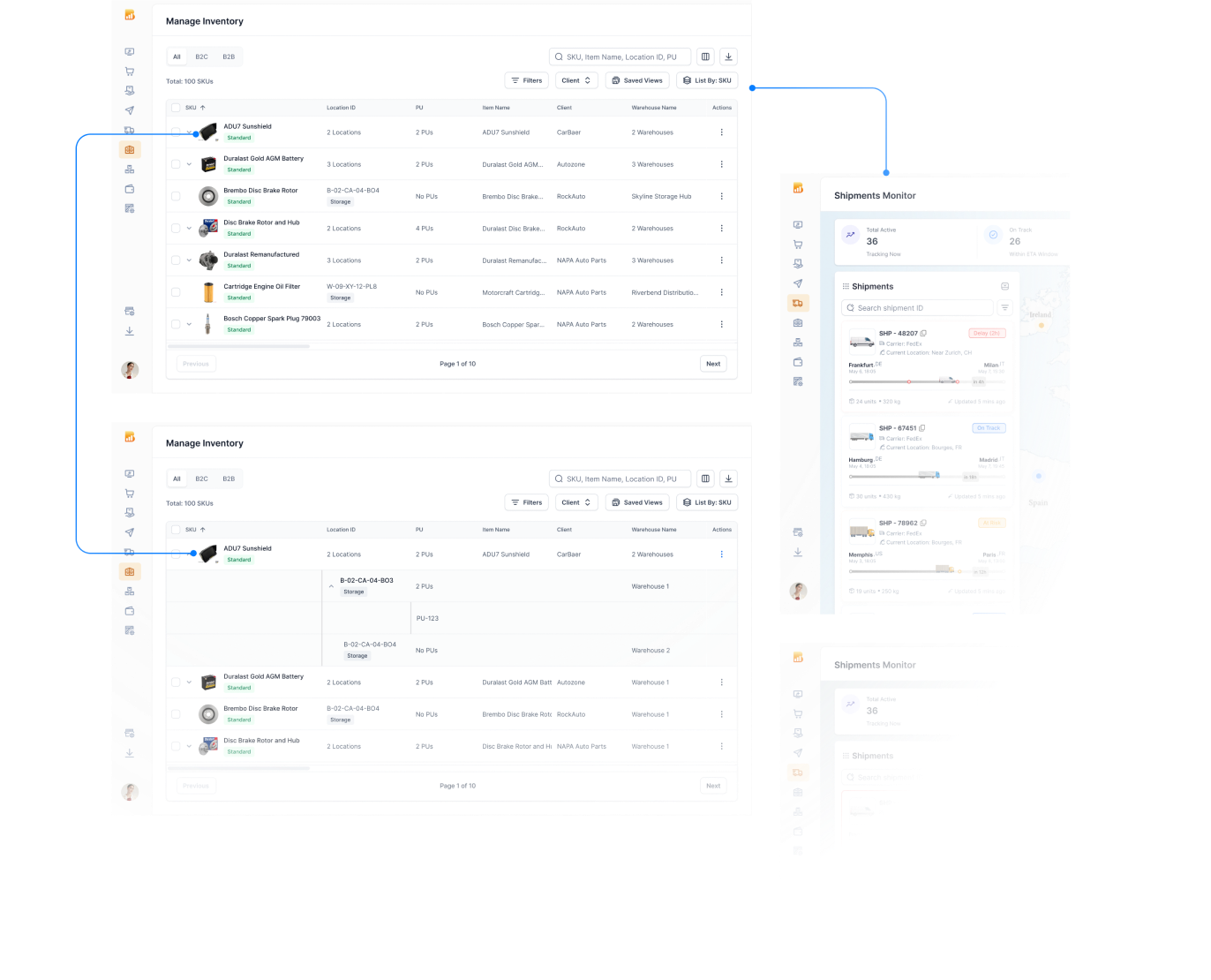
To optimize for performance and handle heavy data without cluttering the screen, we built the expandable location tree using TanStack Table’s row expansion. To keep the initial page load fast, UITOP used lazy loading: the system only fetches sub-level data (facility → row → rack → shelf) when a user actually clicks to expand a row.
To save clicks, the UI dynamically switches between an expandable tree and a simple direct address. This is handled on the backend via a Prisma ORM query that counts the locations per item and tells the frontend exactly when to hide the dropdown.

Integrated Warehouse Management
For real-time KPI metrics, we run PostgreSQL window functions to calculate week-over-week changes directly inside the database. Sending pre-aggregated data through the API cuts out heavy frontend calculations and keeps the app fast.
The order status bar chart is built with Recharts. We fetch the data, store it in Zustand, and format it into a clean structure. This setup makes the chart component completely reusable, so users can instantly regroup the data by client, warehouse, or date without hitting the server again.

Centralized SKU Management
To keep the platform fast, the inventory table uses TanStack Table’s row expansion API for lazy loading. When a user expands a multi-location SKU, the system triggers a scoped REST API call to fetch only the child records for that specific item. This keeps the initial page payload capped at a flat 100 rows, no matter how deep the total data goes.
For B2B/B2C segmentation and multi-dimensional filtering (by Client, Warehouse, or SKU), the UITOP team used Prisma ORM dynamic where clauses. This approach avoids vulnerable raw SQL queries while giving the system the flexibility to handle any combination of user filters instantly.

Similar cases


Technology
The interface matches well with the development frameworks. This ensures that the experience is easy for users.
Front-End


Back-End


Problem solving
Architecture
Design
Development
Quality Assurance