How we use AI in our process

Design, Product
/
May 14, 2026
The software-as-a-service (SaaS) sector is often associated with marketing tools or collaboration platforms. However, there is a separate, critically important category of products known as operational software.
These systems, which include software for order management, warehouse management, procurement, and supply order management, form the “nervous system” of a business.
Unlike standard SaaS solutions, where the focus is on user engagement and interface flexibility, the development of operational systems requires uncompromising precision, stability, and deep integration with physical business processes.
This article analyzes the fundamental differences in approaches to the design, development, and implementation of such systems.
Start discovery
Want product design that aligns user experience with your long-term SaaS strategy?
Contact usAn understanding of operational software begins with its role in the value chain. While standard SaaS products, such as CRM or marketing automation tools, focus on managing data about potential customers and sales funnels, operational systems manage physical assets, inventory, and logistics flows.
For an order management system or warehouse management system, what matters most is data accuracy, which directly impacts the fulfillment of commitments to the customer. The main challenge with operational systems lies in their domain-specific nature.
While an error in CRM may result in an incorrect lead status, an error in WMS or OMS can lead to the shipment of the wrong product, double inventory write-offs, or the shutdown of an entire distribution center. According to research, siloed systems and a lack of data integrity are the cause of operational problems in 46% of businesses. This creates a demand for architecture that minimizes manual data entry and maximizes automation through integrations.
Another key difference lies in the approach to scaling. Standard SaaS solutions often scale by increasing the number of users, whereas operational software must be able to handle extreme workloads during peak periods (such as seasonal spikes in orders), when transaction volumes increase tenfold, without compromising data integrity.
| Characteristic | Typical SaaS (CRM/Marketing) | Operational software (OMS/WMS) |
| Primary goal | Flexibility and engagement | Accuracy and reliability |
| Consequences of errors | Low team productivity | Supply chain disruptions |
| Data complexity | Medium (textual information) | High (real-time inventory status) |
| Development focus | UX/UI and iteration speed | Data architecture and stability |
The development of operational systems requires a shift from a “rapid iteration” model to engineering maturity. Standard approaches focused on templates and rapid MVP launches often prove unsuitable for complex business logic, where every transaction must be legally and financially verified.
Modern custom SaaS design and development of such systems is based on several critical principles:
Integration becomes the foundation of the product. For example, accounts payable (AP) automation systems, such as Ramp or Stampli, integrate directly with QuickBooks or other ERPs to ensure real-time synchronization.
This eliminates up to 80% of manual work but requires developers to have a deep understanding of data exchange and financial logic.
For operational software, data accuracy is the foundation of business viability.
Discrepancies between data recorded in the system and actual stock levels (the so-called “inventory gap”) lead to customer dissatisfaction, excessive shipping costs, and lost sales.
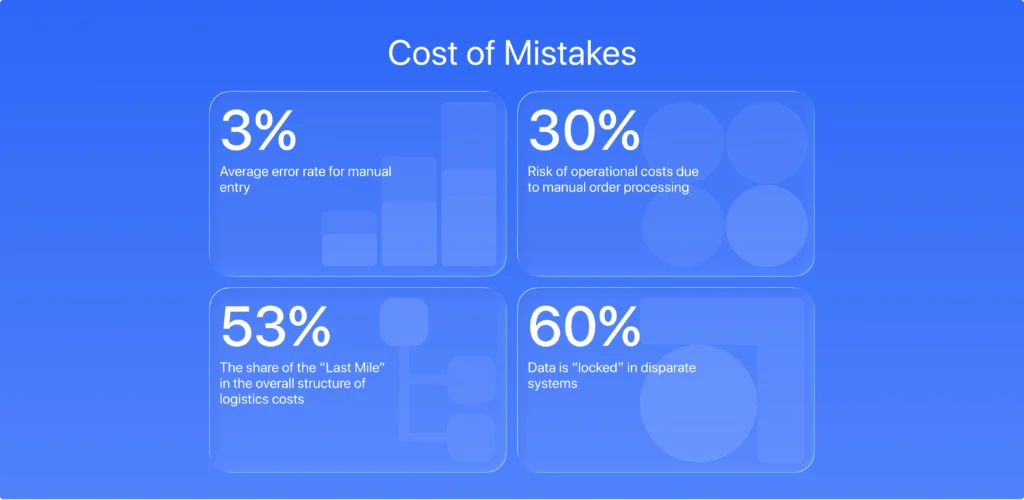
The problem of data integrity often arises from the use of siloed systems, where information about customers, orders, and inventory is stored in separate databases that do not communicate with one another. This forces staff to manually transfer data, resulting in an average error rate of 3%, which, on the scale of large operations, leads to critical financial losses.
The efficiency of modern operational processes directly depends on a business’s ability to overcome typical systemic challenges through technology. In particular, manual order processing remains a significant burden, as it drives a 30% increase in operational costs, making the implementation of automated OMS systems a critical step for maintaining profitability.
At the same time, the fragmentation of internal systems means that 60% of an organization’s data remains effectively locked away and inaccessible for analysis, necessitating a shift to a centralized integration architecture. The domain complexity of logistics chains is most acutely felt at the “last mile” stage, which accounts for as much as 53% of all logistics costs, and it is here that route optimization through modern OMS and WMS becomes a key tool for improving the company’s overall profitability.
Addressing these challenges requires the implementation of mechanisms for automatically checking and validating input data at every stage.
The architecture of the operational system software must also be designed with a focus on modularity and scalability and a vertical software development approach overall. Unlike the monolithic systems, modern operational solutions use an integration-first approach. This means that the system is built as a central hub capable of connecting to any external data sources: from spreadsheets and marketplaces to complex ERP systems.
Critical aspects of operational system architecture include:
An order management system that can’t “see” inventory levels or transfer data to accounting is ineffective. The importance of deep integration is best demonstrated by the example of accounting systems.
Accounts payable automation software must synchronize not only total amounts but also general ledger (GL) accounts, vendor lists, and open purchase orders (POs) every few minutes. This ensures a so-called “single source of truth,” where the financial manager always sees an up-to-date picture of liquidity.
Integration with banking systems and payment gateways (PayPal, Square, Stripe) automates transaction reconciliation, minimizing the human factor.
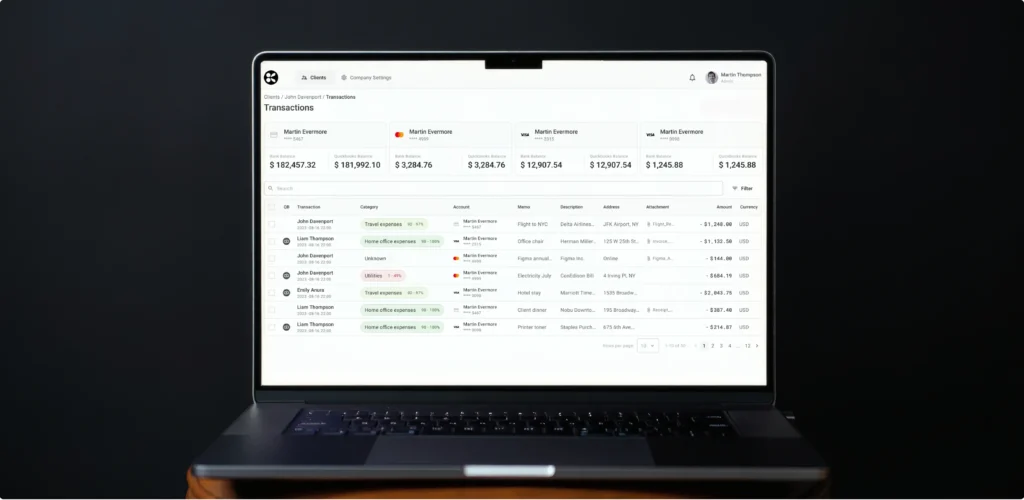
A strong example of this approach is UITOP’s work on Pacioli. From the very beginning, the product was designed around deep integration with QuickBooks.
We built Pacioli as a seamless extension of QuickBooks. We developed a smart integration layer that allows data to move automatically between systems with no manual effort. Auto-mapping tools were introduced to recognize transactions and assign them to the correct categories.
Our developers also ensured a simple setup process that connects accounts in just a few clicks. By making this connection the heart of the app, we ensured the tool was useful and ready to work immediately.
Measurable results:
This case clearly shows that in operational systems, integrations can be the core that connects data, processes, and decisions into a single, working ecosystem.
Operational systems often run 24/7, and any downtime may cost thousands of dollars per minute. Therefore, stability and reliability are also priorities during development. This requires the use of technologies capable of handling large volumes of data and simultaneous requests from hundreds or thousands of users.
Achieving high reliability involves:
The speed of the interface and the real-time accuracy of data directly impact the productivity of warehouse inventory control software.
In a warehouse management software solution, a delay in updating item status, even by a few seconds, can result in two order pickers attempting to pick the very same last item.
Real-time implementation requires:
The design of systems differs significantly from that of consumer applications. Here, “aesthetics” takes a back seat to “efficiency.” The primary goal of UX for operational systems is to reduce errors, minimize cognitive load, and speed up the execution of repetitive tasks.

Key design principles for operational systems:
The choice of infrastructure depends on the scale of the business and security requirements. Cloud-based WMS and OMS solutions are becoming dominant due to their ability to scale quickly.
However, for companies with critical data control requirements or those operating in areas with unstable internet connectivity, on-premise systems remain a viable option.
| Deployment model | Pros | Cons |
| Cloud SaaS | Quick setup, automatic updates, low barrier to entry | Dependence on the internet service provider and internet connection |
| On-Premise | Full control, offline operation, customization for legacy systems | High capital costs, domain complexity of updates |
| Hybrid | Flexibility, combining stability with cloud capabilities | Architectural and maintenance complexity |
The scalability of the cloud allows businesses to add new warehouses or sales channels in a matter of days - something that is impossible with traditional systems.
A strong example of this is UITOP’s work on TimeXpress. The goal was to modernize the interface and rebuild the system so it could handle high loads while remaining fast and responsive. We focused on performance as a core architectural principle.
Our team implemented an instant data layer where updates appear in real time without requiring page reloads. This significantly improved how users interact with schedules and reports. Large lists remain responsive and easy to scroll, even under heavy load.
We also introduced a smart memory system to prioritize frequently used data, reducing access time and improving overall efficiency.
Additionally, on the backend, we reworked the core logic to ensure stability under heavy loads. The system now supports thousands of concurrent users.
Measurable results:
Despite the abundance of off-the-shelf solutions, many companies encounter limitations when attempting to automate their unique operational processes. Off-the-shelf systems are often designed for average scenarios and do not support specific pricing logic, complex order approval workflows, or non-standard methods of picking goods in the warehouse.
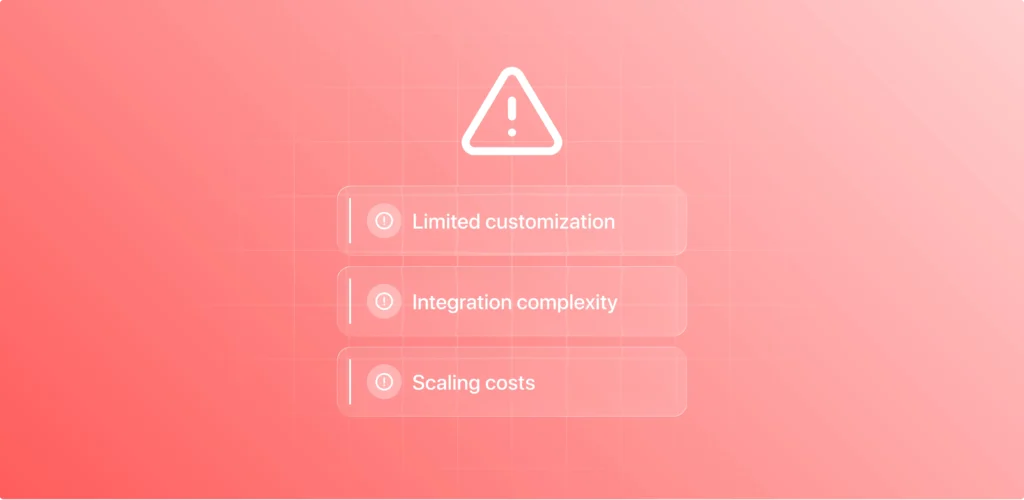
Main reasons for the failure of standard solutions:
For companies with unique business processes, custom operational software development becomes a strategic advantage.
Although it requires a larger initial investment, it allows you to create an “intellectual asset” that learns from your own operational data and delivers efficiency that cannot be purchased as a subscription.
The decision to develop your own operational system should be based on an analysis of return on investment and the criticality of your processes. Custom development is justified if your operational activities form the basis of your competitive advantage.
If off-the-shelf software forces you to adapt your efficient internal processes to its limitations, this is a sign that custom development is needed.
Investing in a custom solution is worthwhile in the following cases:
The need for extreme performance that universal SaaS platforms cannot provide.

What we deliver
Planning to build a custom OMS that supports growth and operational stability?
Contact usCreating an operational system moved from building interfaces to designing very complex engineering ecosystems. The success of these projects depends on a comprehensive knowledge of the domain, a good architectural discipline, and a focus on data reliability.
Operational systems must be developed with a mature approach in which each component moves towards one common goal of providing dependable, accurate business operations without interruption.
There are many different kinds of automation tools available today; however, true value is only obtained when these tools are a fully integrated component of the operational lifecycle. The only type of systems that will be viable in the future will be those types that are very flexible, scalable, and able to operate as a highly integrated system. If you want to upgrade your operations, contact UITOP. We have extensive experience designing and developing operational software and can help you automate your operations in a way that brings positive results for your business.
Operational software is the “nervous system” of any modern enterprise, responsible for the seamless management of internal business processes. It focuses on the order lifecycle, procurement, and staff coordination.
The main goal of such systems is to ensure that every step in the value chain is recorded with maximum precision. This is the foundation that transforms strategic plans into real actions, guaranteeing that goods reach the customer on time and that inventory data is updated instantly.
Reliability takes precedence over attractive design here, as any delay in the operation of the software directly impacts the company’s day-to-day operation
Although SaaS is a distribution model, in a business context, we often contrast typical “lightweight” cloud services (such as CRM for the sales department) with heavyweight operational systems.
The main difference lies in the object of management: CRM works with leads and digital communication, where the focus is on UX/UI and the speed of interaction. In contrast, operational software manages physical assets.
Developing custom software is advisable in situations where a company’s business processes constitute its unique competitive advantage and do not fit within the framework of off-the-shelf solutions.
If commercial software makes you adapt well-established, efficient processes to its limitations, this is a clear indication that you should develop your own product. Custom development also becomes necessary when the cost of integrating third-party software with your specific systems (such as production lines or unique logistics algorithms) exceeds the cost of creating your own module.
Custom software provides unlimited flexibility and allows the company to scale without being dependent on the licensing policies of third-party vendors.
The main challenge lies in the need to maintain perfect synchronization of massive data sets in real time. The system must simultaneously process thousands of stock-keeping units, while taking into account numerous variables: expiration dates, storage conditions, shipping priorities, and the physical location of the goods.
The technical challenge is compounded by the need for continuous communication with peripheral equipment – barcode scanners, data collection terminals, and automated sorting lines.
At the same time, the system must guarantee transaction integrity: even with hundreds of simultaneous requests from different employees, inventory data must remain accurate down to the last unit, preventing “double charges” or data loss during technical failures.