How we use AI in our process

Design, Product, Development
/
Aug 09, 2026

Companies often look for design help because a metric has stalled or the team is struggling to improve the product. Then comes the hiring question: UX designer, UI designer, product designer, or other specialist type?
The better place to start is the product problem. A good contractor is one who studies the business goal and the limits of the product before recommending a role. The client brings context and customer knowledge. The contractor, in turn, defines the expertise needed for the project. Clients need no detailed knowledge of design titles before asking for help.
In this article, we review the main types of design specialists, explain which questions help define the real product problem, and show how to choose the expert whose skills best match the project.
Why Hiring by Job Title Often Leads to the Wrong Decision
Job titles are useful for organizing a team. They are less useful for diagnosing a product problem.
At one company, a UX designer may focus mainly on research and usability testing. Elsewhere, the same title may include wireframes, interaction design, and some interface work. One product designer owns an entire feature from early research to release, while another works mostly on detailed flows. The title gives a general direction, while the person’s actual strengths still need review.
This becomes a problem when a company chooses a specialist before looking closely at the product.
Imagine a SaaS team that sees low activation after signup. The product looks dated, so the company hires a UI designer. The new interface is more consistent, the visual hierarchy improves. Yet activation stays almost the same.
Later, the team learns that new users leave because setup asks them to make decisions before they understand the product. They are expected to invite colleagues, set permissions, and choose a workflow before they have seen enough of the product. The main issue was the order of the experience. Visual design mattered, but another issue needed attention first.
As a result, the company pays for design, development, review, and another round of work once the deeper issue becomes visible. The first specialist could have done a good job within the assigned scope. The problem was the scope itself.
The same thing works in the opposite direction. A company might hire a UX designer for an interface that already has sound flows but lacks consistency. Research then confirms that users understand the product. The team still needs a design system, better visual hierarchy, and stronger interface rules. The UX work adds knowledge, but the urgent need was closer to UI design.
So, a role title helps after the problem is understood.
Explore our Product Discovery services
Learn how product discovery helps uncover the real product problem before investing in design or development.
Learn moreThe first step is to describe the problem in observable terms.
Statements such as the UX is weak or the interface needs improvement are too broad. They leave out where users struggle, how the business is affected, and what evidence already exists. A contractor needs more detail before recommending a specialist.
It helps to start with questions such as:
These questions connect the visible problem with product strategy and discovery.
Low conversion, for example, says little about UX on its own. Perhaps the offer is unclear, or the product attracts the wrong audience. In other cases, the signup flow asks for too much information.
Weak onboarding also has several possible sources. The product could explain too much before the user has context or hide the first useful action. It could also depend on an internal process that the customer is still completing.
Therefore, it’s best to look at the business pressure first: the metric, customer segment, or product goal that needs attention. Then review user behavior, especially where people pause, leave, ask for help, or create their own workaround. Also, consider separating known facts from assumptions and checking which technical or organizational limits affect the work.
Once this picture is visible, it’s easier to understand whether the first step requires research, interface design, broader product design, or support from engineering and product management.
A UX designer is usually the right specialist when the main issue concerns how users understand and use the product.
In these situations, the UX designer studies behavior before the company invests in a larger solution. The work often includes user interviews, usability testing, journey mapping, information architecture, and prototype validation.
A UX designer is especially useful when:
Consider a team management platform with weak completion rates during setup. The product asks administrators to create roles and permissions before they invite colleagues. The company first assumes the form is too long.
A UX designer interviews new administrators and watches several setup sessions. The research shows that length is only part of the issue. Many administrators are still deciding how responsibilities will be divided. They pause because the product asks for an internal decision too early.
The solution could involve a different order. The platform might let users invite a small group first, use a simple default, and adjust permissions later. The designer also tests whether the language makes the decision easier to understand.
The value of UX work comes from finding the reason behind the behavior. Without this step, the team might remove fields, shorten labels, or redesign the form while leaving the main barrier in place.
At the same time, this role is less suitable as a single answer when the problem mainly concerns visual consistency, a weak design system, or technical performance. UX research still supports these areas, but another specialist needs to lead the work.
A UI designer is the right choice when the product structure is already understood and the interface requires stricter visual rules.
The problem could be weak hierarchy, inconsistent components, poor accessibility, or a visual style that no longer fits the brand. The team might also spend too much time designing the same elements again because no shared system exists.
This is common in products that grew quickly. Different teams add features under different deadlines. One part of the product uses a side panel for settings, another opens a separate page. Buttons with the same purpose look different. Error messages appear in several formats.
A UI designer reviews these patterns and creates a more consistent interface language. The work often includes typography, spacing, component states, visual hierarchy, icon use, color rules, and accessibility.
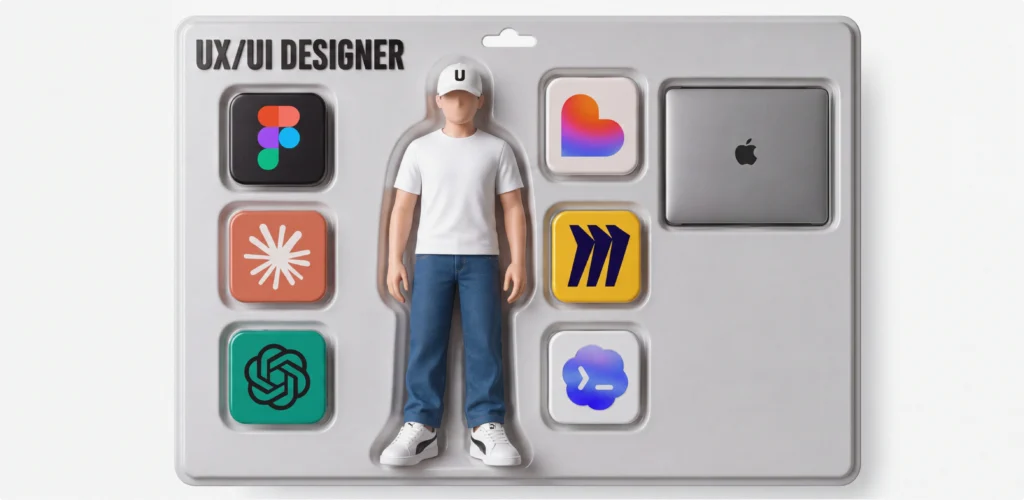
The design system matters because it gives designers and developers a shared reference. It reduces repeated decisions and makes new features easier to build. It also helps the product look and behave like one system.
A UI designer also becomes important during a rebrand. The marketing site might already use the new identity, while the product still looks like an early version of the company. The update needs to bring the product closer to the brand.
A product designer is a good fit when the work covers several stages of the product process and needs one person to connect them.
This role often includes research, UX, interaction design, interface decisions, and regular work with product managers and developers. The product designer helps define the problem, explores possible solutions, tests them, and stays involved during implementation.
Suppose a B2B platform wants to add a new approval process. The business goal is known, but many product questions remain:
A product designer works through these questions with product and engineering. They study the user roles, map the flow, test early concepts, and design the interface. During development, they help resolve cases that only become visible in the working product.
The advantage is continuity. The same person understands why the team chose a certain flow and how this decision connects to business goals. Less context is lost between research, design, and delivery.
The title still needs careful review. Some product designers are stronger in research. Others are stronger in interface systems or interaction design. A contractor needs to match the person’s actual experience with the assignment.
For more on the differences between design specialist roles, watch our video, Who Is Who, where UITOP UI/UX Design Team Lead Katerina Bulkina explains what each specialist does.
SaaS products often involve more than one type of design problem at the same time. A single workflow often involves user research, permissions, data states, interface rules, technical constraints, and changes across several parts of the product.
One specialist may be able to cover much of this work for a small scope. But as the product grows, the workload may become harder to manage without a product design team.
A product design team often covers:
A product design team spreads responsibility and reduces dependence on one person’s strengths. It also gives the company better continuity when several product areas are active at once.

Some product issues look like design problems because users experience them through the interface. But the main cause may be in the code, the architecture, or the way teams work together.
A slow dashboard is a good example. Designers improve loading states and explain what the system is doing. Yet these changes leave the loading time unchanged. If the backend is slow or returns partial results, the product development team needs to address the source.
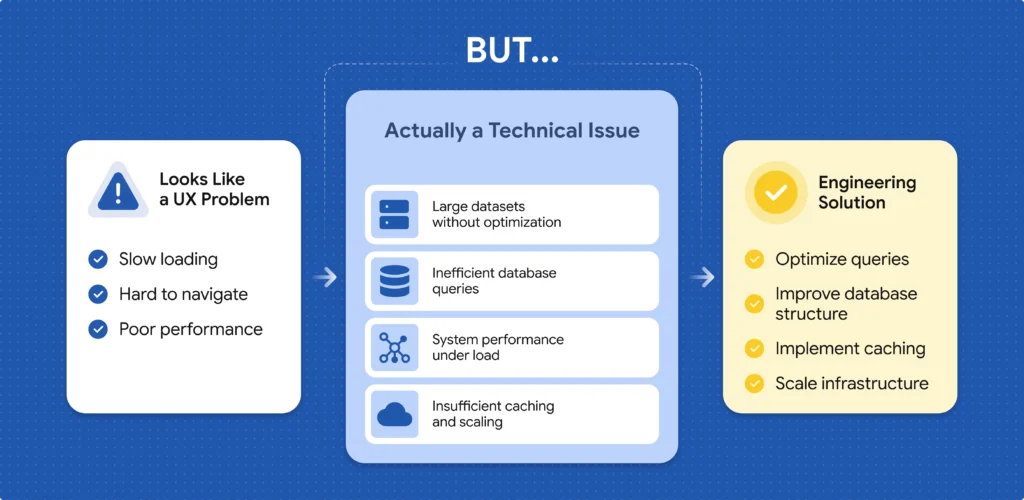
Engineering needs to join the diagnosis early when the proposed experience depends on data the product cannot provide at the right time. The same applies when similar features behave differently because they were built in separate systems, or when technical limits appear only after design approval.
The process creates similar problems. A designer completes a flow and sends it to engineering after stakeholder approval. Developers then find technical limits that require major changes. The final version loses important parts of the design, and both sides become frustrated.
The solution is closer collaboration. Engineers explain technical conditions, and designers help decide how the product communicates limits and errors. Product managers set priorities with a better view of cost.
Sometimes the company also needs stronger product management. Teams sometimes have talented designers and developers but no stable process for deciding what to build.
Design cannot repair this alone, and your contractor needs to say so and involve the right people.
A good agency expects to help the client define the roles.
The client usually knows the business, the customers, and the current pressure. The agency knows how different product disciplines work and where each one is useful. The first stage brings these two views together.
The agency should start by reviewing the product and the available evidence. It should speak with stakeholders, look at analytics, study customer feedback, and ask about technical limits.
From there, the agency needs to recommend a team and explain the reason for each role.
A UX designer could lead because the company lacks a good explanation for why users leave during onboarding, while a UI designer could join later to update the interface system once the flow is developed. An engineer could take part in discovery because the proposed experience depends on architecture changes.
A good contractor should also adjust the team when new information appears. Discovery sometimes shows that the issue is narrower than expected. It might also reveal that design needs support from engineering, analytics, or product management.
Changing the recommendation is reasonable when the evidence changes. The agency needs to explain the adjustment and connect it with the product problem.
The product discovery process gives the team time to understand the problem before committing to a large delivery plan.
The team reviews business goals, product data, customer feedback, current flows, and technical conditions. It then identifies the assumptions that carry the most risk and chooses how to test them.
A product discovery process usually helps define:
A company might begin with a request for a full redesign. Discovery then shows that most of the loss comes from one account setup flow. The first phase focuses on this flow with UX and product design support. The larger visual update comes later.
Another company might expect a UX project. Technical review shows that the main problem comes from old architecture and slow data processing. The team now needs engineering involvement before a new experience works as intended.
Modern product design services cover much more than screens.
A digital product connects business rules, user goals, data, content, and technical systems. The interface brings these parts together, but the design team needs to understand what is behind it.
This is why product design services should often begin with product development team collaboration. Designers need feedback on technical limits. Developers need the context behind the design so they handle cases that only become visible during implementation.
A full product design engagement often begins with discovery and research, then continues through UX, interface work, prototyping, and usability testing. The designers support development, review the implemented product, and study results after release.
An early startup may require help deciding what to build and how to test the idea. A growing SaaS company often needs more consistency as the product expands. A mature platform usually needs focused work across several connected workflows.
Treating all of these needs as interface design leads to a narrow plan. The company receives screens, but the important questions about user behavior, business value, or technical feasibility remain open.
Good product design services support decisions before, during, and after interface work. Screens remain important, but their value depends on the research and product reasoning behind them.
Find the specialist your product requires now
UITOP studies the current product stage and the work ahead before forming the team.
Let’s define the next stepProduct managers, designers, developers, and analysts each see a different part of the product. Better decisions come from combining these views:
When these roles work separately, problems may appear late. For instance, an engineer might build an efficient feature that users do not understand or analytics might track activity that has little connection with the business goal.
Cross-functional work brings these questions into the same discussion.
The team agrees on the problem, reviews evidence. Disagreement may still exist, but it becomes useful.

At UITOP, we work as a full-service design and development team. We bring product thinking, UX, UI, and engineering into the same process when the project needs that range.
You can contact us before deciding which discipline owns the issue. We review the product, discuss the business objective, study the available evidence, and look at delivery limits. Then we recommend the specialists who fit the current stage.
Choosing between a UX designer, a UI designer, a product designer, and other design experts can be difficult when the problem has not been examined in detail. The title alone gives little indication of what the project actually requires. A review of the product, its current goals, and the work already done usually gives a much better basis for this decision.
This is also where an experienced agency can be useful. You can come with a business concern, a product metric, or a workflow that calls for attention. The agency can then determine which expertise is relevant and whether the project needs one specialist or experts from several disciplines.
Contact UITOP, a UX-first product design and development company, for a consultation, and we will help you define the scope of work and select the specialists your product requires.
A product designer helps the team decide how a product feature needs to work, then stays involved while that feature is designed and built. They join early discussions with product managers and developers, review user feedback, and study the current flow before drawing screens.
Their work often includes research, user flows, prototypes, interface design, and design review during development. The balance depends on the company. In a small SaaS business, one product designer often covers a wide area. In a larger company, they usually focus on one part of the product and work with researchers or UI specialists.
A UX designer studies how people use the product and where they struggle. They evaluate the order of steps and the decisions the product asks them to make. Research and usability testing help them understand why users leave a flow or need extra support.
A UI designer works more closely with the interface itself. They improve visual hierarchy, typography, component behavior, accessibility, and consistency across the product. Their work becomes especially important when different parts of the interface follow different rules or when the design system no longer supports the product well.
A company needs a product design team when one designer no longer has enough time to support the product properly. This often becomes visible after a SaaS company adds more features and serves a wider range of customers. Changes in one product area begin to affect other workflows. A single designer spends too much time switching between research, interface work, and implementation support.
The team may not need many people from the beginning. A product designer might work with a researcher during discovery, while a UI specialist joins when the interface system needs focused work. The right team depends on the current workload and the parts of the product that require deeper attention.
As SaaS companies add features, different parts of the product often start using different patterns. Teams may solve similar tasks in separate ways, and developers spend more time working with old interface decisions.
Product design services help the company review these issues before adding another feature or starting a large redesign. The team studies product data, customer feedback, and the current workflow to find where the main difficulty begins. The next phase might focus on research, UX, interface work, or the design system.
The decision depends on how much the founders already know about the first version of the product. When the main workflow is still uncertain, a product designer can help define this. They test how users understand the idea.
Developers may also join early enough to review technical feasibility, as their input affects the scope, delivery time, and architecture of the first release. For many startups, a short discovery phase with design and engineering works well. The designer develops the product flow and tests early ideas, while developers review the technical approach. Once the first version has a focused scope, development takes a larger role and design continues throughout delivery.