How we use AI in our process

Design, Development
/
Aug 20, 2026
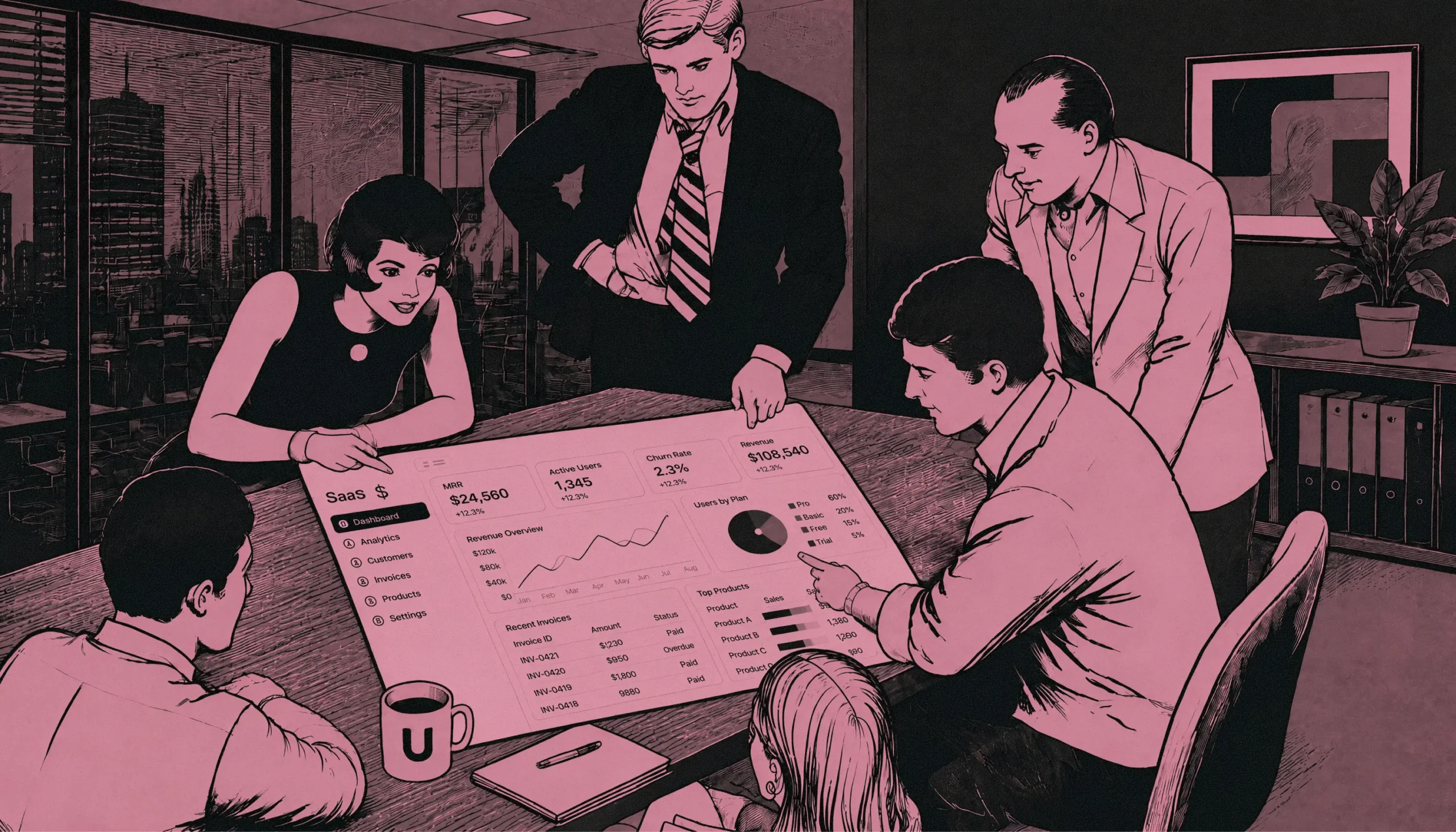
Building a successful SaaS product takes much more than writing quality code or creating attractive interfaces. Every product decision affects user experience, technical stability, business goals, and future growth. When these decisions happen separately, teams often spend extra time solving problems that could have been avoided earlier.
Modern SaaS companies are changing the way products are built. Instead of passing work from one department to another, technical, product, and design specialists collaborate from the very beginning. They explore ideas together, challenge assumptions, and talk through technical and product questions before work moves into development.
This way of working has changed how successful products are built. UX is no longer something that happens before engineering starts, and engineering isn't only about implementing designs. Both play an active role in shaping the product from the first conversation.
Below, we'll explore how cross-functional collaboration helps SaaS teams make better decisions, reduce unnecessary rework, and build products that are both easy to use and technically strong.
Product development didn't always look the way it does today. In many companies, work moved from one team to the next. Product managers gathered requirements, designers created mockups, developers built the features, and QA tested everything at the end.
It seemed like a clear process, but it often caused unnecessary delays. Questions that could have been answered early came up halfway through development. Designers found out that some ideas were difficult to build. Engineers noticed usability issues while writing code. Product managers had to change priorities because new challenges appeared too late.
Today, many SaaS teams work in a different way. Instead of separating design, product, and engineering, they bring everyone into the discussion from the start. Before anyone begins designing or coding, the team talks through the idea together.
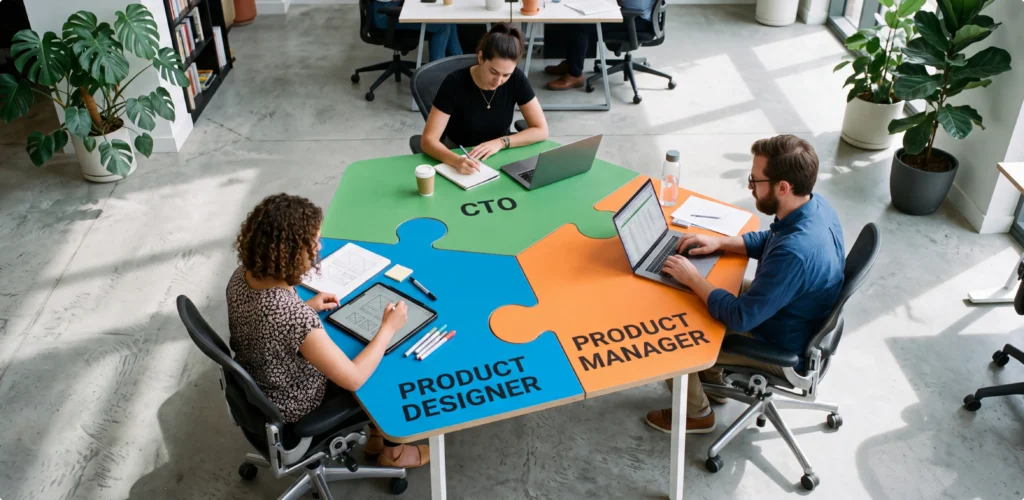
A strong product development team includes people with different skills and expertise who are all working toward the same goal. Product Managers understand the business. Designers focus on users and their experience. Engineers know what is possible today and what will continue to work as the product grows.
Looking at a problem from different angles helps the team make better decisions.
Imagine the team is building a new reporting dashboard. The designer suggests filters that make reports easier to use. The CTO thinks about performance, large amounts of data, and API limits. The Product Manager asks whether those filters solve a real customer problem or simply add another feature.
Everyone brings a different point of view, and that's exactly what makes the discussion valuable. Instead of choosing between business, design, or engineering, the team works toward a solution that balances all three.
Working this way also makes communication much easier. Everyone understands why a feature is being built, which decisions were made, and what trade-offs were accepted along the way. That shared understanding helps prevent confusion later and makes future decisions faster.
As SaaS products become more complex, no single role has enough information to make every important decision alone. Cross-functional collaboration fills those gaps before they become expensive problems.
Building a successful SaaS product is a team effort. While CTOs, Product Managers, and Product Designers work toward the same goal, each one looks at the product from a different angle.
Even though each role has its own responsibilities, their work overlaps more than many teams realize.
A design decision might make a feature more difficult to build. A technical limitation can change how a feature works for users. A new business priority may require both the design and engineering teams to rethink their plans.
That's why these roles work best when they make decisions together.
Take onboarding as an example. A Product Manager may want to shorten the sign-up process to help more users get started. The Product Designer looks at where people drop off and explores different user flows. At the same time, the CTO considers security, authentication, and integration requirements.
By discussing these ideas together, the team can create an onboarding experience that feels simple for users while remaining secure, scalable, and practical to build.
When these conversations happen early, teams spend less time going back to old decisions. They solve problems while ideas are still easy to change, which leads to faster development and better products.
Build with the right people from the start
Bring product, design, and engineering together early to avoid costly rework
Contact usEvery product decision affects something else.
A new interface may require changes to the backend. A performance optimization may limit design options. A business request can introduce technical debt if it's implemented without enough planning.
The larger the product becomes, the more connected these decisions are.
Problems usually appear when teams stop making decisions together.
A designer may create an interaction without understanding technical limitations. Engineers may simplify a workflow without knowing why it was designed that way. Product priorities can shift without considering their impact on the user experience or development effort. None of these decisions are necessarily wrong. They simply lack the full picture.
We experienced this ourselves while working on one of our long-term SaaS projects.
By the time we joined, Valocore already had a consistent design system and user experience. Our team continued designing new features while working closely with the developers.
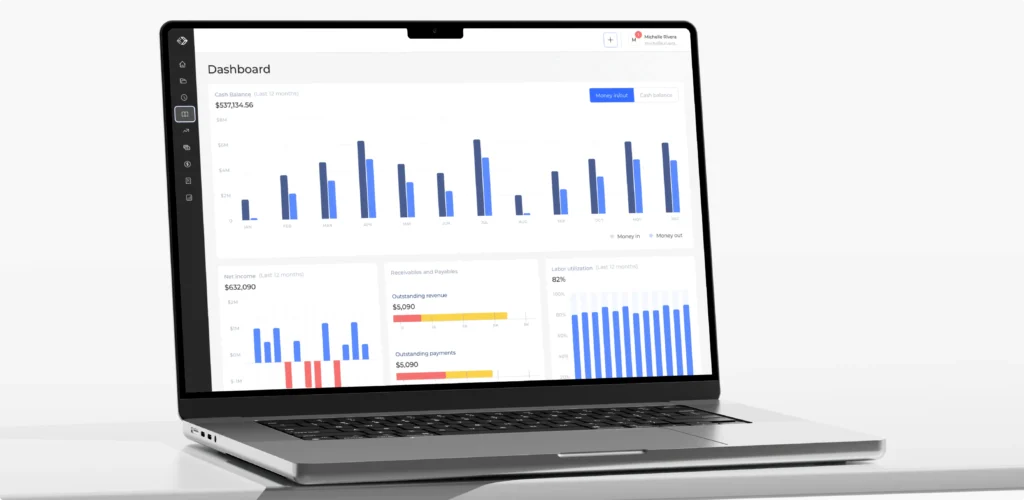
Later, a new Product Manager joined the project, and the process changed. Instead of discussing ideas with designers and engineers, many design decisions were based on AI-generated mockups. We suggested alternatives that matched the existing product and were easier to build, but those ideas were rejected. The AI-generated designs went straight to development, and our designers were no longer allowed to talk directly with the engineering team.
At first, it didn't seem like a big issue. But after a few releases, the problems became clear.
The product started to feel inconsistent. Similar actions looked different in different parts of the platform. Developers spent more time building new features because the designs often created extra technical work. Small changes took much longer than expected because designers and developers couldn't solve problems together.
Perhaps the biggest issue was communication. Design, product, and engineering were no longer working as one team. Each department worked separately, and communication almost disappeared.
Eventually, the Product Manager left the project. Since then, we've been working closely with the development team to improve the user experience, bring consistency back to the product, and fix many of the design and technical issues that built up over time.
This experience showed us that even good ideas can lead to poor results when teams stop collaborating. When designers, engineers, and product leaders work together from the beginning, problems are identified while ideas are still flexible. When communication breaks down, even good intentions can lead to unnecessary rework, slower delivery, and an inconsistent user experience.
One lesson we've learned from real projects is that you can design almost anything. You can create innovative interactions, completely rethink a user flow, or introduce a bold new visual direction. The challenge is that every design eventually has to be built.
The more advanced the design is, the more important it becomes to involve developers early. A great idea might require months of development, major backend changes, or a complete update of the existing architecture. Another solution may deliver almost the same experience while taking half the time to build.
We've seen this many times while working on SaaS products at different stages of growth and collaborated with many teams. While every product is unique, the same patterns tend to appear again and again. Here are a few examples from our own experience.
On one project, a designer created a large multi-page interface where almost identical sections used slightly different versions of the same component. The differences were small enough that users barely noticed them, but they made a big difference for development.
Instead of building one reusable component, the development team had to create several almost identical ones because each variation behaved a little differently. More code meant more testing, more maintenance, and more work every time the component needed an update.
Another common challenge comes from design changes during development.
On one project, designers presented the final flows, our developers started implementing them, and several weeks later the features were ready for testing. That's when QA reported dozens of issues because the designs no longer matched the implementation.
The problem wasn't that developers ignored the designs. The designs had changed while development was already in progress, and nobody told the engineering team.
The result was predictable. Developers had to rebuild completed work, testers repeated the same testing cycles, and the release took much longer than planned.
Consistency is another area where UX directly affects development.
We once reviewed a project where the same UI component looked different almost everywhere it appeared. Different spacing, different styles, and different behavior. From a design perspective, the differences seemed minor. From an engineering side, every variation became another component to build, maintain, and test.
After reviewing the product, we identified many opportunities to reuse existing components and simplify the design system. Development could have been significantly faster with a more consistent approach. Unfortunately, those recommendations weren't adopted, and over time the gap between the design files and the actual product only became larger.
We've also worked on projects where a complete UI kit was created for an existing product. The design looked polished, but once developers reviewed it, they found inconsistent spacing, missing component states, and many situations that hadn't been considered.
That led to weeks of discussions between designers, developers, QA engineers, and project managers. Testers reported issues because the product didn't match the design. Developers explained that some design states simply didn't exist. Designers had to revisit dozens of components before the team could move forward.
None of these situations happened because someone wasn't doing their job. They happened because design and engineering weren't working closely enough throughout the process.
That's why the best design decisions are rarely made by designers alone. They come from conversations between designers, developers, product managers, and stakeholders. Together, they balance user needs, technical limitations, business goals, and delivery timelines. Every product is a compromise, and finding the right balance is part of building great software.
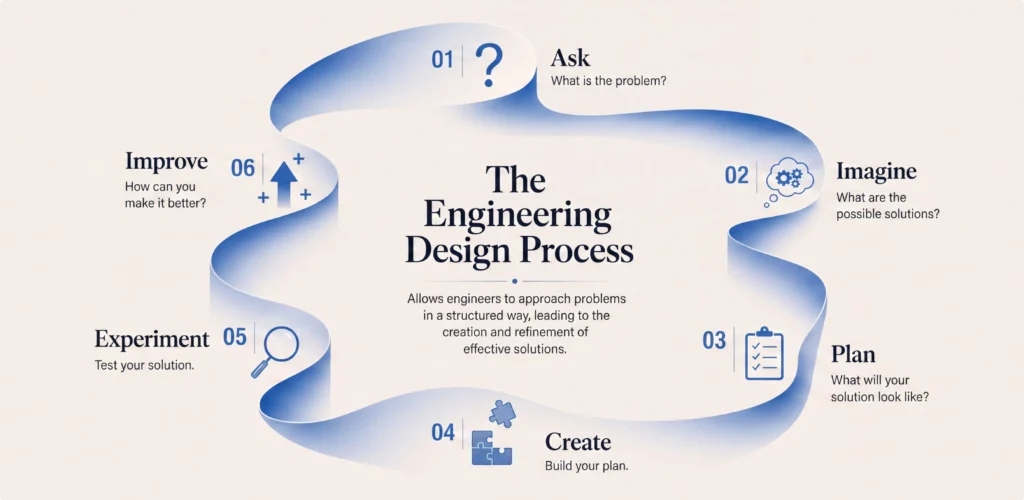
Designers naturally want to create the best possible experience for users. But every idea has to work within the product's technical reality.

Sometimes the original idea still makes sense. Sometimes a simpler solution can provide almost the same user value and take much less time to build.
Engineering input becomes really useful here. It helps designers understand what the product can support today. Developers can explain which components are already available, which ones can be reused, and where a new solution would add unnecessary complexity.
For example, a designer may create a highly detailed dashboard with many filters, live updates, custom charts, and several interaction states. Each element may improve the experience in some way. Together, though, they can create a much larger engineering task.
A developer can help the team decide which parts are essential and which could be simplified. The final design may look less complex, but the experience can still feel clear and useful.
This approach also helps with scalability.
A solution that works for a small number of users may become difficult to support as the product grows. Engineering teams can spot these risks early and suggest approaches that will continue to work with more users, data, and integrations.
And let’s not forget about architecture. It also affects product design. Modular systems allow features to evolve independently. Monolithic structures may require broader changes for even small updates. Designers who understand these differences can plan features that fit existing technical foundations.
Technical constraints can actually make design better. They help teams focus on what users really need and avoid adding complexity just because something looks impressive in a prototype.
The goal is to find the right balance. Designers bring the user perspective. Engineers understand the technical side. Stakeholders bring business goals and timelines. When everyone looks at the same problem together, the team can build something realistic, useful, and ready to grow.
A roadmap should be more than a list of upcoming features. It should show where the product is going and how the team plans to get there. That means looking at business goals, user needs, technical work, and long-term plans together.
In many companies, Product Managers create the roadmap first. Engineers get the tasks later, and designers join when it's time to work on the interface. This can lead to changes and delays because important questions come up too late.
A shared roadmap gives everyone a chance to talk about priorities early. CTOs, Product Managers, and Product Designers can look at each idea together and discuss customer value, technical effort, business impact, and possible risks before anything is set in stone.
This makes planning much easier. Some features may bring clear value to customers but require major changes to the system. Others may look exciting but have little impact on the business. Talking about these things early helps the team choose where to focus.
The roadmap should also include technical work that users may never see. Infrastructure updates, security improvements, performance work, and system maintenance all help the product grow. Giving this work a place on the roadmap makes it easier to plan time and resources for it.
A shared roadmap also gives the team a clearer strategy. People understand why certain projects come first and how they connect to customer and business goals.
Of course, a roadmap can change. Customer feedback changes. Market needs shift. New opportunities appear. Regular reviews help the team adjust priorities while keeping the bigger picture in mind.
When product, design, and engineering plan together, everyone has a better idea of what matters now and where the product is heading next.
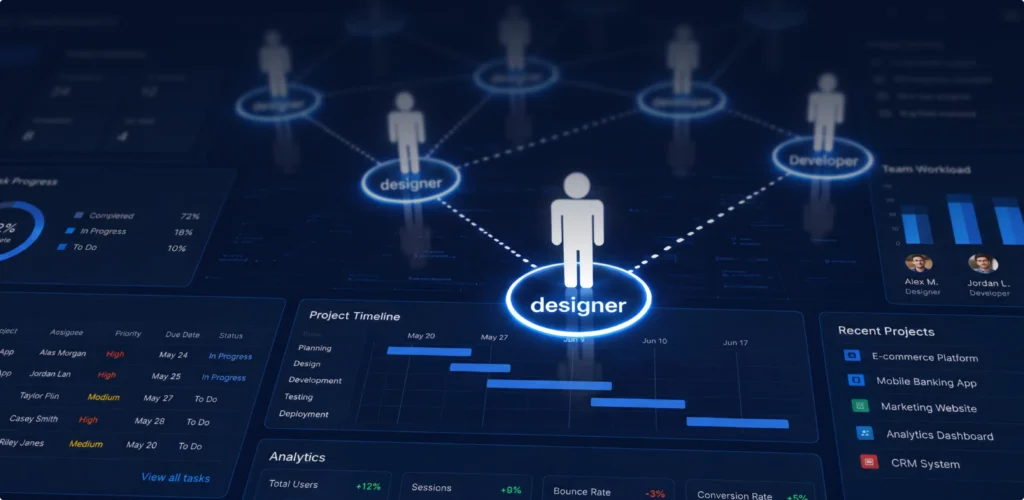
Rework takes time, money, and energy. A lot of it starts with questions that weren't asked early enough.
Cross-functional collaboration helps teams catch these issues before development gets too far.
Instead of reviewing finished work and finding problems later, teams discuss ideas while they are still easy to change. A short conversation at the start can save hours of redesign and development work later.
Here are some of the common issues early collaboration can help avoid:
Imagine a SaaS team building a new subscription feature. The Product Manager works on pricing and business rules. The designer creates the purchase flow. The CTO looks at payment systems, security, and third-party integrations.
When they discuss the feature together, they can spot problems before development starts.
Maybe one payment option needs more development time. Maybe a user flow can be simplified. Maybe an existing integration can handle most of the work. These decisions are much easier to make before anyone starts coding.
Early collaboration also makes estimates more accurate. Developers understand what the design needs. Designers know what the current system can support. Product Managers get a clearer idea of how long the feature may take.
Communication becomes easier too. Design reviews include feedback from developers. Technical discussions consider the user experience. Product decisions take both business and technical needs into account.
Another benefit is faster decision-making. When the right people are involved from the start, fewer questions have to go through several rounds of approval. Teams can solve problems together instead of waiting for another review.
Cross-functional work also strengthens trust.
People become familiar with each other's priorities and constraints. Conversations shift from defending individual opinions to solving shared product challenges. Designers learn more about technical limits. Developers understand why certain UX decisions matter. Product Managers see what happens behind the scenes when a feature moves into development.
This mindset creates healthier product teams.Over time, the team starts thinking about the product as a shared responsibility. People focus more on solving the problem and less on which team owns it.
The result is simple: fewer surprises, less rework, and a smoother development process.
Many companies still treat UX as a step that comes before development. Designers create the screens, developers build them, and feedback often comes later.
But teams working this way often miss valuable opportunities. User feedback may arrive too late. Technical problems can appear during development. Product priorities may change after the team has already spent weeks building a feature.
A UX-first development approach starts much earlier. Research, design, engineering, and product planning happen together throughout the project.
Instead of asking how a feature should look, the team first asks why users need it.
User interviews, workflow reviews, and prototypes help the team understand the problem before development starts. Engineers can join these discussions and explain what is realistic to build. Product Managers can look at the business value and customer needs at the same time.
This creates a shared understanding across the team.
Designers know what problem they are solving. Developers understand why a feature needs to work in a certain way. Product Managers can make decisions based on real user needs and technical input.
The process also makes testing easier. A simple idea can become a prototype. The prototype can be tested with users. Their feedback can then shape the final feature.
The same process continues after launch. Real users interact with the product, the team learns from their behavior, and those insights can help with the next improvements.
This model works especially well for SaaS products because they keep changing. New features, integrations, and customer needs appear all the time. When design, product, and engineering stay connected, the team can respond to these changes without losing consistency.
A UX-first development approach helps teams understand the problem earlier, make better decisions, and build products that work for both users and the business.
Teams often rush into development because they already have an idea. But an idea alone doesn't answer the most important questions.
This is where product discovery can help.
Discovery gives the team time to understand the problem before development starts. It helps everyone build the same picture of what the product needs and why.
The process can include customer interviews, competitor research, business checks, technical research, and early prototypes. Each role brings a different view.
| Role | Main focus during discovery |
|---|---|
| CTO | Technical limits, architecture, and future growth |
| Product Manager | Business value, customer needs, and priorities |
| Product Designer | User behavior, research, and simple user flows |
| Stakeholders | Business goals, resources, and project needs |
Instead of working on separate parts, the team works toward the same product vision.
This can make development much smoother. Features have clear goals. Technical decisions are linked to real user needs. Design choices come from research instead of guesses.
Discovery also helps teams have clearer conversations with stakeholders. It's much easier to explain why a feature matters when the decision is based on user feedback and research.
It can also save a lot of time later. Finding a problem during discovery is usually much cheaper than finding it after months of development.
Product discovery helps teams test ideas before they invest heavily in them. When the team takes time to understand the problem first, development starts with clearer goals and fewer open questions.
Give your SaaS product room to grow
Build a product foundation that connects user needs, UX, and engineering as your product evolves.
Contact us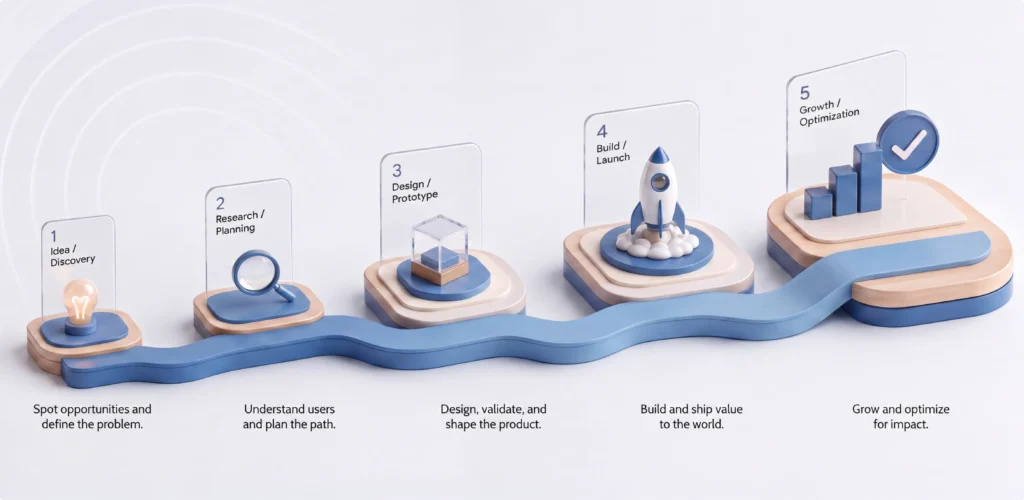
The way designers and developers work together changes as a product grows.
A startup building its first MVP may have one designer and a few developers. A growing SaaS product can have several product teams, designers, frontend and backend engineers, researchers, architects, and tech leads.
As the team grows, communication becomes even more important. More people mean more ideas, more decisions, and more chances for things to get out of sync.
Good SaaS development needs simple processes that can grow with the product. A few practices can make a big difference:
These practices give teams a shared foundation. They can build new features without recreating things that already exist.
Growth also brings new challenges. More customers mean more data. More integrations add more moving parts. More features make the product harder to manage.
Design and engineering need to grow with these changes. Regular design reviews can help teams catch issues early. Technical planning can include UX discussions. Team retrospectives can show what worked and what needs to change.
The same applies to software development as a whole. Adding more people doesn't automatically make a team faster. The way those people work together matters just as much.
As products grow, strong teams keep improving their shared processes. They make communication clearer, reuse what already works, and keep everyone connected to the same product goals.
Teams that communicate openly usually adapt more easily to changing customer expectations. They make faster decisions because shared processes already exist.
Scaling becomes less about adding people and more about improving how people work together.
Traditional organizations often separate responsibilities by department. Designers create interfaces. Engineers write code. Product Managers write requirements and set priorities. Each team completes its own tasks before passing work to the next group.
Modern SaaS companies organize work around outcomes instead.
The team still has designers, engineers, and product managers. The difference is what they work toward together.
If the goal is better activation, everyone looks at the same problem. The Product Manager studies where users drop off. The designer looks for ways to make onboarding clearer. Engineers check what can be changed and how quickly it can be done. The whole team then looks at whether those changes actually improve activation.
This changes the conversations inside the team. Designers start thinking about business results. Engineers get closer to customer problems. Product Managers understand technical limits and opportunities better.
It also makes it easier to decide what deserves attention. A feature can be interesting, but if it has little impact on the main goal, the team can put it lower on the list.
This way of working also creates faster feedback. The team can launch an idea, look at the results, talk to users, and adjust the product based on what they learn.
Many companies describe this philosophy as product engineering. It treats engineering as part of building the product and creating customer value. Engineers help shape solutions instead of only receiving tasks to implement.
Design plays the same role. A designer helps shape the product experience from the start. They work with the team to understand user needs and find the best ways to solve their problems.
Departments still have their own skills and focus areas. But product success becomes everyone's responsibility.
When teams work toward the same outcome, priorities become clearer. People understand why a decision matters and how their work affects the final result.
That makes collaboration more natural and gives everyone a clearer reason to care about the product's success.

Many SaaS products involve several teams, vendors, and outside contractors. When work moves between them, some information can get lost. People may also need extra time to explain decisions and catch up on what has already been done.
An end-to-end product team stays involved throughout the whole project. The same team can work on research, product strategy, UX design, development, testing, launch, and future updates.
This creates strong product knowledge. Team members remember why decisions were made. They know what users need, what technical choices were taken, and what the business wants to achieve.
This becomes even more useful as the product grows. Customer needs change. New integrations are added. The technical side becomes more complex. Business goals also change over time.
A team that already knows the product can react faster. They understand how a new feature may affect existing screens, users, and technical systems.
Working together also improves the quality of each release. Designers can review how their work looks in the real product. Engineers can suggest technical changes while the design is still in progress. Product Managers can use customer feedback to decide what to improve next.
Every release gives the team something new to learn. Those lessons can then shape the next feature or update.
This creates a steady way to improve the product over time. The team keeps the knowledge it has built instead of starting from zero with every new project.
Companies looking for long-term product support can benefit from end-to-end product design services. They bring research, UX, design, engineering, and product thinking into one connected process.
The result is a product that can grow with fewer disruptions and stronger alignment across every stage of development.
Strong SaaS products rarely appear because one department performs exceptionally well. They grow through continuous collaboration between people who see the product from different angles.
The CTO can see how a product idea may affect the technical side. The Product Manager understands its business value. The Product Designer sees how it may change the user experience. When these perspectives come together early, the team can find solutions that make sense from all sides.
This also changes how the team handles trade-offs. A feature may be valuable but expensive to build. A design may look great but need a simpler technical solution. A technical shortcut may save time now but create problems later. Discussing these points together helps the team choose the right balance.
That balance eventually becomes visible in the product. Users get clearer flows and features that solve real problems. Developers work with fewer surprises. Businesses get a product that can keep growing without constant changes to its foundations.
Collaboration also becomes more valuable as the product gets bigger. More features create more connections between different parts of the system. More users bring more feedback. More business goals create more decisions to make.
A team that already knows how to work together can handle this complexity with more confidence. People understand each other's priorities and can solve problems before they become major blockers.
Over time, this becomes part of how the product is built. Good collaboration shapes better decisions, and better decisions shape better products. This is also the thinking behind a product-focused software development company, where product strategy, UX, and engineering stay connected throughout the product journey.
Building SaaS products has become increasingly complex. Customer expectations evolve quickly. Technology continues to change. Products integrate with more platforms than ever before. No single role can successfully manage every aspect of this process.
Modern product teams succeed because they combine technical expertise, product thinking, and user-centered design from the beginning.
CTOs, Product Managers, and Product Designers each bring different perspectives. Their collaboration creates better decisions, stronger products, and healthier development processes.
A UX-first mindset supports this collaboration by encouraging continuous learning instead of isolated execution. Ideas receive validation earlier. Engineering risks become visible sooner. Design solutions remain connected to business goals. The result is a product that serves both users and the business over the long term.
Companies investing in collaborative product teams often discover another benefit. Their processes improve alongside their products. Communication becomes clearer. Planning becomes more reliable. Innovation becomes easier to sustain.
If your goal is to build SaaS products that continue growing after launch, collaboration deserves as much attention as technology itself. At UITOP, we care about what happens between the first product idea and the final release. Good UX, clear product thinking, and solid engineering decisions all shape that journey.
The best products grow when the people building them grow together. Keep the conversation open, keep learning from users, and let every release make the next one better.
CTOs and Product Designers solve different parts of the same challenge. Early collaboration helps balance user experience, technical feasibility, scalability, and business priorities before development begins.
A Product Designer researches user needs, creates user flows, designs interfaces, and validates solutions. The role connects business objectives with intuitive customer experiences throughout the product lifecycle.
Product management helps teams prioritize the right features, align work with business goals, reduce unnecessary development, and make informed decisions using customer feedback and market research.
A cross-functional product development team brings together product managers, designers, engineers, and technical leaders. They share responsibility for product outcomes and make decisions collaboratively instead of working in isolated departments.
UX-first development encourages research, design, product planning, and engineering to evolve together. Shared discussions reduce assumptions, improve communication, and help teams identify risks before development starts.