


















AIHow we use AI in our process Learn moreabout how we use AI in our process

AI MODEL EVALUATION AND TESTING

AI Model Evaluation and LLM Evaluation Services

The newest coding models still fail on tasks our engineers write. Bring them your AI, and they will find where it breaks, prove each failure and fix it before users see it.

Contact us
Failures proven by repeated runsStart small, scale when readyEvery fix retested

LLM Evaluation Services
for Model Builders and AI Products

01

Tasks written to make AI fail

On simple tasks, today’s AI rarely makes mistakes. Our engineers write very complex, multi-step prompts built on business logic, long technical documentation and the small rules your team knows by heart, and that is where the AI starts to fail.

02

Repeated runs before any verdict

One wrong answer can be bad luck, so a failing task runs many times before it goes into the report. When the AI keeps failing the same task, you have found a real weak spot, and its failure rate shows the team where to aim the first fix.

03

An evaluation report with real numbers

You get an evaluation report that shows where your AI holds up, where it fails, how often and what each failure costs. Teams that train AI use it to plan the next training round, while product teams use it to decide what to fix before release.

Selected Metrics that
Reflect Our Product Delivery Experience

13
AI projects delivered
3
Model types: GPT/Claude, open-source, custom
110
Engineers, designers and QA in one team
100%
In-house team
74%
Long-term clients

What Clients Say About
Working with
UITOP

5.0
25 reviews
Cole Weiler video review
Play
Cole Weiler

Cole Weiler

CEO, BoltWise

“They took extra time to ensure that our frontend developer could easily implement the wireframes.”

Sam Jordan

Sam Jordan

TrovBase, CEO
USA
Jake Heimark video review
Play
Jake Heimark

Jake Heimark

Costa Security, CEO

“They took way more responsibility than we asked and we were so happy with the results of all their work. UITOP was easy to work with, flexible, and valuable to our company.”

Neil Hosey

Neil Hosey

ResHub, CTO
USA
Dirk Pauw video review
Play
Dirk Pauw

Dirk Pauw

CEO, Tavas

"We are happy with the improved UI/UX, which has made product navigation cleaner, simpler, and more intuitive. The team is great and always there to help."

Michael Mosseri

Michael Mosseri

Total Brokerage, CEO
USA
Dylan Gambardella video review
Play
Dylan Gambardella

Dylan Gambardella

Founder, Different Health

“We’re most impressed with UITOP’s ability to come up with a system to be able to bring design solutions.”

Jordan Girard

Jordan Girard

Whiterock, Founder
USA
Nicolas Endress video review
Play
Nicolas Endress

Nicolas Endress

ClimEase, CEO
WHY UITOP

Why Companies Choose UITOP for AI Model Evaluation

01

Testers of frontier coding models

UITOP’s evaluation team of 60 people tests frontier coding models. Our software engineers (SWEs) write programming tasks that the newest releases still get wrong and rerun each one until the failure is proven. Your product gets the same method and the same standards, with tasks written for your domain, your data and your users.

02

Code judged by people who write it

Coding AI is judged by senior software engineers who read a generated change the way a reviewer would. They run the code and test the edge cases, where a bug in AI-written code tends to hide. Then they write down why the answer fails. When the task is about screens or user flows, our designers judge the answers, since they design AI products themselves.

03

Coding models from every major provider

Our SWEs work with the latest coding models from OpenAI, Google and Anthropic every day and know how each one tends to fail, from a skipped edge case to a change in a file nobody asked it to touch. If your product writes or reviews code, your tasks run on all of them, and you see which one holds up best on your own codebase.

04

The team that finds it can fix it

Finding a failure is half the job for a product team. The people who test your AI also build AI features. A proven failure turns into a fix in the same sprint. DevOps, a PM and QA engineers join when your project needs them. You keep one contact for testing and for every fix that follows from it, from the first report to the last rerun.

05

A small team before you scale

We start with a few of our SWEs on one of your task types. You see the prompts they wrote, the failures they proved and how many of their submissions passed review, and the team grows only when you decide to scale. If your product runs on GPT or Claude instead, we start with the cases where a mistake costs you the most and show where your AI fails, how often and what to fix first.

06

Full confidentiality of results

What we find in your AI stays between your team and ours. We never publish it, never name your product in our cases or on our site and never reuse your tasks for other clients. Your records never go into models we train for others, and when the project ends, the test set, the answers and the report belong to you alone.

Let us break your model first

Tell us where your model needs to get stronger, and our SWEs will write the prompts it fails.

Contact us

What You Get from Our AI Model Evaluation Services

Evaluation for AI Labs and Model Teams

Hard coding tasks from engineers

Our SWEs write tasks from their own daily work. These are things like debugging a failing test, refactoring a module or adding a feature to an unfamiliar codebase. Each task comes with the expected result, so a pass or a fail is a fact you can check.

Proven failures with a written reason

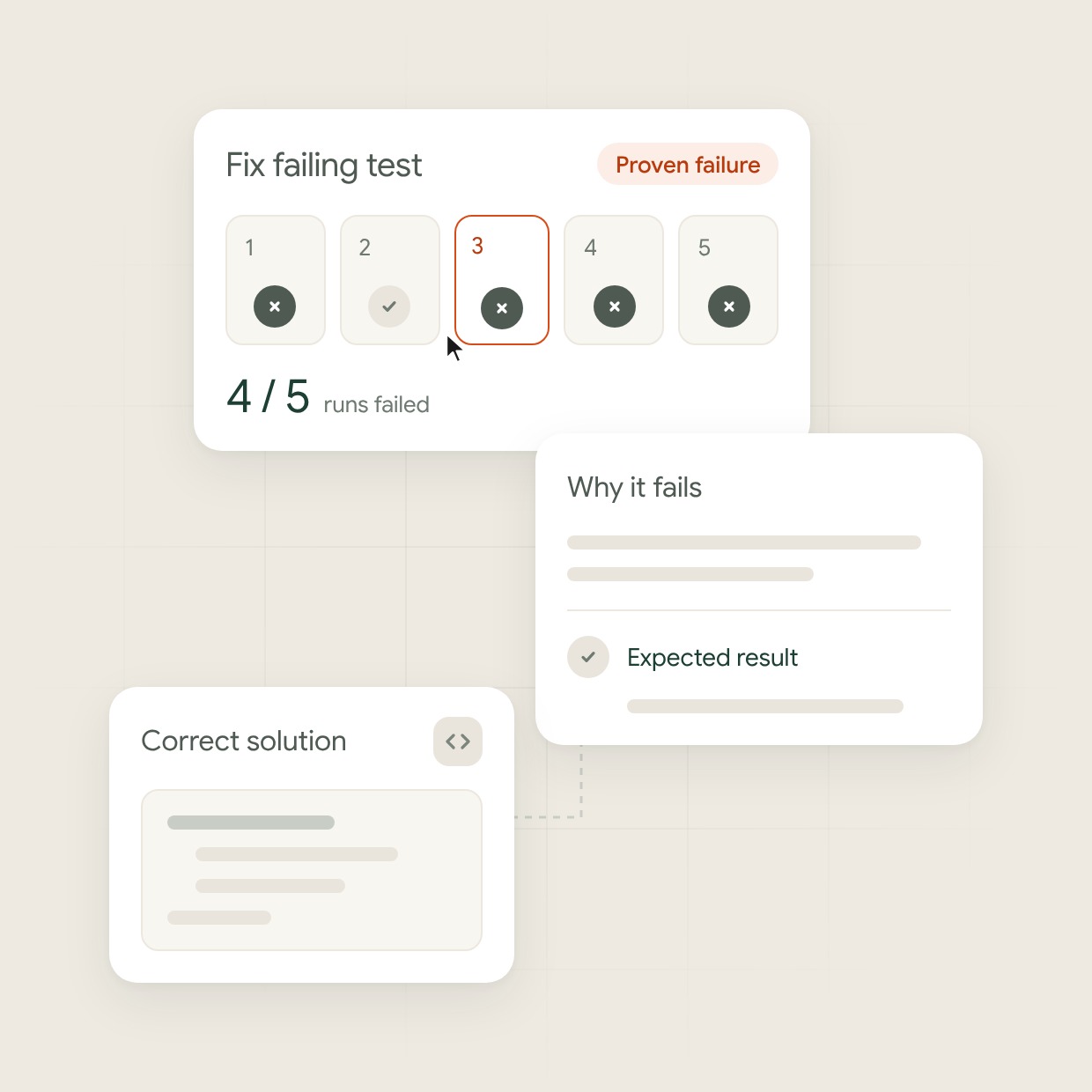
Each task runs many times on the same version, and a failure counts only when it repeats. For every proven failure, the engineer writes where the answer goes wrong and what the correct result is, and you get a failure rate per task type.

Reference solutions and answer comparisons

For each failure, an engineer writes a correct solution your team can train on. Engineers also compare pairs of AI answers and mark the better one with a reason, and a senior reviewer checks every submission before it reaches you.

One coding task run five times on the same model: four runs fail, so the failure is proven, with the reason and a correct solutionOne coding task run five times on the same model: four runs fail, so the failure is proven, with the reason and a correct solution

Expert Teams at Scale

SWEs matched to your domains

We hire and assemble software engineers for the languages, frameworks and domains your model needs to get better at. New engineers start with a mentor and a reviewer, so their first tasks already follow your guidelines and rubric.

Senior review of every submission

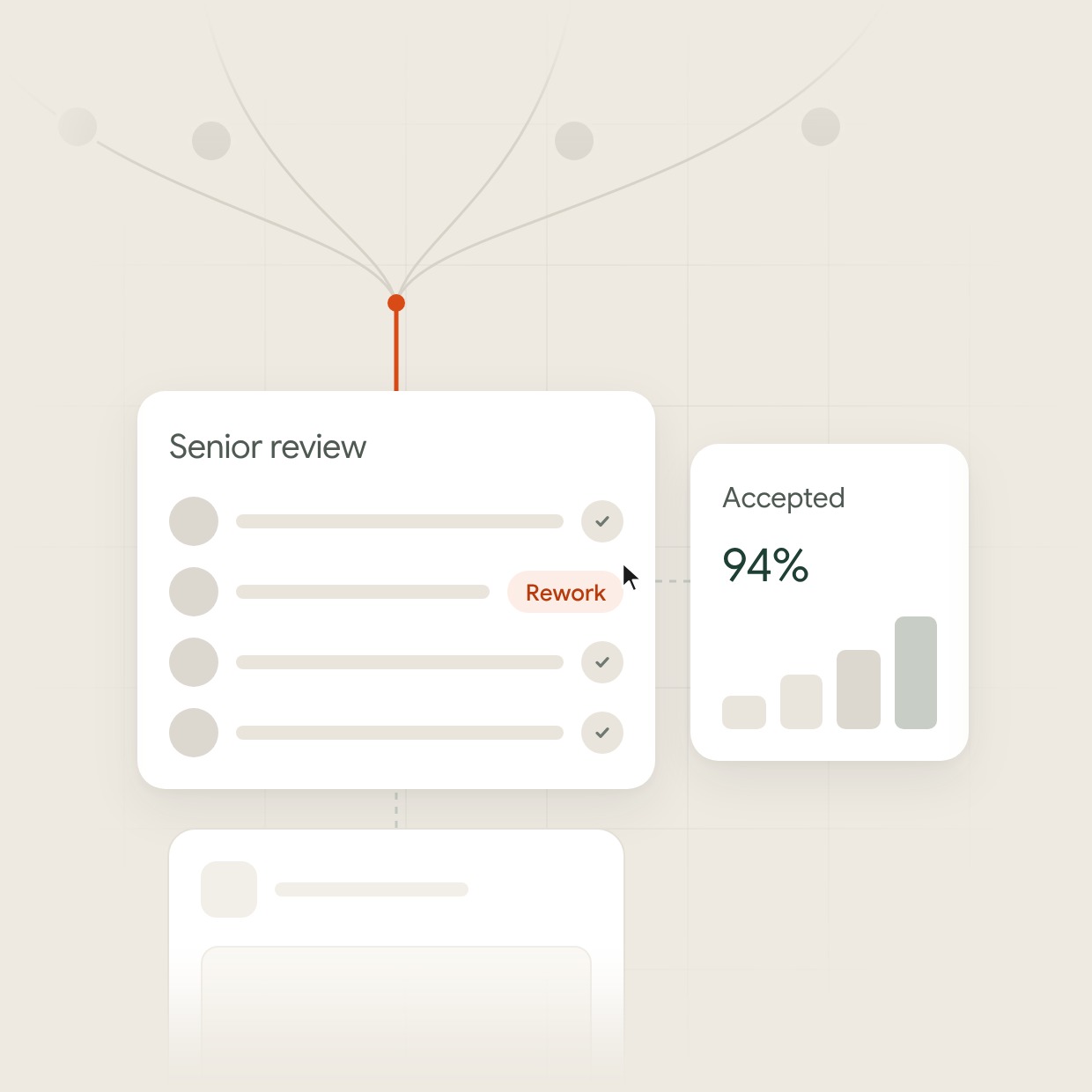
A senior reviewer checks each task, its written reason and its solution before it reaches you. Weak submissions go back to the author with comments, and acceptance rates are tracked per engineer, so quality holds as the team grows.

A team that grows with your volume

The evaluation team starts small and grows when your volume does. Hours and tasks are tracked per person and per week, and you get a regular report on what was submitted, accepted and sent back for rework, with the numbers broken down by engineer.

Submissions from many engineers go through senior review: most are accepted, one goes back for rework, acceptance stays high as volume growsSubmissions from many engineers go through senior review: most are accepted, one goes back for rework, acceptance stays high as volume grows

For AI in Your Product

A test set from your real cases

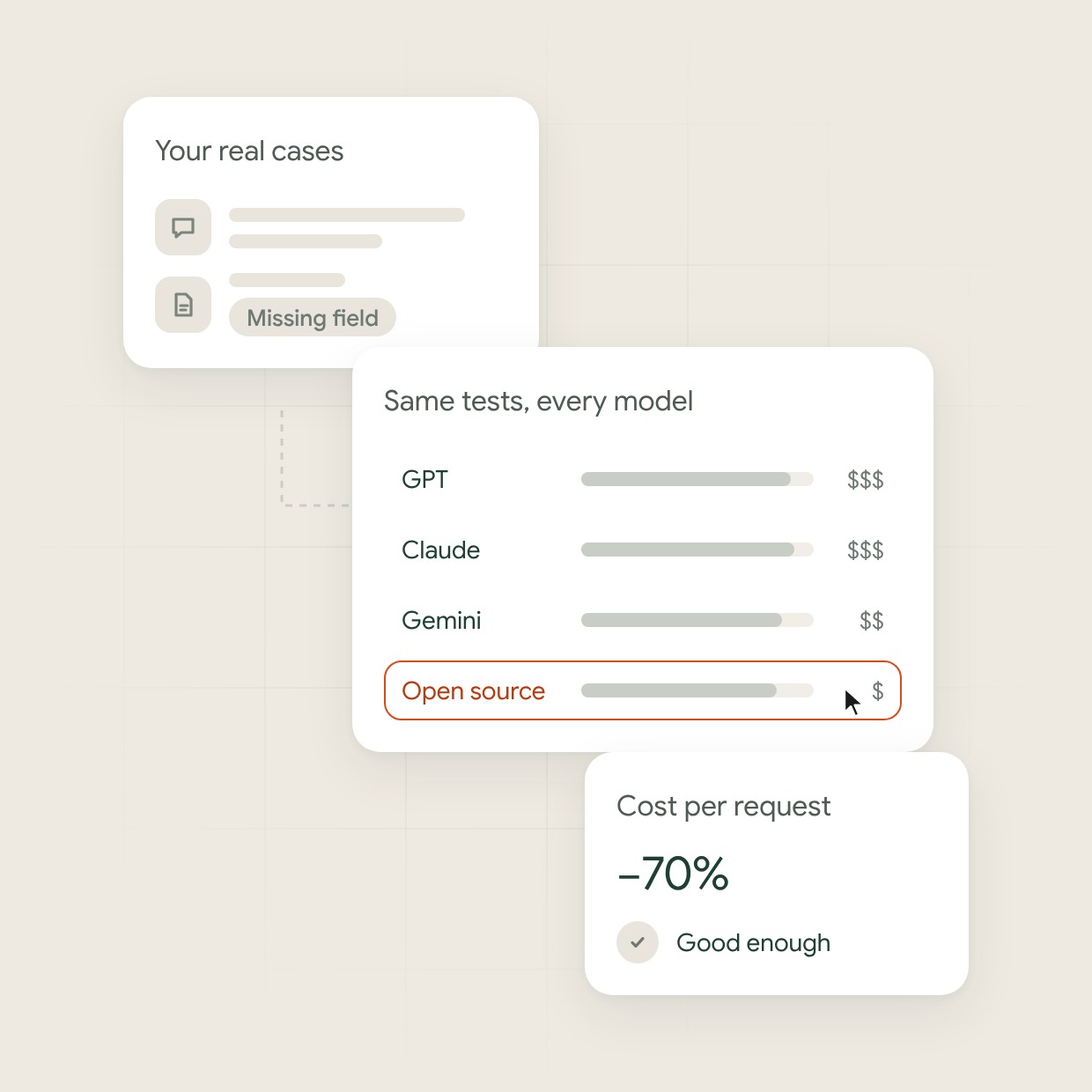
We start from the inputs your product sees, such as support tickets, contracts, user questions or code from your repository. Engineers add the hard versions of those cases, where a field is missing, two rules conflict or the question is vague.

Comparison of GPT, Claude and Gemini

The same test set runs on GPT, Claude, Gemini and open-source options. Answer quality, speed and cost per request go into one table you can share with your team. You see whether a cheaper option is good enough before you pay for a larger one.

Fixes measured on the same tests

We fix prompts and document search or add a second model that checks answers, and every fix reruns the failing tasks. When fixes are not enough, the proven failures become training data for fine-tuning an open-source model on your own examples.

Your real cases run on GPT, Claude, Gemini and an open-source model in one table; the cheaper model passes at a lower cost per requestYour real cases run on GPT, Claude, Gemini and an open-source model in one table; the cheaper model passes at a lower cost per request

Tests That Stay With You

A regression set for every release

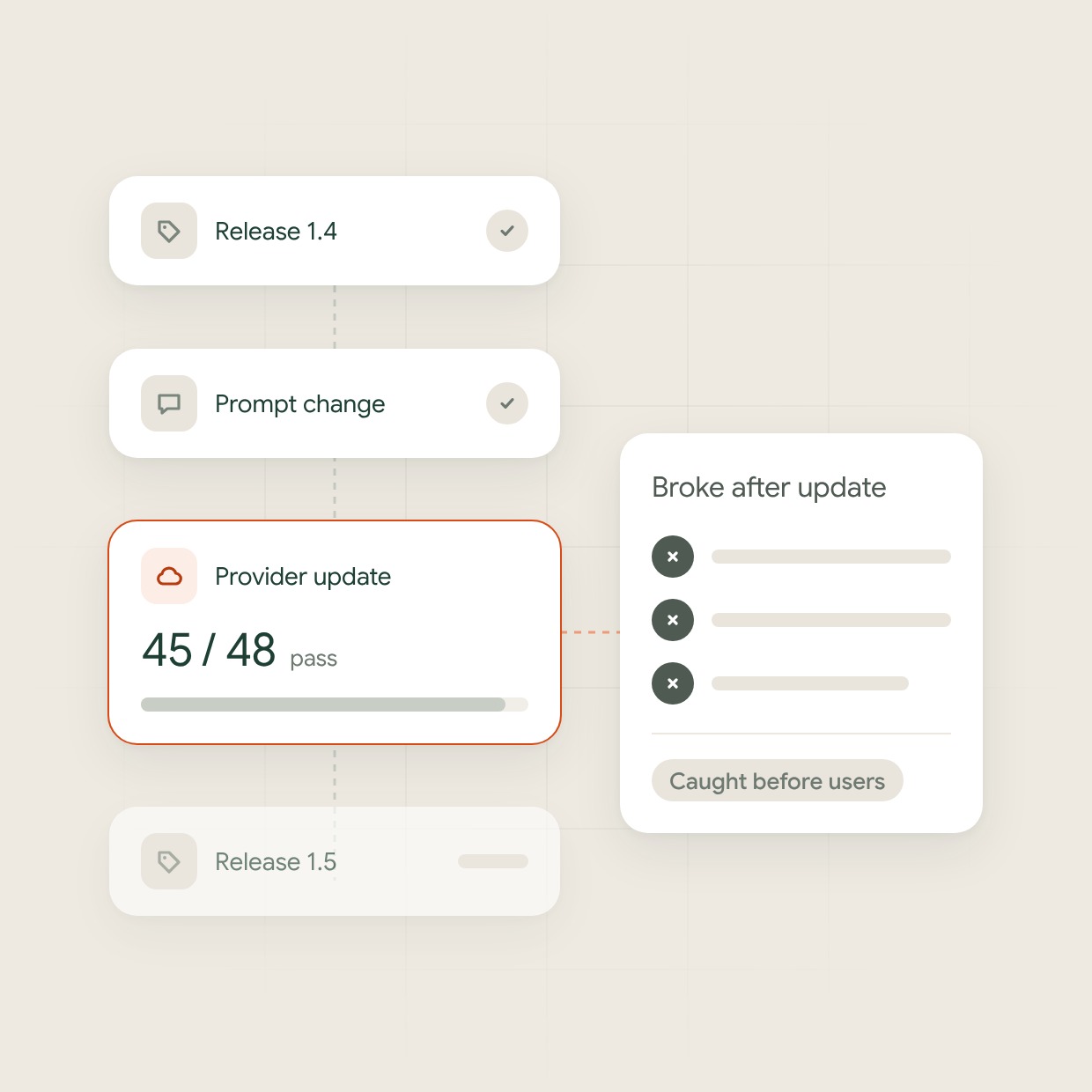
The failing tasks and the fixed ones become a set that runs on every new model version or prompt change. A fix that repairs one case and breaks three others shows up in the scores before it reaches users, along with the cases that moved.

Rechecks when a provider updates

GPT, Claude and Gemini get new versions several times a year, and an update can change answers your product relies on. Before you switch, the same set runs on the new version. You see which answers broke and whether the switch is worth it.

A report your team can act on

The report lists each proven failure with the task, the AI’s answer, the expected result and how often it repeated. Failures are grouped by cause, so your engineers see which ones a prompt fix closes and which ones need new training data.

A regression set runs on every release: after a provider update three cases break and are caught before users see themA regression set runs on every release: after a provider update three cases break and are caught before users see them
HOW WE WORK

Our AI Model Evaluation Process

  1. Share your guidelines

    Task types, domains and your rubric
  2. Assemble the team

    SWEs hired and trained for your domains
  3. Break the model

    Prompts it fails, proven by repeated runs
  4. Review every task

    Senior reviewers check each submission
  5. Hand over the data

    Failures, reasons, solutions and ratings
  6. Scale with you

    More engineers as your volume grows
RELATED SERVICES

Not quite what you need?

Questions and answers

Frequently Asked Questions

What is AI model evaluation?

AI model evaluation, also called AI assessment, is testing how an AI system answers real tasks and measuring where and how often it fails. At UITOP, engineers write hard tasks for coding models, chat assistants or AI features. Each failure is rerun to prove it, and the results become fixes or training data. Automated LLM evals score answers against a fixed test set, while human evaluation by our engineers adds new hard tasks and finds failures that set does not cover.

How much do AI model evaluation services cost?

For model teams, we set up a dedicated evaluation team billed monthly, based on our average rate of €40 an hour. For product teams, a full evaluation with a test set, a report and fixes starts from €6,400 and takes from 4 weeks.

How long does an LLM evaluation take?

A full evaluation takes from 4 weeks. That leaves time to test the AI from several angles, fix what we find and rerun the tests. How soon the first failure shows up depends on the AI and the tasks, so the first weeks leave room for several rounds of attempts. For model teams, the evaluation team works on an ongoing basis and grows with your volume.

Can you scale a team of software engineers for our model?

Yes. We hire and onboard software engineers for the languages and domains your model needs, and the team grows with your volume. New engineers start with a mentor and a reviewer, and every submission passes senior review before it reaches you.

We use GPT or Claude in our product. Is this for us?

Yes. If your product runs on GPT, Claude or Gemini and the feature gives wrong answers, this is the service for you. We test your feature on your real cases, compare the main options on them and fix the prompts or document search. You keep the test set and run it before each release.

How do you prevent AI hallucinations?

AI models can hallucinate, so we build AI features in layers where one model checks another’s output before it reaches users. Results with low confidence go to a person, and a test set from your real cases runs before every release. For mature products we build custom models trained only on your data and keep working to cut hallucinations further.

How do you use AI in your own work?

We use AI tools across design and development, and our designers and engineers check every result. AI helps us write code faster, design and build components faster, hand them from design to development and assemble new screens from existing parts. On one fintech project, Figma MCP and Claude Code turned a design system into code in 3 days instead of about 2 weeks. Our engineers design the architecture and review the code before every release.

Can you work with our in-house team?

Yes. UITOP designers and engineers work with your in-house team as part of it. They join your daily calls and chats, plan the work with your developers and follow the same process and code review. You can talk to them every day, like to any other teammate. Your team sees each change and keeps full ownership of the code.

Do you work with companies in the UK and EU?

Yes. Our working day overlaps most of the UK and EU working day, and for US clients we are available for most of the Eastern Time working day. We quote in US dollars and euros.