
















AIHow we use AI in our process Learn moreabout how we use AI in our process

FITNESS, WELLNESS & WELLBEING APPS

Wellness & Fitness App Design and Development

We design and build fitness, wellness and mental-wellbeing apps for iOS, Android and the web. That covers onboarding that converts, habit loops people keep coming back to, wearable data that syncs, and subscriptions that bill correctly. A clickable prototype takes 1 week per clickable flow; build teams start at €3,200 per four weeks.

Let’s build your product
Retention-first UXHealthKit & Health ConnectSubscriptions & paywalls

Wellness App Development
for Apps People Keep Opening

UITOP’s wellness app development service takes a consumer fitness, wellness or mental-wellbeing product from discovery to a live App Store and Google Play release: onboarding and habit design, iOS, Android and web engineering, wearable and payment integrations, and privacy and store readiness. It is for founders, studios and wellness brands that need a premium app people still open after the first week. Clinical software for providers belongs on our healthcare page.

01

Built for week four, not day one

Most wellness apps lose users after the novelty fades. We design onboarding, goals, reminders and progress so the habit forms before the trial ends.

02

Health data handled with care

Permissions, consent and data flows are designed up front for Apple HealthKit, Android Health Connect, GDPR and app-store review. Privacy is not left for the week before launch.

03

One team from idea to store

Researchers, designers and engineers work in one delivery flow, so the paywall, the workout player and the sync logic ship as designed.

Selected Metrics that
Reflect Our Product Delivery Experience

5/5
Clutch rating from 25 reviews
64
Projects delivered
74%
Clients who stay long-term
100%
In-house designers and developers
2 weeks
To a clickable prototype, from €3,200

What Clients Say About
UITOP’s
Product Delivery

5.0
25 reviews
Cole Weiler video review
Play
Cole Weiler

Cole Weiler

CEO, BoltWise

“They took extra time to ensure that our frontend developer could easily implement the wireframes.”

Sam Jordan

Sam Jordan

TrovBase, CEO
USA
Jake Heimark video review
Play
Jake Heimark

Jake Heimark

Costa Security, CEO

“They took way more responsibility than we asked and we were so happy with the results of all their work. UITOP was easy to work with, flexible, and valuable to our company.”

Neil Hosey

Neil Hosey

ResHub, CTO
USA
Dirk Pauw video review
Play
Dirk Pauw

Dirk Pauw

CEO, Tavas

"We are happy with the improved UI/UX, which has made product navigation cleaner, simpler, and more intuitive. The team is great and always there to help."

Michael Mosseri

Michael Mosseri

Total Brokerage, CEO
USA
Dylan Gambardella video review
Play
Dylan Gambardella

Dylan Gambardella

Founder, Different Health

“We’re most impressed with UITOP’s ability to come up with a system to be able to bring design solutions.”

Jordan Girard

Jordan Girard

Whiterock, Founder
USA
Nicolas Endress video review
Play
Nicolas Endress

Nicolas Endress

ClimEase, CEO
Cases

Wellness & Fitness Cases

Examples of our wellness and health product work. ReLounge and Impruvon Health were design projects; AirClub covered both design and development. Each case study states its own scope.

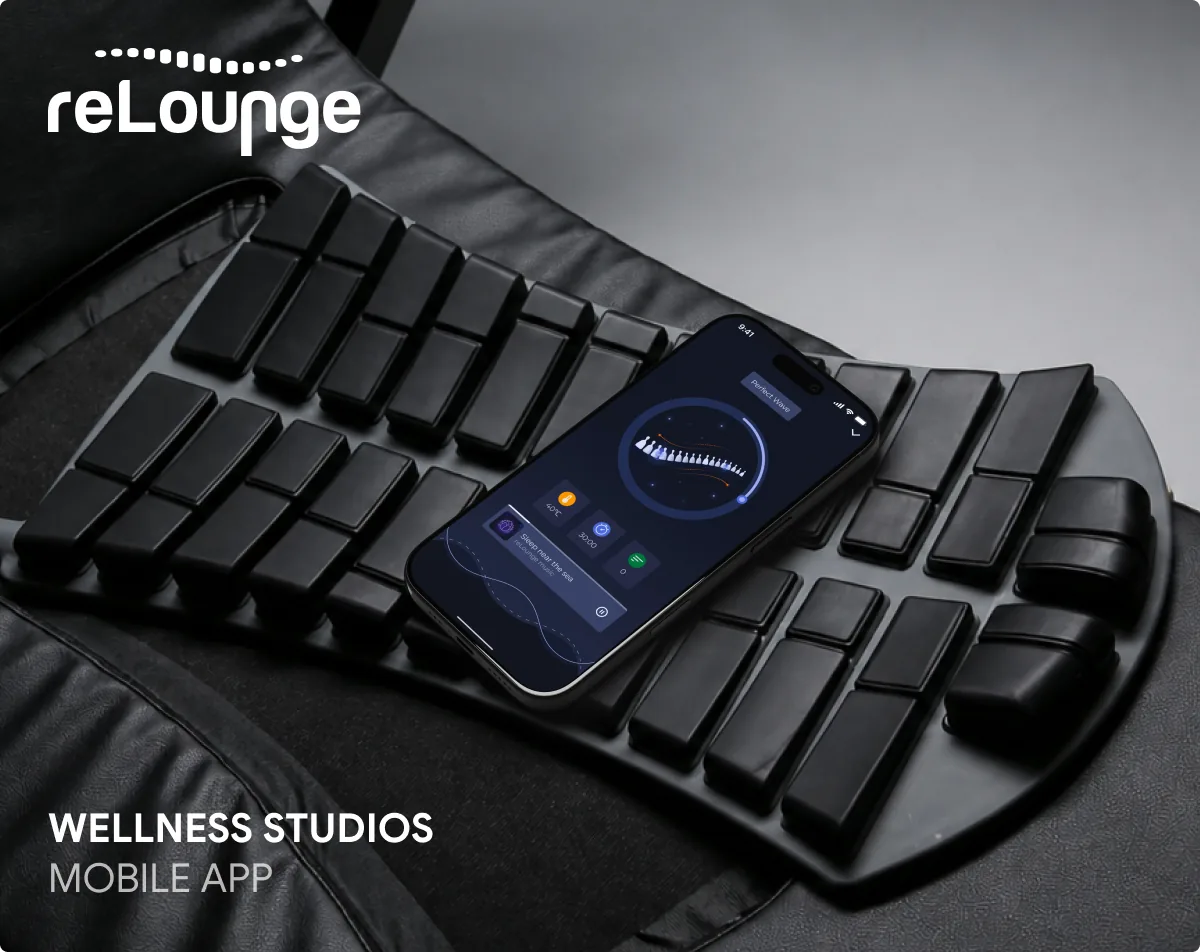
ReLounge back-health app case study by UITOP
RELOUNGE

Back-health app connected to training equipment

ReLounge is a consumer mobile app that connects to back-training equipment. We designed exercises, meditation, goals, rewards and progress tracking into one simple flow that keeps users motivated between sessions.

Explore ReLounge case study
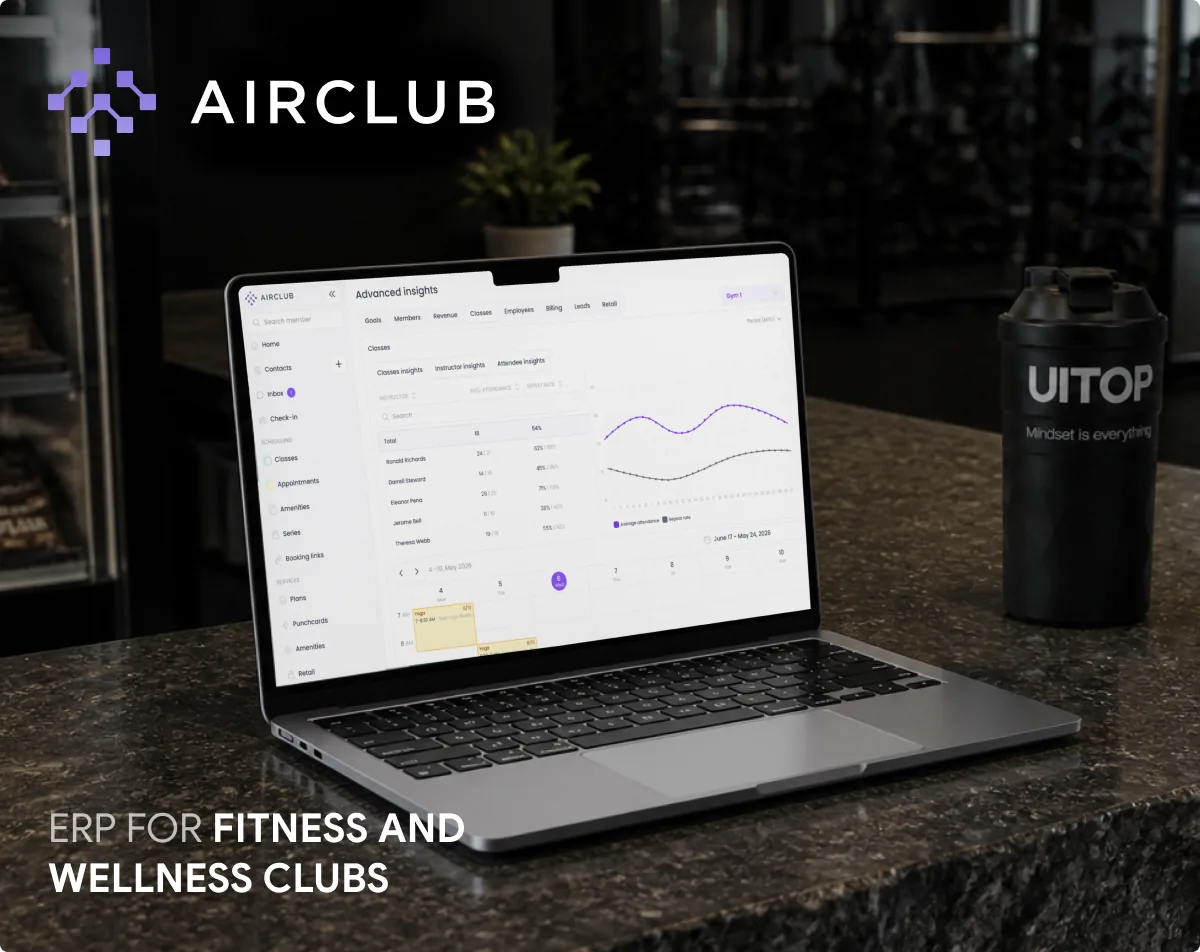
AirClub fitness studio platform case study by UITOP
AIRCLUB

Studio platform with a members’ video hub

AirClub is software for fitness and wellness studios. We redesigned and developed it to simplify member management, scheduling and payments, and built an online video hub for virtual classes. The product was acquired by a major New York gym chain.

Explore AirClub case study
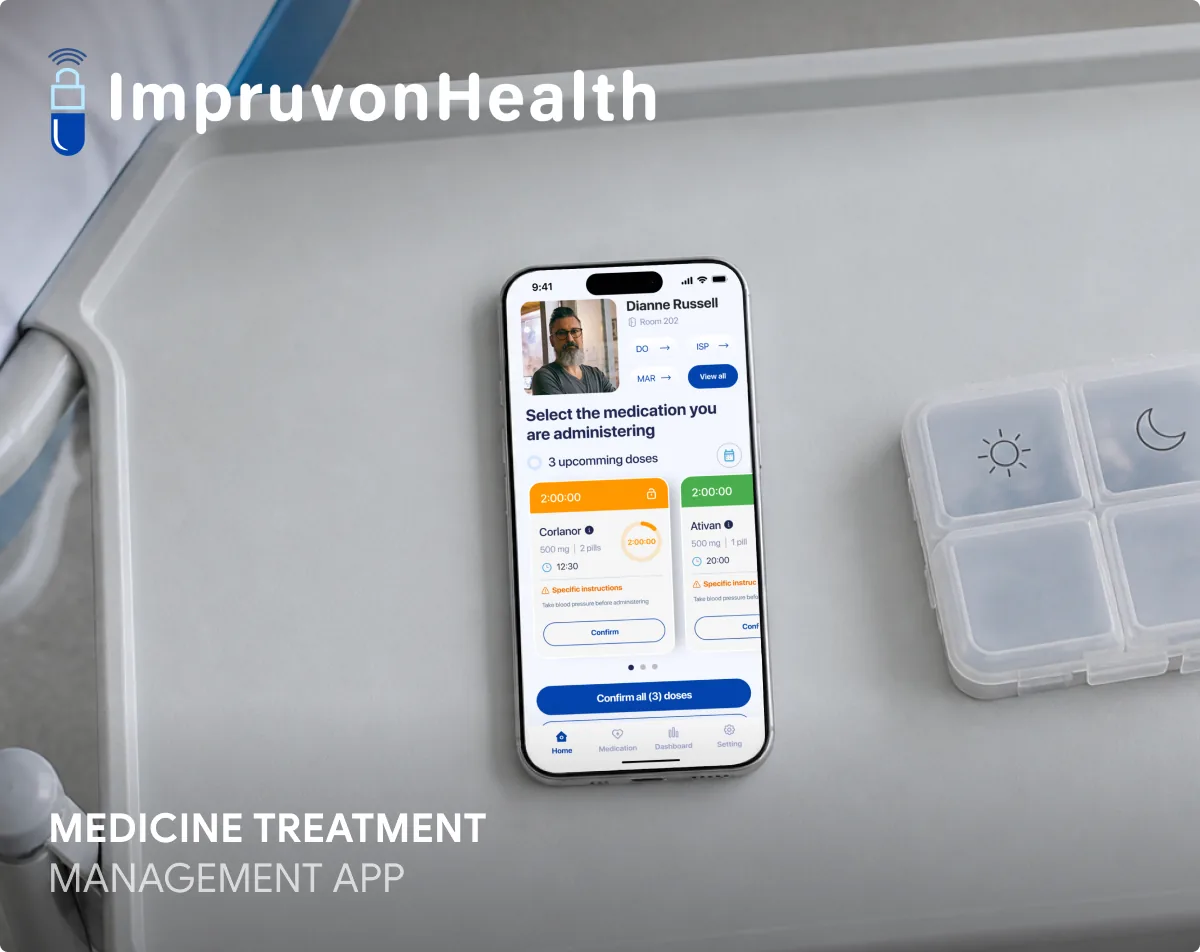
Impruvon Health patient app case study by UITOP
IMPRUVON HEALTH

Patient app built around reminders and routine

Impruvon Health helps patients follow their treatment plan with reminders, dosage tracking and side-effect notes, while doctors monitor progress. We designed onboarding and navigation for users of any tech level.

Explore Impruvon Health case study

Have a wellness app idea that needs to reach the store?

Let's define the habit your app builds, scope the first release and plan a launch your users will stick with.

Contact us
WHY UITOP

Why Wellness Brands Choose UITOP for App Development

01

Retention is a UX problem first

We design the first week, reminders and progress views as carefully as the core feature. That is where wellness apps win or lose subscribers, so onboarding, goals and re-engagement are planned before the first screen is built.
02

Wellness work you can inspect

ReLounge’s back-health app connects to training equipment and combines exercises, meditation and progress tracking. AirClub’s studio platform added a members’ video hub for virtual classes. Both case studies are public, and we can walk you through each one.

03

Design and engineering in one team

100% in-house designers and developers work in one flow, so subscription logic, sync states and empty states are designed and built together. What you approve in the prototype is what ships to the stores.

04

Privacy designed in, not bolted on

Health data needs explicit consent, per-type permissions and clear disclosures. We plan them in discovery, because retrofitting them late delays store approval and erodes the trust a wellness brand depends on.

05

Published prices, scoped up front

A prototype starts at €3,200, specialists start at €3,200 per four weeks, and you get an initial estimate within one business day. Scope is agreed in writing before any build work starts.

06

Clear about our limits

We build consumer wellness products. If your product diagnoses, treats or is used by clinicians, we scope it as healthcare software and say so before you commit, so compliance work is planned rather than discovered.

What Our Wellness App Development Services Include

Discovery & Product Strategy

Audience and habit research

We interview target users and map the moment the app must earn a place in their day. That defines the core loop and the first-week experience.

Monetization model

Free, trial, subscription, one-off or hybrid. We model the paywall position and pricing tiers against the value users reach before paying.

Release scope and plan

A prioritized first release, an integration list and a timeline your team can budget against.

Discovery & Product Strategy

UX/UI & Content Design

Onboarding and personalization

Short goal-setting flows that tailor plans without a 20-screen questionnaire.

Workout, meditation and tracking experiences

Players, timers, logs and progress charts designed for one-handed use, in the gym or on the go.

Design system

A component library that keeps new programs, challenges and content types consistent as the app grows.

UX/UI & Content Design

App Engineering & Integrations

iOS, Android and web apps

Native or cross-platform, chosen per product; backend, admin panel and content management included.

Health data and wearables

Apple HealthKit, Android Health Connect and wearable vendor APIs, with sync rules that survive offline sessions and denied permissions.

Payments and subscriptions

App Store and Google Play billing, Stripe for web, trials, promo codes and entitlement logic.

App Engineering & Integrations

Launch & Growth

Privacy and store readiness

Consent flows, privacy policy inputs, and the health-data disclosures App Store and Google Play reviewers look for.

Analytics and retention

Event tracking for activation, trial conversion and churn, plus the reminders and re-engagement flows that move those numbers.

Post-launch iterations

Releases based on real usage, new content types, and OS updates handled before they break features.

Launch & Growth
HOW WE WORK

Our Wellness App Development Process

Six steps, from habit idea to a store release.

  1. Define the habit

    A target user, core loop and success metrics

    We start with the person, not the feature list: who the app is for, which habit it supports and what a successful first month looks like. Interviews and competitor teardown give us a core loop and the metrics, such as activation and week-four retention, that the release will be judged on.

  2. Scope the first release

    Prioritized features, integration list and estimate

    We separate what the first release must prove from what can wait: programs, social features and extra content types usually come later. You get a prioritized feature list, the integrations it needs, such as HealthKit, Health Connect and billing, and an estimate your team can plan against.

    Further reading: MVP cost factors

  3. Prototype & test

    A clickable prototype tested with real users

    We build a clickable prototype of onboarding, the core session and the paywall at 1 week per clickable flow, then test it with people from your target audience. Confusing steps, weak motivation cues and paywall timing problems surface here, while they are still cheap to fix.

    Further reading: Building a fitness app from scratch

  4. Design & build

    Working app, backend and integrations in sprints

    Interface design and engineering run in the same sprints. We build the app, backend, admin panel and integrations against confirmed flows, including sync rules for offline sessions and denied permissions, and you review working builds every sprint rather than a big reveal at the end.

  5. Test & launch

    Store-approved release with analytics in place

    We test critical paths across devices and OS versions, prepare privacy disclosures, permission explanations and subscription terms, and submit to the App Store and Google Play. Analytics for activation, trial conversion and churn are live from the first day, so you learn from real users at once.

    Further reading: Ethical paywalls and cancellation

  6. Measure & grow

    A retention and monetization roadmap from real data

    After launch we review cohorts, funnels and user feedback together with you. The weakest step, whether onboarding, the first workout or the paywall, sets the next release, and we keep the app current with OS releases and store policy changes.

Our Value

Technologies, Tools, and Practices
We Use for Wellness Apps

We choose native or cross-platform stacks per product and pair them with proven tooling for health data, payments, analytics and AI-assisted delivery. Every choice is weighed against store requirements, offline behavior and how easily your team can extend the app after launch.

Let’s build a wellness app people still open in week four

Share your idea and get an initial estimate within one business day.

Contact us
BEFORE YOU BUILD

Plan your wellness app.

Practical answers to the decisions that shape a fitness or wellness product.

RELATED PAGES

Not quite what you need?

Each page covers one kind of project. If yours is different, one of these is likely a better fit.

Questions and answers

Frequently asked questions

How much does it cost to build a wellness or fitness app with UITOP?

It depends on platforms, integrations and backend logic. A clickable prototype starts at €3,200 and takes 1 week per clickable flow. For the build, each designer or developer costs €3,200 per four weeks part-time or €6,400 full-time, with PM and QA billed separately. On our pricing page, a comparable web-and-mobile MVP (Pacioli) cost €25,000. Share a brief and we send an initial estimate within one business day.

How long does it take to launch a wellness app?

A testable prototype takes 1 week per clickable flow. On our pricing page, a comparable MVP with a web app, a mobile app and bank integrations took 1.5–2 months of development, plus design time. Wearable integrations, content production and app-store review add time. We give you a timeline for your scope after a short discovery, before any build work is booked.

Does my wellness app need to be HIPAA compliant?

Usually not, if you sell directly to consumers and do not handle data for a healthcare provider or health plan. You still have obligations. In the US, the FTC Health Breach Notification Rule covers many health apps outside HIPAA, and sharing health data without authorization counts as a breach. In the EU, health data needs explicit consent under GDPR. We design for these from discovery.

Source: FTC Health Breach Notification Rule (Federal Register) and GDPR Article 9.

Can you integrate Apple Health, Health Connect and wearables?

Yes. We connect to Apple HealthKit on iOS and Health Connect on Android, and to wearable vendors’ APIs where they offer one. We design for denied permissions and offline sessions so the app still works. Note that Google Fit APIs are deprecated and supported only until the end of 2026, so new Android apps should use Health Connect instead.

Source: Android Developers, Google Fit migration FAQ.

Which monetization model works for wellness apps?

Most premium wellness apps use a free trial followed by a subscription, but the right model depends on how fast users reach value. We place the paywall after that moment and test pricing tiers. Many apps now mix subscriptions with one-off purchases. RevenueCat’s 2025 report found 35% of subscription apps do this. Honest cancellation flows reduce refunds and store complaints.

Source: RevenueCat, State of Subscription Apps 2025.

How do you improve retention in a fitness or wellness app?

We design the first week deliberately: a short goal-setting onboarding, an early win, reminders users control, and progress they can see. We instrument activation, trial conversion and churn from the first release, then iterate on the weakest step. In ReLounge’s app, for example, goals, rewards, reminders and progress tracking work together to keep users training.

Do you build native or cross-platform apps?

Both. Cross-platform frameworks such as Flutter or React Native suit most wellness apps: one codebase for iOS and Android, a faster release cycle and lower cost. Native makes sense for heavy device, sensor or background work. We recommend one during discovery, based on your integrations, performance needs and team, and explain the trade-off in plain terms.

Can you take over or redesign an existing wellness app?

Yes. We usually start with a UX audit: €1,000 for selected flows in three business days, or €1,500 for the full product in five. It covers onboarding, paywall, retention and usability issues, with prioritized fixes. From there we redesign the weak flows or join your team to build them, working with your existing backend and developers where that is the better option.