

















AIHow we use AI in our process Learn moreabout how we use AI in our process

MODELS TRAINED ON YOUR DATA

AI Model Training Services and LLM Fine-Tuning

We train AI on your company’s data so it uses your terms and handles your edge cases, and we test it on your real cases before users see it.

Contact us
Trained on your data onlyTested on your real casesOpen-source or custom models

AI Model Training Services
for Your Own Data

01

AI that learns your terms and edge cases

A first AI feature rarely needs training. If GPT, Claude or Gemini with search over your documents still miss your terms, formats or edge cases, we fine-tune an open-source model on examples from your work.

02

Training data from your own records

The training set comes from records your team already keeps, in whatever form they exist. Our engineers clean and label these records first, because the AI learns any errors in the data as readily as the right answers.

03

Tested on your hardest cases

Before release, the tuned version runs on real cases it never saw in training, and we deliberately add the cases where current tools fail. You see which answers got better after training, where the AI is still wrong and how much each answer costs.

Selected Metrics that
Reflect Our Product Delivery Experience

13
AI projects delivered
3
Model types: GPT/Claude, open-source, custom
110
Engineers, designers and QA in one team
100%
In-house team
74%
Long-term clients

What Clients Say About
Working with
UITOP

5.0
25 reviews
Cole Weiler video review
Play
Cole Weiler

Cole Weiler

CEO, BoltWise

“They took extra time to ensure that our frontend developer could easily implement the wireframes.”

Sam Jordan

Sam Jordan

TrovBase, CEO
USA
Jake Heimark video review
Play
Jake Heimark

Jake Heimark

Costa Security, CEO

“They took way more responsibility than we asked and we were so happy with the results of all their work. UITOP was easy to work with, flexible, and valuable to our company.”

Neil Hosey

Neil Hosey

ResHub, CTO
USA
Dirk Pauw video review
Play
Dirk Pauw

Dirk Pauw

CEO, Tavas

"We are happy with the improved UI/UX, which has made product navigation cleaner, simpler, and more intuitive. The team is great and always there to help."

Michael Mosseri

Michael Mosseri

Total Brokerage, CEO
USA
Dylan Gambardella video review
Play
Dylan Gambardella

Dylan Gambardella

Founder, Different Health

“We’re most impressed with UITOP’s ability to come up with a system to be able to bring design solutions.”

Jordan Girard

Jordan Girard

Whiterock, Founder
USA
Nicolas Endress video review
Play
Nicolas Endress

Nicolas Endress

ClimEase, CEO
Cases

AI Model Training Cases

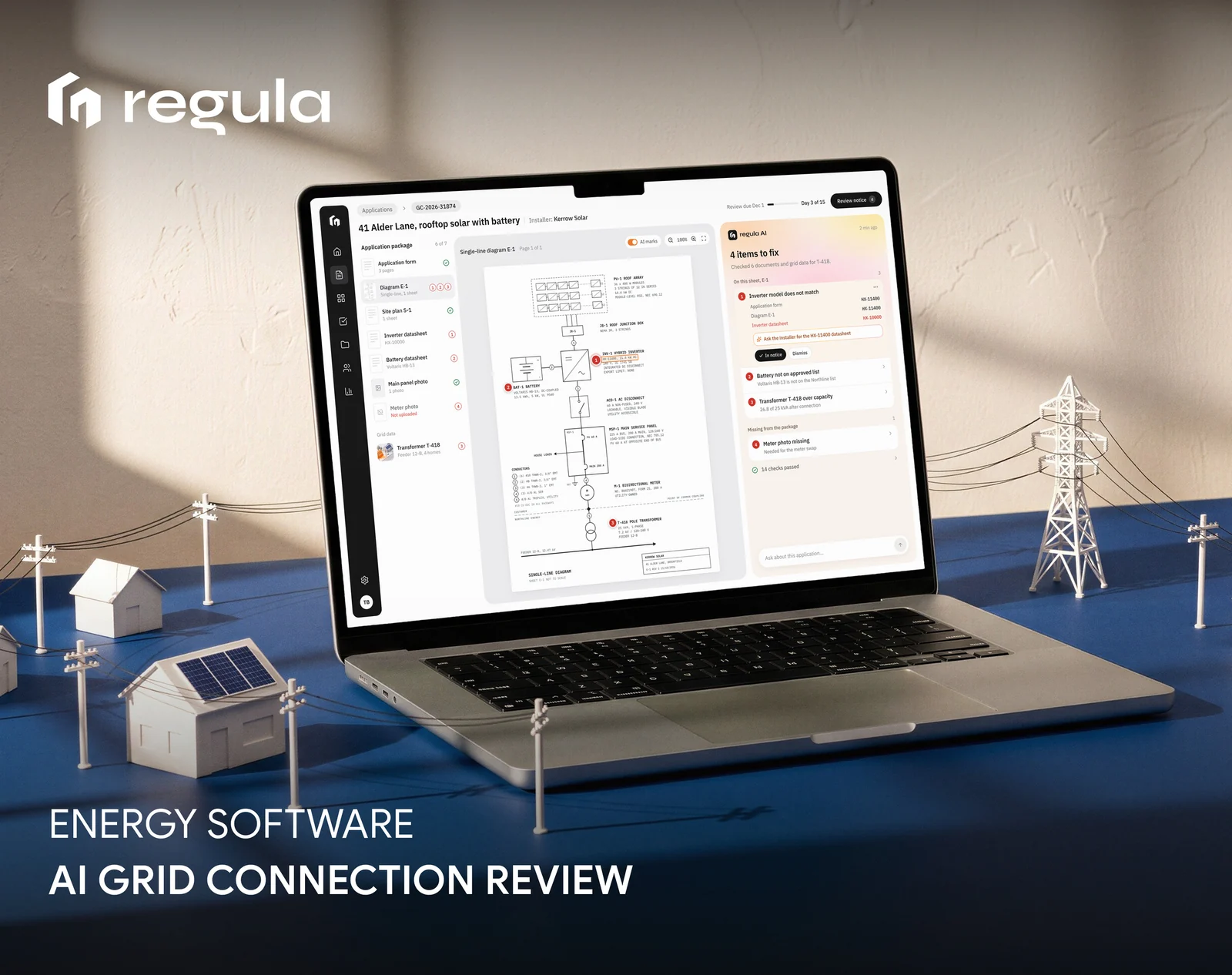
Energy software for AI grid connection review, a client AI model project under NDA by UITOP
PROJECT UNDER NDA

A client’s own AI model under NDA

On a long-running client project under NDA, UITOP is developing the client’s own AI model. The goal is to make it one of the strongest open-source options in its class. It learns only from that client’s data. Our team also builds the product around it, so the same people plan the training data, the processing of heavy files and the screens where the results are used.

Pacioli case by UITOP
PACIOLI

Client rules on top of AI categorization

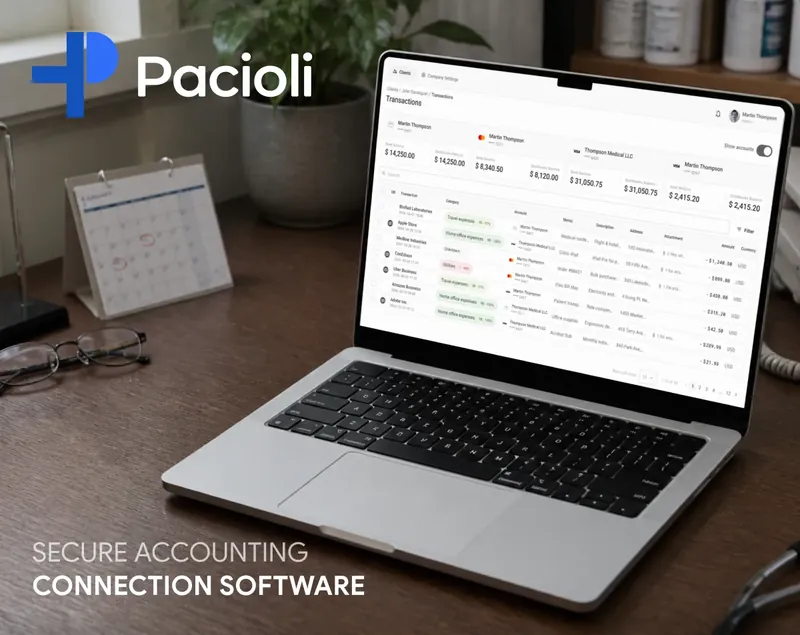
Pacioli is an accounting platform for healthcare professionals in Canada that pulls live data from about 97% of Canadian banks. Each accounting firm sorts transactions by its own chart of accounts, so general AI categorization was not enough on its own. UITOP used AI to sort transactions and gave accountants a rule engine that overrides it when a firm’s rules say otherwise. A UITOP team of 6 designed and built the web platform and mobile app.

Explore Pacioli case study
WHY UITOP

Why Companies Choose UITOP for AI Model Training

01

Proof on your data before training

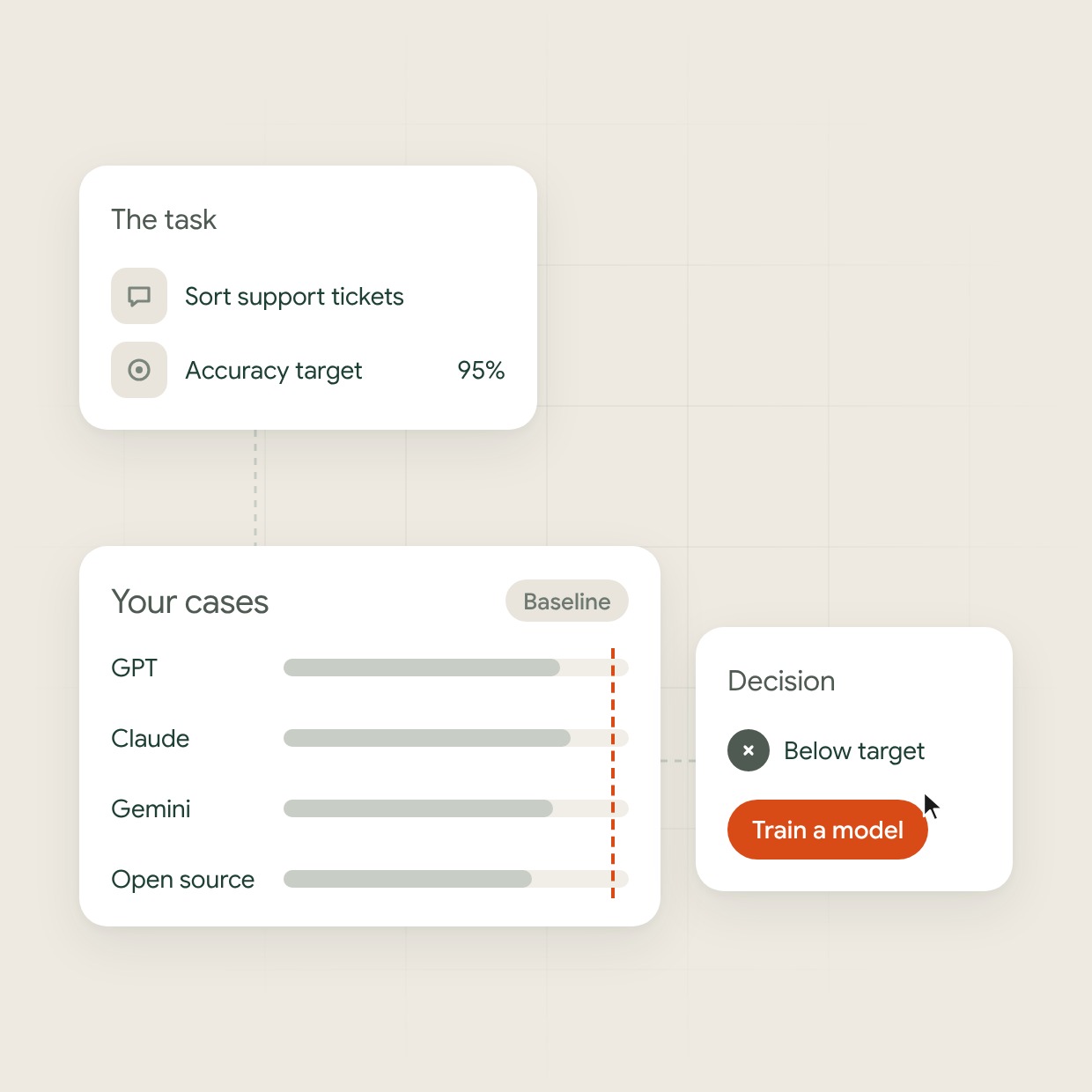
Training is an investment, and it has to show results on your own cases. Before any training budget is spent, we measure how GPT, Claude and Gemini handle your real tasks and how far they are from the accuracy your product needs. When the gap is real, we train. When it is not, you launch sooner on a ready model and put the budget into the product.

02

Three types of models in production

UITOP has integrated GPT, Gemini and Claude, added open-source models to products clients already run and built custom models on client data. We work across AI providers and model types, so we recommend the one that scores best on your real cases. You see the scores behind that choice in a table you can share with your team.

03

Training and product in one team

Engineers who run the training work with the full-stack engineers and designers of your product, and DevOps, a PM and QA engineers join when your project needs them. Training decisions take the product into account from the first week, and designers plan the screens for its answers while developers connect the result.

04

Screens built for wrong answers

People who rely on trained AI at work need to see where each answer came from and how sure the system is about it. Our designers plan those views, the flag and correct actions and the queue for answers a person has to check. Every correction your team makes there is saved as a labeled example for the next training round.

05

Your data trains only your model

Each custom model we build learns only from that client’s data, and your records never go into models we train for other clients. We log which records went into each training set, so any version of your model can be traced back to the data it learned from. If a record has to be removed later, you know which versions used it.

06

A report after every training round

After each training round you get a short written report. It shows the scores on your test set, the cases that got better or worse and the cost per request. With those numbers in front of you, you decide whether to release the version, run another round or stop training. The decision stays with you, and the report gives you the numbers to explain it to your team.

Thinking about training a model?

Tell us what your AI gets wrong today and what data you have, and we will look at whether training is worth it.

Contact us

What You Get from Our AI Model Training Services

Deciding Whether to Train

The task and the accuracy it needs

We define the one job the AI does, the mistakes that cost you most and the accuracy the product needs before launch. That target decides whether GPT, Claude or Gemini can do the job as they are or training is worth its cost.

Baseline tests on your cases

We run GPT, Claude, Gemini and suitable open-source options on a sample of your real cases. Answer quality, response time and cost per request go into one table, which you see before any training budget is spent.

Choice of the base model

We pick the starting point by its scores on your cases, its speed, its cost per request and where it has to run. Open-source options can run on your own servers, while GPT, Claude and Gemini run through the provider’s API.

GPT, Claude, Gemini and an open-source model tested on your real cases all fall below the 95% accuracy target, so the decision is to train a modelGPT, Claude, Gemini and an open-source model tested on your real cases all fall below the 95% accuracy target, so the decision is to train a model

Training Data Preparation

Data audit

We check where your data lives, how much of it there is and what the AI is allowed to see. Early in the project you learn whether there is enough to train on, how much cleanup it needs and how many weeks that work will take.

Cleaning and labeling

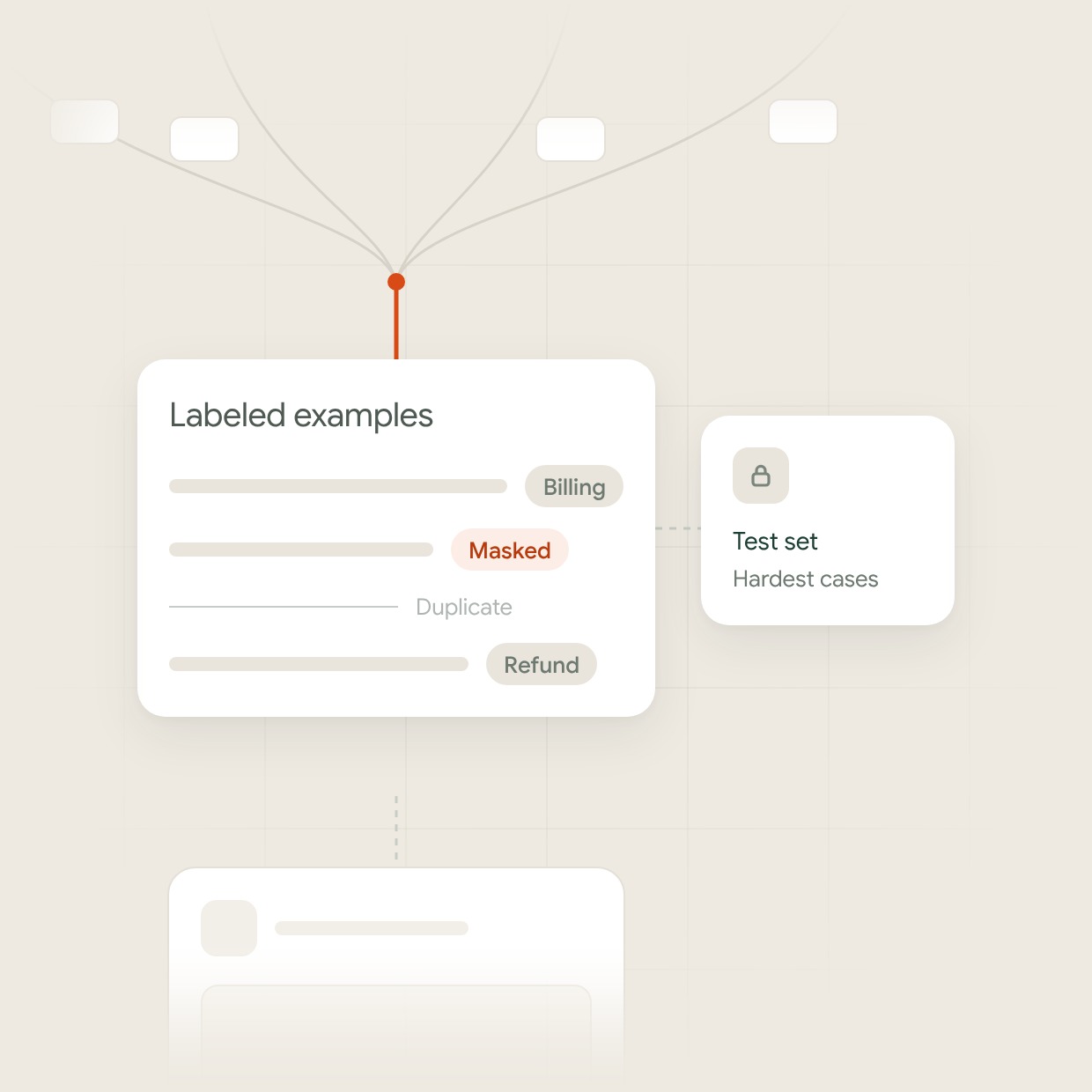
Our team removes duplicates, fixes formats, corrects records with wrong answers and labels examples with the answers you expect. Where the task allows it, personal data is masked or removed before training starts.

A test set from your hardest cases

Some of your real cases are set aside and never used in training, especially those where current tools fail. Every new version is scored on this set, so progress is measured on your own work and on the cases that matter to your users.

Scattered records flow into one clean set of labeled examples with duplicates removed and personal data masked, while the hardest cases are set aside as a test setScattered records flow into one clean set of labeled examples with duplicates removed and personal data masked, while the hardest cases are set aside as a test set

Model Training and Fine-Tuning

Fine-tuning open-source models

We fine-tune open-source models on your examples so they use your terms, follow your output formats and handle your edge cases. After tuning, a smaller model can answer faster and cost less per request than a large general one.

Custom AI model development for mature products

For products at a later stage, we build custom AI trained only on the client’s data. This route fits companies with a large set of their own examples and a task that general tools keep getting wrong.

Several models in one product

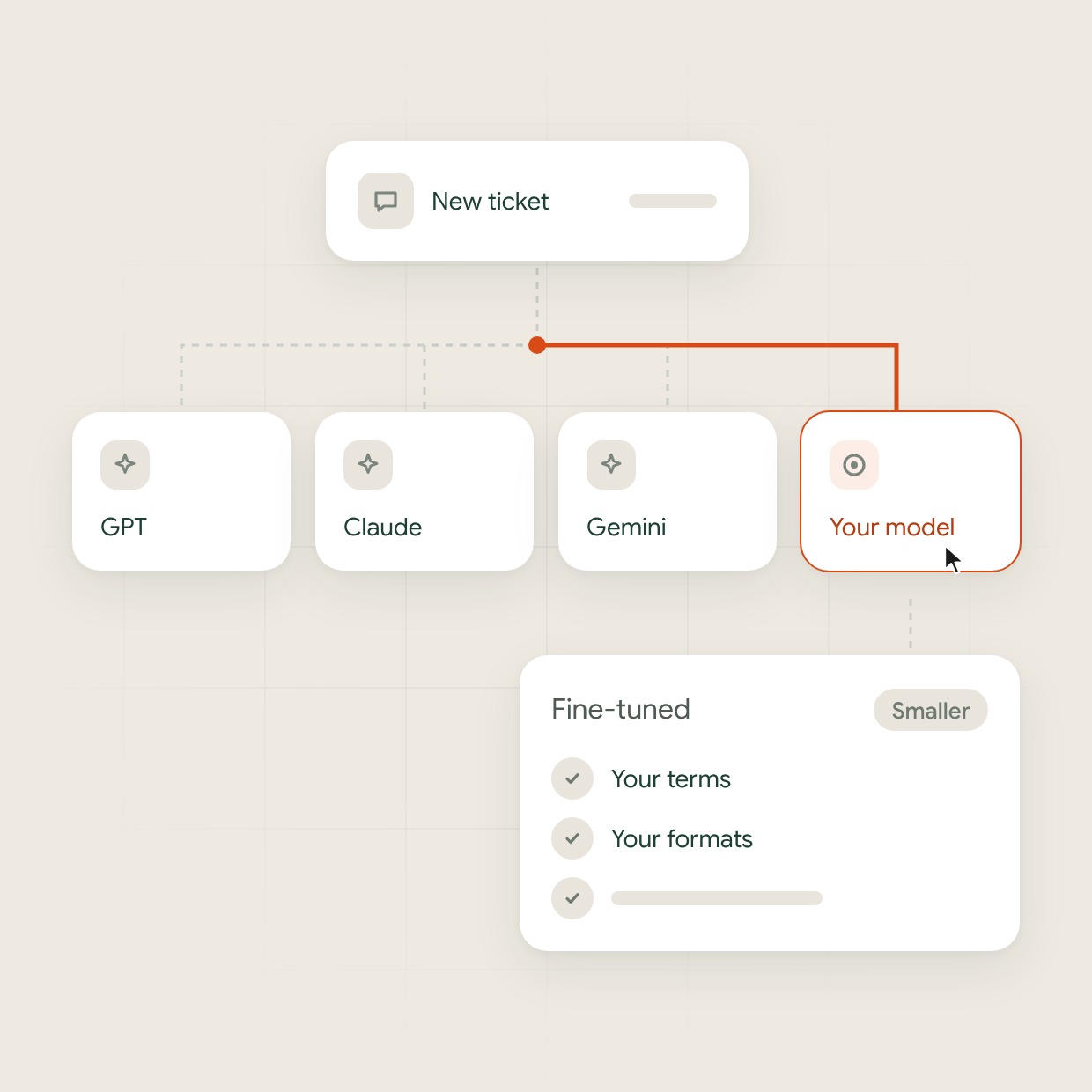
Sometimes one AI is not enough, and the work is split between several. In one product we work on, GPT, Gemini, Claude and a custom one run side by side. Each request goes to the one set up for that task.

A new ticket is routed to the model set up for it: your fine-tuned model, a smaller model that uses your terms and formats, next to GPT, Claude and GeminiA new ticket is routed to the model set up for it: your fine-tuned model, a smaller model that uses your terms and formats, next to GPT, Claude and Gemini

Testing, Launch and Retraining

Comparison with the base model

Each trained version is compared with its starting point and the previous version on the same test set. If training did not beat the starting point, you see it before release and do not pay to run a weaker version.

Hosting on your infrastructure

A fine-tuned open-source model can run on your servers or in your cloud account, so requests stay inside your infrastructure. Our DevOps engineers set up the hosting and show what it costs to run each month.

Retraining after launch

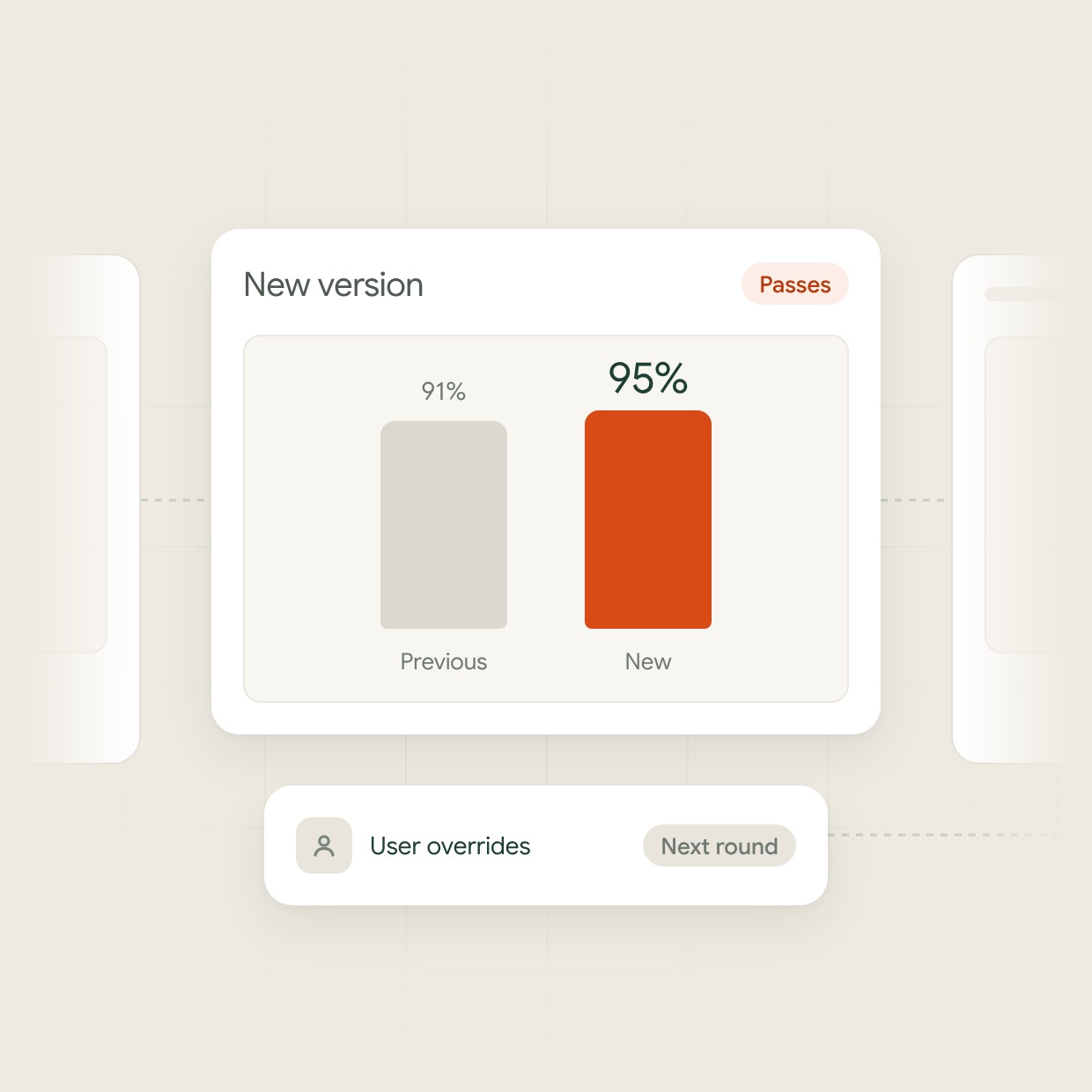
After launch we track where the AI is wrong and where users override it. Those cases go into the next training round. A new version has to pass the same test set as the old one before it replaces it in production.

A new model version scores 95% against 91% for the previous one on the same test set and passes; user overrides after launch go into the next training roundA new model version scores 95% against 91% for the previous one on the same test set and passes; user overrides after launch go into the next training round
HOW WE WORK

Our AI Model Training Process

  1. Define the task

    The job, the costly mistakes and the target accuracy
  2. Test base models

    Scores for GPT, Claude, Gemini and open-source models
  3. Prepare the data

    A cleaned, labeled dataset and a held-out test set
  4. Train & evaluate

    A tuned version scored against its starting point
  5. Integrate & launch

    The tuned AI in your product with review states
  6. Monitor & retrain

    New training rounds from real errors
RELATED SERVICES

Not quite what you need?

Questions and answers

Frequently Asked Questions

What are AI model training services?

AI model training services prepare your data and then fine-tune an existing model or train a custom one for a specific task in your product. The work spans the choice of a starting point, data cleaning and labeling, training and tests on your real cases. It ends with the trained version connected to your product.

How much do AI model training services cost?

Adding an open-source AI model to a product you already have starts from €6,400. Fine-tuning or a custom build costs more, depending on how much data needs cleaning and labeling and how much compute the training takes. Before work starts you get a written estimate based on our average rate of €40 an hour.

How long does it take to fine-tune a model?

Adding an open-source AI model to a product you already have takes from 4 weeks. Fine-tuning adds time for data cleaning, labeling and test rounds, and the amount depends on the state of your data. You get a timeline after the data audit, before training starts.

Do I need fine-tuning, RAG or a custom model?

Start with RAG, which searches your own documents, when answers depend on content that changes often, such as policies, product specs or a knowledge base. Fine-tuning fits when the AI has to learn your terms, output formats or past decisions and GPT, Claude or Gemini still miss them after prompt work. A custom build makes sense for a mature product with a large set of its own examples. We test the cheaper options on your real cases first.

What data do you need to train a model?

We need real examples of the task, such as support tickets with the right replies, contracts with the key clauses marked or forms your team filled in. Personal data is masked or removed where the task allows it. Your data trains only your AI, never the ones we build for other clients.

How do you prevent AI hallucinations?

AI models can hallucinate, so we build AI features in layers where one model checks another’s output before it reaches users. Results with low confidence go to a person, and a test set from your real cases runs before every release. For mature products we build custom models trained only on your data and keep working to cut hallucinations further.

How do you use AI in your own work?

We use AI tools across design and development, and our designers and engineers check every result. AI helps us write code faster, design and build components faster, hand them from design to development and assemble new screens from existing parts. On one fintech project, Figma MCP and Claude Code turned a design system into code in 3 days instead of about 2 weeks. Our engineers design the architecture and review the code before every release.

Can you work with our in-house team?

Yes. UITOP designers and engineers work with your in-house team as part of it. They join your daily calls and chats, plan the work with your developers and follow the same process and code review. You can talk to them every day, like to any other teammate. Your team sees each change and keeps full ownership of the code.

Do you work with companies in the UK and EU?

Yes. Our working day overlaps most of the UK and EU working day, and for US clients we are available for most of the Eastern Time working day. We quote in US dollars and euros.