How we use AI in our process


Product, Development
/
Oct 21, 2026
Software development is the work of building and maintaining software, from writing code to testing how it runs. Product engineering covers this task as well but also ties it with making decisions about the product itself. This may include identifying which issues users face and figuring out ways for continuous enhancement. The two ideas can often overlap, creating potential confusion when forming a team. Understanding product engineering vs software development helps you decide which responsibilities to keep internally and which to delegate to a partner.
In a software development engagement, you agree on what the software needs to do, and the team builds and tests it. The scope can include maintenance and later improvements. Normally, you choose which issues to tackle and if the completed software provides the outcomes that you need.
In the area of product engineering, this idea involves software development. However, the group also assists in making these product choices. It challenges needs, aids in setting priorities, and monitors what occurs after release. If users have difficulty with a feature or do not use it at all, the team contributes to finding out why and what adjustments are necessary.
The comparison is about the engagement model. It says nothing about how skilled the engineers are. The same team can work under either arrangement, depending on the responsibility and decision-making authority you give it.
The main difference is how much responsibility the team takes beyond building the software. Here is how that usually works in each engagement:
| Area | Software development | Product engineering |
|---|---|---|
| Focus | Deliver the software you have agreed to build | Decide with you what is worth building and keep improving its usefulness |
| Starting point | Requirements that give the team enough detail to begin development | A problem to investigate, with some requirements still to be worked out |
| Scope | Defined work that may include ongoing development and maintenance | Work across the product’s life, including deciding what to change or retire |
| Ownership | The team is responsible for implementation. You usually set product priorities | You and the team share responsibility for priorities and product results |
| Team | Developers work with the specialists needed for the agreed scope | Developers, designers and product specialists stay involved in product decisions |
| Metrics | Does the software work as specified? Is delivery on track? | Are people using it successfully? Is it meeting business goals? Technical quality still matters |
| Change-handling | Discuss the request and agree on its effect on cost and delivery | Review what you have learned and decide whether planned work should change |
| Post-launch responsibility | Fixes and improvements depend on the support agreement | The team continues checking results and addressing problems throughout the engagement |
Choose based on how much you still need to figure out and which skills you have in-house. If your people can research user needs and set priorities, you may need a team mainly for development. If these responsibilities require support, consider product engineering. Product maturity matters because it affects what you already know, although even an established product can face uncertainty about its next direction.
Software development can begin with an approved specification. Product engineering often begins by checking the problem behind this specification and deciding what needs to be built.
If you already know what users require, the development team can review your requirements and plan the work. It still needs to flag gaps or question technical choices. You provide the reasoning behind the requested features.
When that reasoning is uncertain, software discovery before development helps you work through it. The team investigates who has the problem and how they currently deal with it. It checks whether your proposed solution fits their work. Budget limits and dependencies on existing systems also need to be understood before you commit to an approach.
Suppose you want a dashboard because managers spend hours preparing reports. The team should find out what takes so long. If managers spend most of the time correcting inconsistent data, a new dashboard may leave the actual problem unresolved. That finding changes the requirements.

Discovery should leave you with decisions developers can act on: prioritised requirements and user flows, supported by research. Tested prototypes help explain how the solution should work. UITOP includes these deliverables alongside technical planning in our discovery service.
You also need a record of unresolved risks and clear success criteria. For the reporting example, this could mean agreeing on a target reduction in preparation time and how you will measure it.
This work continues beyond the opening workshop. As development exposes technical limits, the team revisits affected decisions. After release, it checks whether the reporting process actually takes less time and investigates what still slows users down.
Both engagement models can include discovery. In product engineering, continuing the investigation is part of the team’s ongoing responsibility.
When you hire a team, you should agree on what it is responsible for: delivering the requested software or helping you decide what to build and checking the results.
There are three levels of responsibility:
Imagine customers requested that export to save time preparing client reports. The team builds it correctly, but customers still spend hours rearranging the downloaded data. The requirements were met. Customers’ work has barely changed.
Someone now should investigate what went wrong and decide whether to improve the feature. In a software development engagement, this responsibility usually stays with your company. In a product engineering engagement, the partner shares it within the authority you have agreed.
This also affects decisions during the work:
For the reporting feature, the agreement should make clear who checks whether customers save time and who can approve further work. This is where responsibility for delivery extends into responsibility for the product.
Looking for a product engineering partner for your SaaS?
UITOP can help you develop the solution and improve it as you learn from users after launch.
Discuss your productIn a software development engagement, your company usually directs the product work. A product engineering partner brings more of the people who plan that work into the team.
If you have an internal product manager and designer, they can prepare the backlog for developers and QA specialists. Developers review the tasks and raise technical questions. QA checks expected behavior and tests the implementation. Your team stays responsible for explaining the user problem and setting priorities.
With product engineering, the partner typically provides a broader team:
What matters is when these people talk to each other. Suppose a designer is planning live delivery tracking, but the delivery provider only sends location data every 30 minutes. An engineer who joins the discussion can flag this limit before the design is approved.
The team can then agree on a useful alternative, such as showing the last known location and its timestamp. Everyone understands both what users want to know and what the system can reliably show. That shared understanding makes later decisions easier.
This collaboration can happen in either model. Software development includes analysis and technical judgment too. When choosing a partner, ask who will prepare the work and whether engineers will help evaluate ideas.
A software development project ends when the agreed work is accepted. In product engineering, the team stays involved after release to check results and decide what to improve.
For a project, you might agree on milestones for design approval, a working build, and launch. These give you clear points to review progress and approve delivery. Support and future releases depend on the agreement.
Product engineering uses milestones too. The difference becomes clearer after launch. A feature can work correctly and still leave users struggling. The team investigates the gap and uses what it learns to plan the next release.
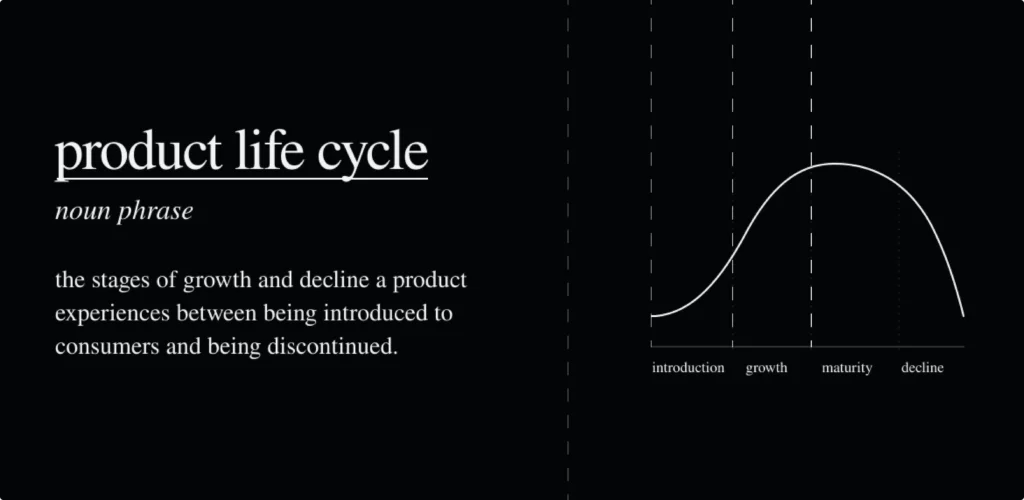
Consider the reporting feature discussed earlier. Its purpose is to reduce the time customers spend preparing reports. The work could unfold like this:
The team may return to earlier questions at any point. If customers still rebuild every report, more export capacity will not solve their problem. The next step may be another design test.
Development projects can include this kind of iteration as well. The agreement determines how long the team remains responsible. Product engineering makes continued learning and improvement part of that responsibility.
Software development metrics tell you how well the team delivered the agreed work. Product engineering also checks whether the work helped customers accomplish what they came to do.
The reporting feature illustrates the difference. You can confirm that it exports the correct data and was delivered within budget. Finding out whether it saves customers time requires watching what happens after release.
Both checks matter. You want useful software, and you want control over the cost of building it.
For delivery, the measures usually include:
Product engineering keeps the delivery discipline. It also makes room for measures that take longer to observe, once people have started using the software:
Choose the measures that fit the reason for doing the work. For the reporting feature, preparation time and task success would be useful starting points. Revenue contribution may tell you less if the immediate goal is to make an existing customer’s job easier.
Before development, establish how long report preparation currently takes and agree on the improvement you expect. After release, check the same task again. If customers still spend most of their time rearranging data, the team has something specific to investigate.
You can then decide whether another change is worth funding. Perhaps the report layout needs work. Perhaps the feature has achieved enough, and another problem deserves attention.
A software development engagement can include these checks too. In product engineering, the partner takes an ongoing role in reviewing the results and recommending what to do next.
Your choice of engagement affects how the team plans for future changes. Architecture matters here because a feature you approve today can make the next one expensive.
In a software development engagement, engineers usually plan around the agreed requirements and any future plans you share. A product engineering partner also helps investigate where the product is heading, so these technical decisions have a clearer basis.
Imagine your SaaS product currently serves small companies. Everyone within a customer account can access the same information. Now you want to sell to larger organizations, where department managers should see only their own team’s records.
Adding a department selector to the interface looks simple. Making sure every report and search result respects these boundaries takes more work. The original account structure may have to change.
This is how architecture becomes part of a product decision. Entering a new market has an engineering cost, and the cost can affect whether the move is worth making.
Other plans raise similar questions:
The answer is not to prepare for every possible future. This can leave you paying for complexity before you know whether customers will use it.
A team could spend months building flexible access controls when two basic roles would support the current product. These months delay other work, and the extra code still requires testing and maintenance.
Shortcuts carry their own cost. As our Technical Lead, Oleksandr Sainchuk, puts it:

The decision becomes easier to discuss through four questions:
Returning to the department example, several committed customers may justify changing the account structure now. A tentative expansion idea may call for more customer research before the investment.
Engineers explain the technical consequences. Whoever leads the product weighs these consequences against customer demand and available funding. In product engineering, the partner stays involved in both sides of the discussion as the evidence changes.
Does every new feature require reworking existing code?
We can identify what is slowing development and decide what to fix first.
Discuss your productA software development engagement is often enough when you know what to build and have someone in-house who can make product decisions.
You may have already researched the problem and settled on a solution. Bringing in a development team lets you move ahead with the work while your product owner stays responsible for priorities.
This arrangement works well when:
Product engineering is a better fit when you want a partner to help decide what to build and stay involved as customers start using it.
You might have a clear business idea without knowing exactly how the software should work. This involvement is useful when:
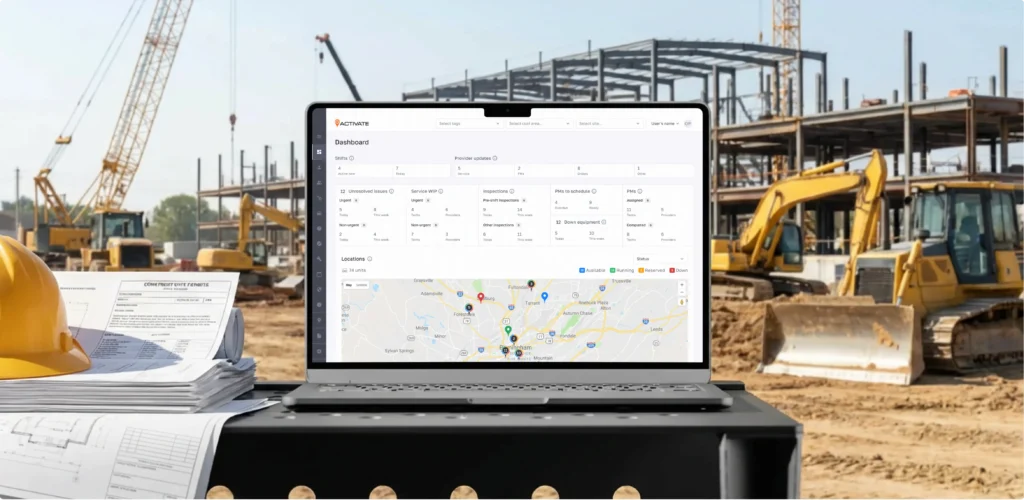
So, an engineering partner can take on more responsibility as your product develops. For instance, our engagement with Activate OS, a construction fleet management platform, began with a dashboard redesign and grew into a three-year partnership. We became Activate OS’ R&D team and share responsibility for the product, delivering monthly improvements.
These eight questions can guide the conversation when choosing the right product specialist:
Our approach at the UITOP UX-first product team starts with what you want to improve and what is getting in the way. Discovery helps us understand the problem before we propose changes.
Our designers work directly with engineers as they develop the UX. If simplifying a workflow requires changing how the software stores data, we discuss the effort with you before committing to the design. This gives you a clearer basis for deciding what to build.
For example, connecting design and development decisions was necessary when we worked on Pacioli, the accounting platform for MedTax. Accountants needed to categorize transactions according to each client’s accounting structure. AI could suggest categories, but accountants also required a way to override these suggestions.
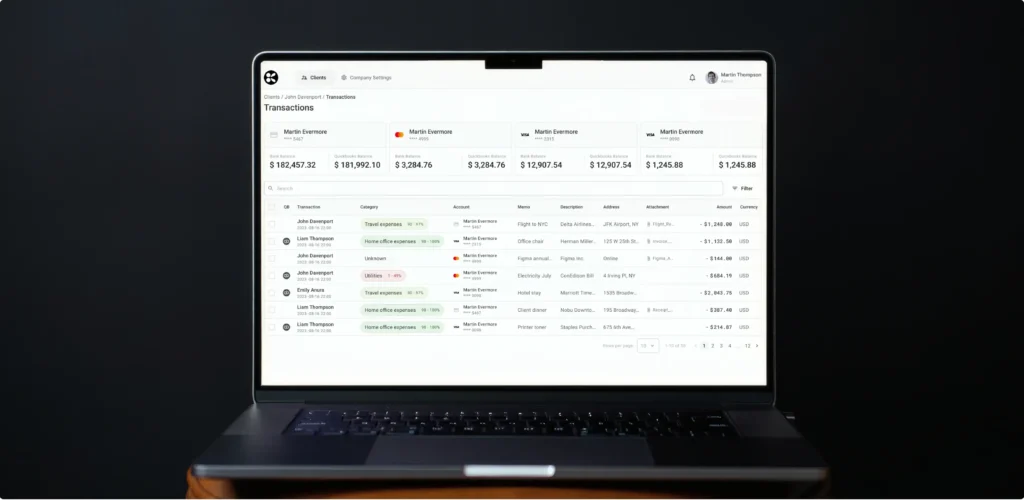
So, our team built configurable rules for these exceptions, along with an approval process. Accountants could submit new rules, and administrators could approve or decline them.
Software development can be enough when you have a clear scope and someone internally to guide product decisions. Product engineering fits when you also want a partner to help decide what to build and follow the results after launch.
If you are unsure how much support makes sense, contact UITOP. We can work through what your team already covers, agree on the responsibilities you want us to take on, and join at this level.
With software development, you agree on what to build, and the team delivers it. A product engineering partner also helps decide what is worth building and checks the results after release.
The distinction in product engineering vs software engineering is the scope of responsibility. Software engineering covers building and maintaining software. Product engineering also involves deciding what to build and checking its value after release.
When you know what the software should do and how you will check it, a development team may be enough. Your internal product owner handles priorities and questions along the way.
You will usually work with a product lead, designers, developers, and QA specialists. An architect may join for complex system decisions, or a senior engineer may take on the work.
Ask them to walk you through a project where the plan changed. Find out why it changed, who made the decision, and how they checked whether the new approach worked.