 How we use AI in our process
Startup, Development
/
Sep 15, 2026
You can have a smart product strategy, great UX, and solid engineering and still end up with a product that users don't love.
The problem often starts between the teams.
The product team decides what to build. Design turns it into screens. Engineering gets the designs and starts coding. QA checks the result. Then the feature goes live.
Everyone did their job. The product still may miss the mark.
SaaS product engineering takes a different approach. Product, design, and engineering work together from the first idea through launch and beyond.
The team keeps asking the same basic question:
What are we trying to change for the user or the business?
That question stays relevant during discovery, design, development, and future releases.
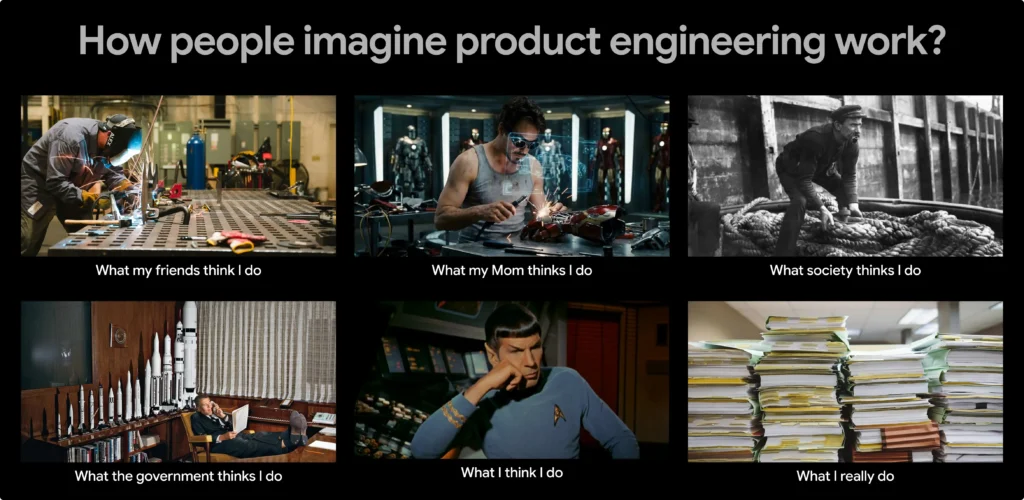
Product engineering describes a way of building and improving digital products. It connects product thinking with design and engineering throughout the product lifecycle.
The work starts with a business goal or user problem. The team investigates the problem, explores possible solutions, and tests assumptions.
UX helps turn user needs into real workflows. Engineering looks at technical constraints. Product weighs priorities and business needs. Everyone brings a different perspective.
That matters because a product decision can create technical consequences. A technical decision can also change the user experience.
Imagine a SaaS product adding a new customer role.
At first, it sounds simple. Add a role, give it some permissions, ship it.
Then engineering finds that the current permission model cannot support it cleanly. The designer discovers that users need different controls in several parts of the product. Now the original feature looks very different.
A product engineering team catches these things early.
Architecture becomes part of the product conversation. The team considers integrations, permissions, data, performance, security, and expected growth.
Delivery includes regular feedback. After release, the team studies product behavior and user feedback. New findings influence the roadmap.
The process keeps moving. A discovery finding may lead to a new UX. UX may need a different technical approach. Engineering can change the product decision.
That is part of the model.
Product engineering also changes what teams consider a finished task. A completed ticket can show that development work ended. A successful product change requires stronger evidence.
These questions keep engineering connected to product outcomes.
Many SaaS teams still work through a sequence of handoffs. Let's look at a common SaaS workflow.
A product manager writes a ticket. A designer creates the screens. An engineer builds them. QA checks the result.
Now imagine the feature takes six weeks to build.
During those six weeks, nobody really checks whether the original assumption still makes sense.
Every team can perform its role well. The product can still miss the original goal. This happens more often than teams like to admit.
Context often gets weaker at every handoff. Small assumptions become requirements. Requirements become designs. Designs become tickets. Engineers then implement decisions they did not help shape.
By the time the feature ships, the original idea can look very different.
This can also create product debt.
A temporary UX workaround stays in the product. A quick technical fix becomes part of the architecture. A feature gets added because it was already on the roadmap.
The team keeps moving. The product becomes harder to change.
Outcome ownership gives teams a common reference point.
The team keeps asking what should change for users or the business. Each role brings its own evidence and expertise to the process.
For SaaS leaders, useful areas to watch include:
The team doesn't need data for every decision. Some decisions still need judgment.
What matters is making important assumptions clear.
When teams understand the desired outcome, they can question requirements, suggest simpler solutions, and spot technical risks earlier.
This gives them more room to learn and adjust during development.
A practical product engineering model connects seven areas.
Business goals explain what the team wants to achieve. Discovery helps define the problem. UX turns user needs into workflows. Architecture supports those workflows. Development turns ideas into working software.
After release, measurement shows what happened. Scaling helps the product grow while the team keeps learning.
Each stage answers a different question.
| Stage | Key question | Main decision |
|---|---|---|
| Business goals | What needs to change? | Define the outcome |
| Discovery | What problem should we solve? | Validate assumptions |
| UX | How should users complete the job? | Define workflows |
| Architecture | How should the system support it? | Choose technical trade-offs |
| Development | How should we build it? | Implement the solution |
| Measurement | What happened after launch? | Check the hypothesis |
| Scaling | What needs to change next? | Improve the product |
These stages rarely happen in a neat line.
Engineering may join discovery. Product may revisit a decision during development. A usability test may change the roadmap.
That flexibility is useful for SaaS products because they change all the time.
New customers bring new requirements. Integrations add complexity. User roles multiply. Data grows. Old decisions start causing new problems.
A connected team can deal with these changes as they happen.
For companies building SaaS products, end-to-end SaaS product design and development can provide a connected workflow across these areas.
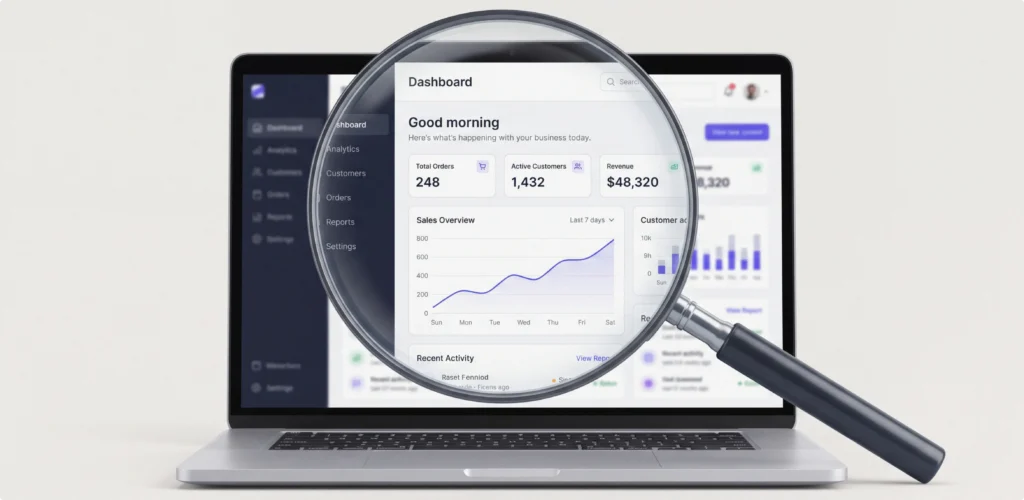
Starting with a feature request is easy.
“Customers want an analytics dashboard.” Okay.
What should the dashboard show?
Which customers need it?
What are they trying to understand?
What do they do with the information?
What data already exists?
Those questions are part of discovery.
Good discovery looks at customer evidence, business constraints, technical limitations, assumptions, and success criteria.
The goal is to understand the problem before committing too much effort to a solution.
For example, customers might ask for a reporting feature. After talking to them, the team may find that they don't really need more reports. They need a faster way to find three specific numbers. That changes the solution.
Discovery can also uncover technical issues.
The required data might sit across three systems. An API could have strict limits. The current architecture may struggle with the planned workflow.
Finding these issues early gives the team more options.
Product and technical assumptions before development can help make these questions clearer before implementation starts.
Discovery also continues after development begins.
A prototype can challenge an assumption. Early users might point to a different problem. Engineering may uncover a technical constraint.
Good product teams leave room for that information.
UX is often treated as the step before development. The designer creates the screens. The engineer builds them. Complex SaaS products rarely work that neatly.
A screen is only one part of the experience.
Take something as simple as inviting a teammate. There may be different roles. Different permissions. An existing account. A pending invitation. An expired invitation. A user who should not have access. Each situation creates a different product state. Those states affect design and engineering.
The same goes for dashboards, tables, billing, integrations, search, and onboarding.
A product designer needs to understand what the user is trying to do. Engineering needs that context too.
This is why engineering input before the final design matters.
An engineer may know that a proposed workflow requires a major backend change. A designer may find a simpler interaction. The product manager may decide that the simpler version is enough for the first release.
Everyone saves time.
Slabstack, an ERP platform for the construction industry, is a good example. The product had different user roles and complex field workflows, including cases like offline mobile use and empty data states. Thinking through those situations early helped our team turn them into clear requirements.
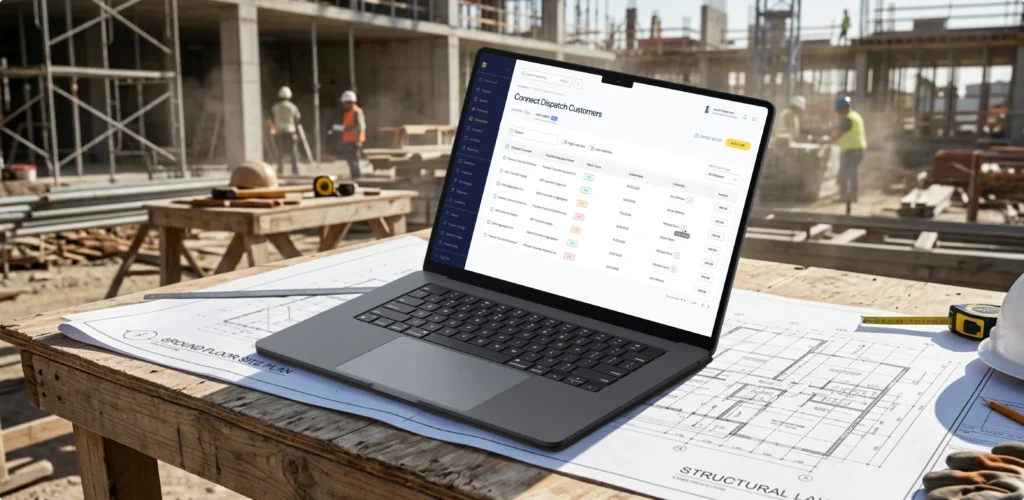
Designers worked with developers during sprint planning to check component feasibility and reduce rework. A modular Figma design system then helped carry those decisions into development.
This kind of collaboration keeps UX, requirements, and engineering connected from the start. The result was a market-ready MVP delivered in four months, with 156+ custom screens mapped from requirements to code.
The goal is to turn user workflows into something the whole team can build. Our approach to product design that connects workflows with business outcomes follows this idea.
For B2B SaaS products, this matters even more. There are usually more roles, more permissions, more data, and more edge cases. Good UX needs to account for all of them.
Architecture has a direct impact on the product.
A decision that works for 100 users may create problems at 100,000.
The same goes for permissions, integrations, data, and performance.
Multi-tenancy shows this well. A simple SaaS product may start with a basic customer structure. Later, customers may need teams, departments, custom roles, or separate data access. The architecture needs to support that evolution.
Integrations create similar questions.
We had to think through similar things with Pacioli, a financial platform for healthcare practices. It pulls in bank data from different sources, so the system needed to handle both real-time bank feeds and CSV files without changing how transactions were processed.
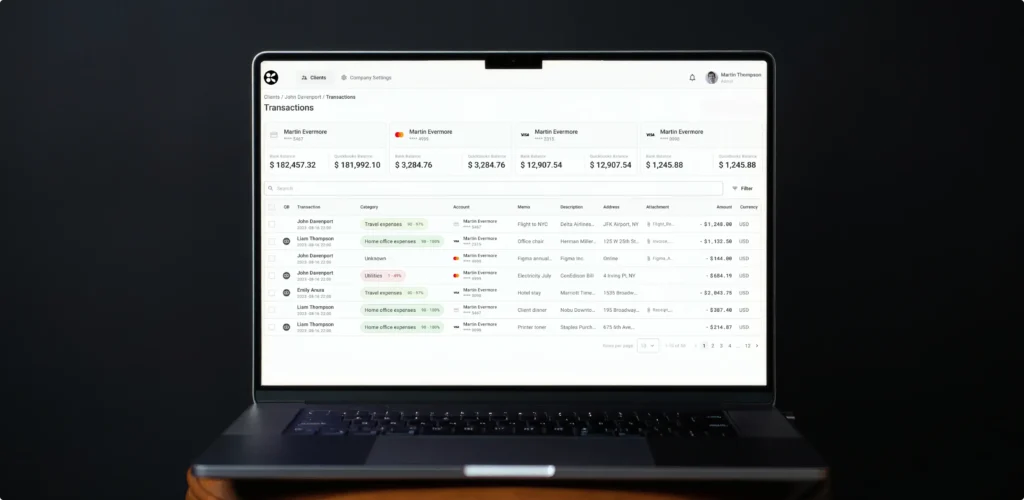
The team also moved heavier operations into the background. That kept the main product responsive while it handled more data behind the scenes.
The result was the same processing logic for live and imported data, real-time connections to 97% of Canadian banks, and stable performance under heavy load.
There is no single best architecture for every SaaS product. A lot depends on the product, team, expected scale, technical constraints, and roadmap. Product engineering teams consider these factors together.
They also think about reversibility. Some decisions are easy to change later. Others can lock a product into a certain direction for years.
A team might choose a simpler solution for an early release. If future requirements are already clear, a more flexible approach may make more sense.
The important part is knowing what you are choosing and why. Technical decisions should have a reason behind them.
Good design can still run into problems once development starts.
A small change in one workflow can affect several screens. A technical limitation can change an interaction. A missing state may only show up when someone actually uses the feature.
This is why designers and engineers need to stay in touch throughout the process.
A shared backlog gives everyone the same picture of what is being built and what still needs attention. Clear acceptance criteria make it easier to agree on what “done” means.
Design QA helps catch the smaller things after development. Maybe a state is missing or interaction feels different from the original idea. These issues are much easier to fix while the feature is still fresh.
Smaller releases help too. Instead of building a large feature and reviewing it months later, the team can release smaller pieces and see how they work.
This is especially useful for complex workflows. A tricky flow can be tested early with a prototype or a small release. If something feels confusing, the team can change it before it spreads across the product.
This also helps avoid some of the delivery gaps that make strong UX fail. Design and engineering keep checking each other's work instead of handing things over and moving on.
The feedback loop stays short. Problems come up earlier, decisions happen faster, and the product gets better as it is being built.
Launching a feature is when you start learning how it really works.
Real users may use it differently than the team expected. They might skip a step, get stuck somewhere, or keep asking support the same question.
Those are useful signals.
Start with what users are actually doing. Product metrics can show where people drop off. Feedback and customer conversations can help explain what is going on.
The team can then form a hypothesis.
Say users keep leaving a setup flow halfway through. The data shows where they stop. A conversation with users might reveal that they need information from another system before they can continue. Or maybe the form simply asks for too much.
From there, the team can test a small change, release it, and see what happens.
Then do it again.
Continuous improvement also doesn’t mean adding more features forever.
The best change may be removing a step. Sometimes it means simplifying a workflow, fixing a confusing state, or making a slow page faster.
Technical work matters here too. Refactoring, security updates, performance fixes, and architecture improvements can make the next product changes easier to ship.
A SaaS product keeps changing as users, requirements, and the business change. The team needs to keep learning and adjusting with it.

Shared ownership does not mean everyone makes every decision.
Each role still has a clear area of responsibility.
The product manager decides what to build and why. The product designer works out how the product should work for users. The tech lead or architect decides how the system should support it. Engineers build the solution. QA checks whether it works as expected.
The difference is how these roles work together.
Say the team is planning a new billing workflow. During the discussion, the designer spots a problem with the user flow. The tech lead sees a data issue that could make the first version harder to maintain. QA points out a few edge cases the team has not considered yet.
Those comments can change the final solution. But the person responsible for each area still makes the call.
| Role | Core decision | Evidence | Handoff risk |
|---|---|---|---|
| Product Manager | What to prioritize | Customer and business data | Context gets lost |
| Product Designer | How the workflow should work | Research and user needs | UX loses its original purpose |
| Tech Lead / Architect | How the system should support it | Constraints and expected change | Technical debt grows |
| Engineer | How to implement it | Requirements and system behavior | Local solution misses context |
| QA | Whether it works correctly | Scenarios and acceptance criteria | Edge cases reach users |
Everyone can raise a concern. But the whole product team should understand the outcome.
An engineer can question a requirement. A designer can challenge a workflow. A product manager can revisit a feature after technical discovery.
That is healthy collaboration.
You need some way to know whether product changes are working. Shipping faster is useful, but it does not tell you if the product improved. A better approach is to look at four groups of metrics.
Start with what users can actually do with the product.
Task success can show whether people complete an important workflow. Activation can show how many new users reach the first useful moment. Retention tells you if the product keeps delivering value over time.
For example, if you simplify onboarding, the hypothesis might be:
“Reducing the number of setup steps will help more new users reach their first successful workflow.”
Your baseline could be the current activation rate. After the change, you can compare the new results against it.
The product also needs to move the business forward.
Depending on the product, this could mean more paid conversions, higher expansion revenue, lower churn, or fewer support costs.
The important part is connecting the metric to the change you made.
If a new self-service feature is meant to reduce support work, measure support volume before and after launch. If the feature does not change that number, the team needs to understand why.
A team can ship quickly and still have an unhealthy delivery process.
Cycle time shows how long work takes from start to release. Change failure rate shows how often releases cause problems or need a rollback, hotfix, or follow-up fix.
These metrics help show what is happening inside the delivery process.
For example, a shorter cycle time sounds good. But if change failure rate rises at the same time, the team may simply be moving problems into later stages.
You can also judge quality by what happens after a release.
Support requests can tell you a lot. A sudden increase in tickets can point to confusing UX, missing states, bugs, or a feature that does not work as expected.
You can also track escaped defects, performance issues, or recurring production problems.
The key is to start with a baseline.
Without a baseline, it is hard to tell if a change actually helped. “Activation improved” means little if you do not know where it started.
The same goes for delivery. A cycle time of five days may sound good until you compare it with the previous six months and see that it doubled.
A useful metric should answer a specific question.
That keeps metrics tied to real product decisions instead of turning them into a dashboard nobody uses.

These terms often get mixed together. They are related, but they describe different parts of the work.
Software development is about building software. The team takes requirements and turns them into working features, applications, or systems.
Product development covers more of the journey. It can include research, product strategy, UX, development, launch, feedback, and future improvements.
Product engineering sits across both. The team builds the product, helps shape product decisions, and stays involved as the product grows and changes.
| Software Development | Product Development | Product Engineering | |
|---|---|---|---|
| Scope | Building software and features | Full product lifecycle | Product, UX, engineering, delivery, and ongoing improvement |
| Main output | Working software | A product shaped around user and business needs | A working product that can keep evolving |
| Feedback loop | Often delivery-focused | Across the lifecycle | Continuous |
| Ownership | Engineering | Cross-functional | Shared outcome |
| Best fit | Clear software requirements | Products that need work across the full lifecycle | SaaS products that keep changing after launch |
The lines can overlap.
A product engineering team still does software development. It also works on product questions that come up along the way.
The key difference is what happens after a feature ships.
The team looks at how people use it, what is working, what needs to change, and what the next version should look like. Engineering decisions are part of that conversation too.
For SaaS, this approach fits the reality of the product. The roadmap changes. User needs change. Integrations grow. Technical decisions made today affect what the team can build later.
Product development engineering brings those conversations into the same workflow.
When a SaaS Company Needs Product Engineering
Not every SaaS company needs product engineering.
Sometimes you just need a team to build a well-defined feature. But things get different when product and engineering decisions start affecting each other all the time.

So what does that look like in practice?
These are good reasons to look at product engineering as a broader way of working.
It does not mean every SaaS company needs a full product engineering setup.
If you have a small, well-defined piece of work, a focused delivery team may be all you need. This could be a separate integration, a UI update, or a feature with clear requirements and little uncertainty.
The point is to match the approach to the work. Product engineering makes more sense when product, UX, and engineering decisions keep changing together. For a clearly defined task, keeping the scope narrow can be simpler.
Ready to connect the dots?
Let’s talk about the product you’re building and what it needs next.
Contact us
Choosing a product engineering partner is about more than checking the services on their website.
Start with discovery.
Ask what they do before development starts. Do they validate user needs, product assumptions, technical risks, and the scope? Look for real examples of discovery work and the decisions that came from it.
Then look at how design and engineering work together.
You want to see designers and engineers involved in the same process. Ask how they handle complex workflows, missing states, technical limitations, and changes during development. A good process leaves room for both sides to shape the solution.
Architecture is another important area.
Ask how the team makes technical trade-offs. What do they optimize for now? What can wait? Which decisions are easy to change later, and which could lock the product into a certain direction? A good team should be able to explain these choices in plain language.
Delivery should be easy to follow too.
Ask how they plan the work, share progress, handle changes, and decide what is ready to ship. You should know what the team is working on and where things stand without having to chase for updates.
And don't stop at the launch.
Ask what happens once real users start using the product. Does the team look at product data and user feedback? Do they review support issues and technical problems? Can they turn those findings into changes for the next release?
Finally, look at the cases they have actually worked on.
A portfolio full of simple marketing websites does not tell you much about building a complex SaaS platform. Look for relevant cases involving multiple user roles, complex workflows, integrations, large data sets, legacy systems, or products that have grown over time.
The goal is to find a team that can stay involved as the product changes.
For SaaS companies looking for this kind of collaboration, UX-first product engineering partner can be a useful model to look for.
The real value of product engineering comes from keeping product decisions connected throughout the whole lifecycle, rather than putting more specialists into the same project.
The team should know what users need, what the business is trying to achieve, and how each product decision supports those goals. That connection should stay there from the first discovery session to the work that happens after launch.
That also changes how the team thinks about ownership. A feature should not feel like something that gets passed from product to design, then engineering, then QA. Everyone has their own role. But everyone is working toward the same outcome.
For a SaaS product, that connection matters long after the first release. Users change. Business priorities move. New integrations appear. Technical decisions need to evolve.
Product engineering gives the team a way to keep those decisions connected as the product grows.
Product engineering is a way to build and improve digital products with product, design, and engineering working closely together. The team looks at user needs, business goals, UX, technical decisions, delivery, and feedback throughout the product lifecycle.
Software engineering focuses on building and maintaining software. Product engineering includes those activities while connecting them with product goals, UX, discovery, architecture, and user feedback. The wider view helps teams make technical decisions with the product’s future in mind.
A typical SaaS product engineering team can include a product manager, product designer, tech lead or architect, engineers, and QA. Larger products may also need DevOps, data, security, or integration specialists. The exact setup depends on the product’s complexity.
Product engineering services can be useful when a SaaS product has complex workflows, several user roles, legacy systems, changing requirements, or significant integration needs. A narrowly defined project may work better with a smaller delivery-focused team.
Look for experience with products similar to yours. Ask how the company handles discovery, UX, architecture, development, QA, and post-launch improvements. Pay attention to how teams make trade-offs and respond when new information changes the original plan.

